
Hyperpigmentation: A K-Beauty Approach
In this article
Why dark spots are so stubborn
Dark spots fade slowly because pigment is part of your skin's defense system. If UV or inflammation keeps triggering it, the spot keeps getting refreshed.
Concern snapshot
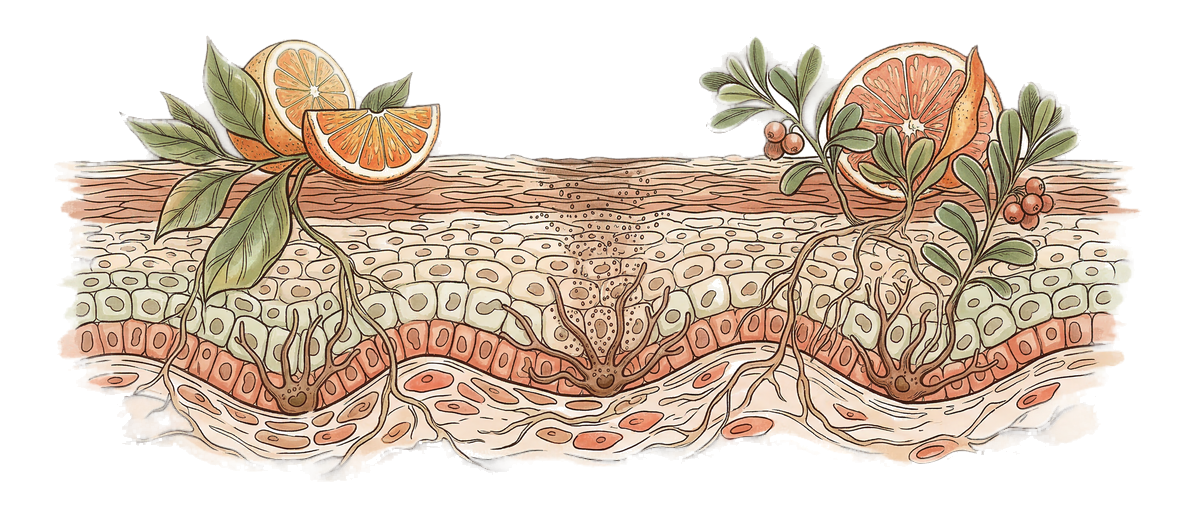
Hyperpigmentation is excess melanin deposited in the epidermis or dermis, triggered by UV exposure, inflammation (post-acne marks), or hormonal changes (melasma).
4 mapped causes
5 key ingredients
Layered support
Brightening actives cannot outrun daily UV. SPF is the step that keeps old marks from getting darker again.
What triggers uneven tone?
Dark spots can start from acne, irritation, sun, or hormones. Your routine needs to quiet the trigger and slow the pigment pathway.
What keeps it going
01. UV-triggered melanogenesis: ultraviolet radiation activates melanocytes through prostaglandin signaling, stimulating tyrosinase activity and increasing melanin output as a protective response.
02. Post-inflammatory hyperpigmentation (PIH): skin trauma from acne, cuts, or irritation causes melanocytes to deposit excess melanin in the surrounding tissue during the recovery process.
03. Hormonal influences: elevated estrogen and progesterone (during pregnancy, from oral contraceptives) upregulate melanocyte activity, producing the symmetric facial patches characteristic of melasma.
04. Epidermal vs. dermal deposit depth: melanin trapped in the epidermis appears brown and responds to topical treatments within months. Melanin that has dropped into the dermis appears blue-gray and is much harder to fade with topicals alone.
Which ingredients fade spots best?
The strongest brightening routines stack different pigment jobs. Vitamin C and arbutin slow pigment creation. Niacinamide slows pigment transfer. Tranexamic acid helps with UV-triggered signaling.
Evidence-backed ingredients
Vitamin C (L-ascorbic acid)
ProvenBinds copper ions at the active site of tyrosinase, blocking the enzyme's ability to convert tyrosine into melanin. Also directly reduces oxidized (dark) melanin back to a lighter form through electron donation.
Pullar et al., 2017 — Nutrients
Niacinamide
ProvenDoes not inhibit melanin production itself. Instead, it blocks the transfer of melanosomes (melanin-containing packets) from melanocytes to surrounding keratinocytes. In co-culture models, 5% niacinamide inhibited 35-68% of melanosome transfer.
Hakozaki et al., 2002 — British Journal of Dermatology
Alpha-Arbutin
StudiedReversibly inhibits tyrosinase and DHICA oxidase at the melanocyte level. Hydrolyzes to hydroquinone on the skin surface at very low, non-cytotoxic concentrations. Slower acting than hydroquinone but with a better safety profile for long-term use.
Ertam et al., 2008 — Journal of Dermatology
Tranexamic Acid
StudiedCompetes with plasminogen at keratinocyte receptor sites, reducing prostaglandin E2 release that would otherwise signal melanocytes to produce more melanin after UV exposure. Works through a different pathway than tyrosinase inhibitors, so it can be combined with them.
Janney et al., 2019 — Journal of Cutaneous and Aesthetic Surgery
Azelaic Acid
ProvenSelectively targets hyperactive melanocytes (cells producing abnormally high amounts of melanin) while leaving normal melanocytes alone. Also inhibits tyrosinase and has anti-inflammatory properties that address the PIH component of post-acne dark spots.
King et al., 2023 — Journal of Cosmetic Dermatology
What should the routine do?
Think slow and steady. Use one or two brighteners daily, keep the barrier calm, and never skip sunscreen.
Routine principles
A K-beauty hyperpigmentation routine layers brightening actives across AM and PM. Morning: vitamin C serum after cleansing (it doubles as antioxidant UV defense), followed by a niacinamide moisturizer and SPF 50+. Night: tranexamic acid or alpha-arbutin serum, followed by moisturizer. Azelaic acid can replace or supplement either the AM or PM active 2-3 nights per week. The consistent daily SPF is what makes the rest of the routine work: without it, UV exposure triggers new melanin deposits faster than any active can clear them.
What keeps spots from fading?
The usual culprit is irritation. If a brightening routine burns every night, it can create more discoloration than it removes.
Common traps
01. Using brightening actives without daily SPF. Even 10 minutes of unprotected sun exposure can trigger enough melanin production to undo weeks of brightening progress. SPF 30+ every morning is the non-negotiable foundation.
02. Expecting results in under 8 weeks. Epidermal turnover takes roughly 28 days, and brightening actives work within that cycle. Visible fading of established dark spots typically requires 2-3 full turnover cycles (8-12 weeks) of consistent daily use.
03. Using hydroquinone at high concentrations for extended periods without medical supervision. Concentrations above 2% used for more than 3 months can cause ochronosis, a paradoxical permanent blue-gray darkening of the skin. Alpha-arbutin and niacinamide are safer for long-term maintenance.
04. Approaching all dark spots the same way. PIH (brown, flat) responds to tyrosinase inhibitors. PIE (pink/red, flat) is a vascular issue from damaged capillaries, so melanin-targeting actives won't help. Melasma is hormonally driven and tends to recur even after fading, requiring ongoing maintenance rather than a one-time care plan.
Find the dark spot routine that fits your skin type.
Answer 9 questions. Koracle checks fit, conflicts, texture, and evidence.
Build my routine →Common questions
What is the fastest way to fade a dark spot from a healed pimple?
A combination of vitamin C (tyrosinase inhibitor) and niacinamide (melanosome transfer blocker) applied daily, with SPF 50+ every morning, is the most effective over-the-counter approach. Fresh PIH from a pimple that healed within the last month fades faster than older spots because the melanin is still in the upper epidermis. Adding a gentle AHA exfoliant once a week speeds the shedding of pigmented cells. Expect 6-8 weeks for noticeable improvement on a fresh mark.
Why do my dark spots get darker in summer even when I wear sunscreen?
Most people underapply sunscreen: the tested amount is 2mg per square centimeter, which works out to roughly a quarter teaspoon for the face alone. At half the recommended amount, an SPF 50 product performs closer to SPF 7. Reapplication matters too: sunscreen degrades after about 2 hours of UV exposure. If you apply SPF once in the morning and spend time outdoors at lunch, you have several hours of low protection during peak UV. A PA++++ rated sunscreen and midday reapplication close the gap.
Can I use vitamin C and niacinamide together for hyperpigmentation?
At the concentrations in most K-beauty products (vitamin C at 5-15%, niacinamide at 2-5%), yes. The old concern about niacinamide converting to niacin and flushing the skin came from a 1960s study using pure ascorbic acid and nicotinamide at high temperatures, conditions that don't occur on skin. Many well-studied Korean serums contain both. If you use high-concentration L-ascorbic acid (above 15%) with high-dose niacinamide (above 10%), separating them into AM and PM is a reasonable precaution.
Is hydroquinone safe, and how does it compare to K-beauty alternatives?
Hydroquinone at 2% is effective and considered safe for courses of 3 months or less under medical guidance. It works by inhibiting tyrosinase and is directly cytotoxic to hyperactive melanocytes. The concern is long-term use at higher concentrations, which carries a risk of ochronosis. K-beauty alternatives (niacinamide, alpha-arbutin, tranexamic acid) are individually weaker than hydroquinone but safer for indefinite daily use. Combining two or three of them targets melanin through different pathways and can approach hydroquinone's effectiveness over a longer timeline.
Does exfoliation help with hyperpigmentation, or does it make it worse?
Gentle chemical exfoliation (AHA at 5-8%, once or twice a week) speeds the shedding of melanin-loaded keratinocytes from the surface, which helps spots fade faster. Over-exfoliation does the opposite: it causes inflammation, and inflammation triggers more melanin production (PIH). Physical scrubs carry more risk because uneven pressure can irritate some areas more than others. If your skin is red or stinging after exfoliation, you are doing too much and creating the exact conditions that worsen hyperpigmentation.
Will my melasma come back even if I get it to fade?
Melasma recurrence is common because the underlying hormonal sensitivity of the melanocytes does not change. Even after the visible patches fade, those melanocytes remain primed to overproduce melanin when triggered by UV exposure or hormonal shifts. Long-term maintenance with daily SPF, niacinamide, and tranexamic acid reduces recurrence frequency. Many dermatologists manage melasma as a chronic condition rather than a problem to solve once.
Top picks for hyperpigmentation
Paid links: Koracle may earn from qualifying purchases. Details.
Find products matched to your skin type and concerns.
Build my dark spot routine