
AHA in Korean Skincare: Glycolic, Lactic, and Mandelic Acid Compared
In this article
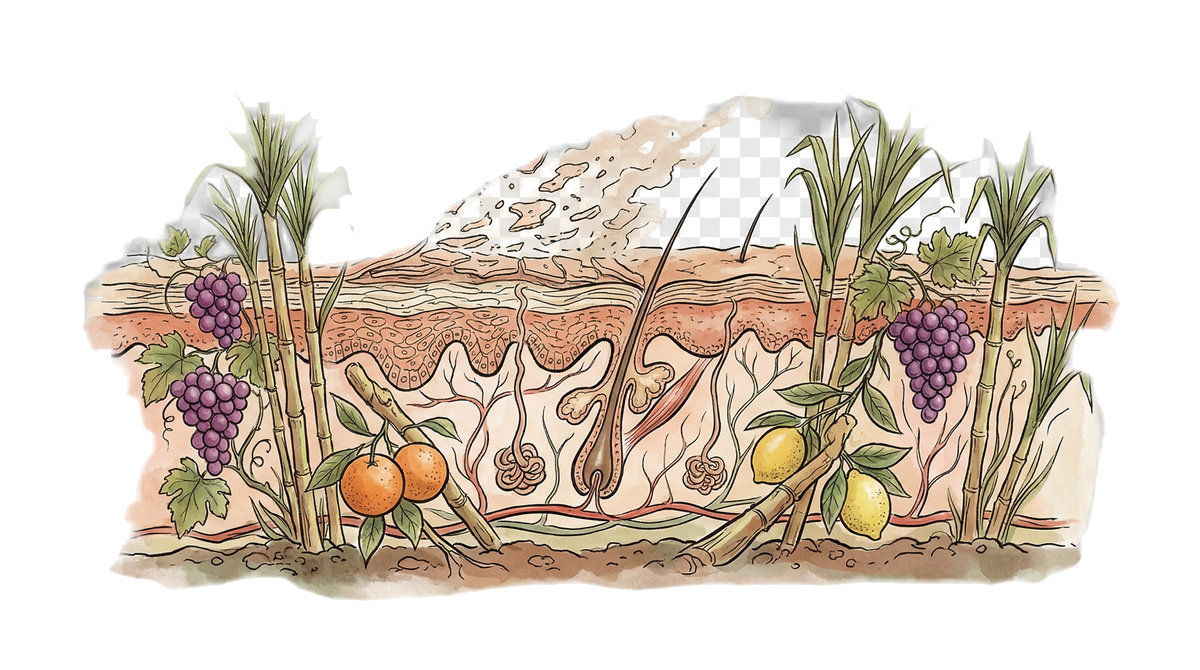
If your skin looks dull no matter how much you hydrate, the problem is probably on the surface: a buildup of dead cells that won't shed fast enough on their own. AHAs fix that through chemistry, not scrubbing. They lower your skin-surface pH and chelate the calcium ions holding dead cells together, causing the outer layer to shed and reveal newer skin underneath. The three you encounter most in K-beauty (glycolic at 76 Da, lactic at 90 Da, and mandelic at 152 Da) differ by molecule size, which determines how deep they penetrate and how much they irritate. Glycolic goes deepest and stings most. Mandelic stays shallow and is safest for darker skin tones. Lactic does double duty: the L-isomer increases ceramide production in your keratinocytes, so it exfoliates and repairs your barrier at the same time.
Three molecules, three penetration depths. Picking the wrong one is the most common exfoliation mistake.
Dissolve dead-cell bonds by chelating calcium ions
AHAs lower skin-surface pH and strip the calcium that holds desmosomal bonds between corneocytes. Dead cells shed faster, revealing newer skin underneath.
Increase UV sensitivity by 18% — even at low concentrations
The FDA found that 4% glycolic acid made skin measurably more vulnerable to UV damage. This sensitivity persists for about a week after you stop using the product. SPF 30+ is mandatory.
Glycolic 76 Da, lactic 90 Da, mandelic 152 Da
Molecule size determines everything. Glycolic penetrates deepest and stings most. Mandelic stays shallow and is safest for darker skin tones. Lactic sits in between and doubles as a humectant.
Double absorption of vitamin C and hydroquinone after AHA use
By removing compacted dead cells, AHAs reduce the barrier thickness other actives must cross. A study found up to 2x increased absorption of actives applied after glycolic acid pre-treatment.
Myth: AHAs thin your skin over time.
Reality: AHAs thin the dead outer layer (stratum corneum). That is the point. But they actually thicken the living epidermis by accelerating cell turnover, and at higher concentrations they stimulate firmer-looking skin support in the dermis. Net result: thinner dead layer, thicker living skin.
Clinical benefits
Accelerated cell turnover and smoother texture
A 22-week double-blind study of 74 women found that 8% glycolic acid cream produced statistically significant improvements in skin smoothness, fine wrinkle reduction, and overall photoaging scores compared to vehicle. Improvement was progressive: results at 22 weeks exceeded those at 10 weeks.
Stiller et al., 1996 — Journal of the American Academy of Dermatology
Hyperpigmentation reduction
AHAs fade dark spots by accelerating the shedding of melanin-loaded keratinocytes. A 12-week study of lactic acid at 8% showed measurable reduction in melasma severity index in 25 Indian women, with lactic acid performing comparably to hydroquinone 4% for superficial epidermal pigmentation.
Sharquie et al., 2012 — Journal of Cosmetic Dermatology
Dermal collagen stimulation
Glycolic acid at concentrations of 20-70% in clinical peels increased dermal collagen density measured by ultrasound in a 6-month study. Even at lower daily-use concentrations (8-12%), AHAs upregulate hyaluronic acid and firmer-looking skin support through fibroblast stimulation, though the effect is slower.
Bernstein et al., 2001 — Dermatologic Surgery
Improved absorption of other actives
By removing the outer layer of compacted dead cells, AHAs reduce the barrier thickness that other actives must penetrate. A study found that glycolic acid pre-treatment increased the absorption of topical hydroquinone and vitamin C by up to 2x compared to untreated skin.
Tung et al., 2000 — Dermatologic Surgery
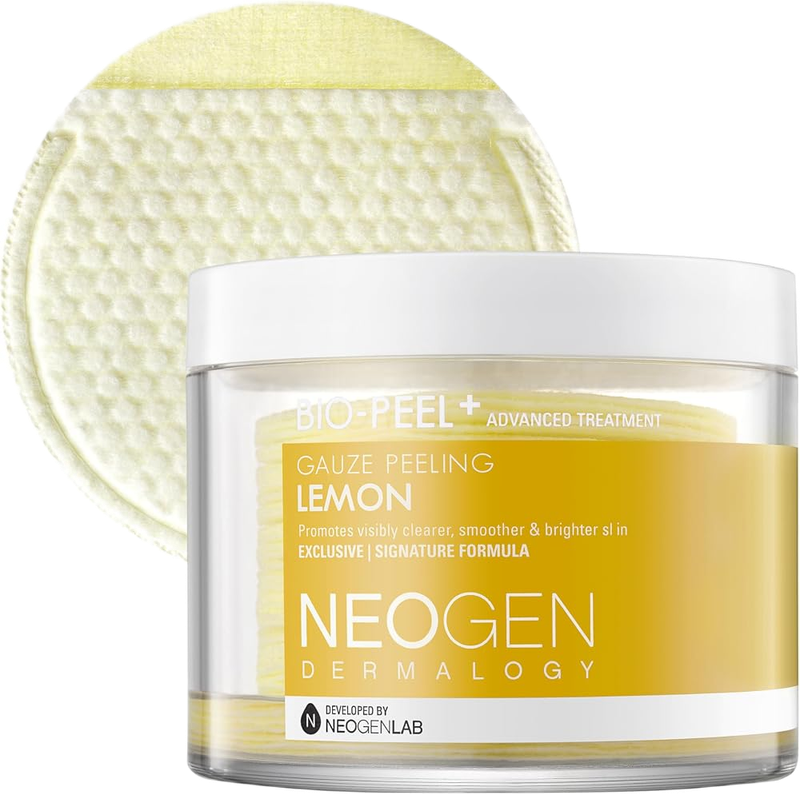
Products with aha
Paid links: Koracle may earn from qualifying purchases. Details.
Skin types
If your skin runs oily or combination, you'll tolerate AHAs well and benefit from the oil-clearing exfoliation. If you have a darker skin tone (Fitzpatrick IV-VI), mandelic acid is your best starting point: its larger molecular size reduces the risk of post-inflammatory hyperpigmentation from over-exfoliation. Dry or sensitive skin responds best to lactic acid, which doubles as a humectant while it exfoliates. Glycolic acid is the strongest and most studied, but it also carries the highest irritation risk. Start there only if your skin is experienced with acids.
Effective concentrations
pH 3-4. Most K-beauty AHA toners sit here. Start 2-3 times per week.
Stronger resurfacing. Use once a week and follow with hydrating layers.
Dermatologist-administered only. Stimulates firmer-looking skin support in the dermis.
Pairs well with
Niacinamide
Apply AHA first, wait 15-20 minutes, then apply niacinamide. Niacinamide calms any irritation from the acid and strengthens the barrier while AHA exfoliates. Do not apply them simultaneously: niacinamide's neutral pH reduces free acid availability.
Hyaluronic acid
AHA exfoliation increases TEWL temporarily by thinning the corneocyte layer. Applying HA after AHA has absorbed replenishes surface hydration. The combination prevents the tight, dry feeling that AHAs sometimes cause.
Avoid combining with
Retinol in the same routine step
Both AHAs and retinol increase cell turnover and thin the stratum corneum. Using both in the same application can cause excessive peeling, redness, and barrier damage. Alternate nights: AHA on one evening, retinol on the next.
Vitamin C (L-ascorbic acid) at the same time
Both require a low pH to work, but layering two low-pH actives multiplies irritation without proportional benefit. Use vitamin C in the morning and AHA in the evening.
Other exfoliants (BHA, PHA, enzymes) in the same step
Stacking exfoliants accelerates barrier disruption beyond what the skin can repair overnight. Pick one exfoliant per routine. If you use BHA for pores and AHA for texture, alternate them on different nights.
The bottom line
AHAs are the most effective surface exfoliants backed by decades of clinical data. Start at 5%, twice a week, in the evening. Increase frequency before increasing concentration. Wear SPF 30+ daily: AHAs thin the stratum corneum and increase UV sensitivity for up to a week after you stop using them. Mandelic acid is the safest choice for melanin-rich skin; lactic acid is the gentlest for dry or sensitive skin; glycolic acid is the strongest but carries the highest irritation risk.
Common questions
What is the difference between glycolic acid, lactic acid, and mandelic acid?
Glycolic acid is the smallest AHA molecule (76 Da): it penetrates deepest and exfoliates most aggressively. Best for experienced users targeting wrinkles and thick, sun-damaged skin. Lactic acid (90 Da) penetrates more slowly, causes less irritation, and has humectant properties that hydrate while exfoliating. Good for dry or sensitive skin. Mandelic acid (152 Da) is the largest and gentlest. It exfoliates the surface without penetrating deep enough to trigger post-inflammatory hyperpigmentation, which makes it the safest choice for darker skin tones.
Do AHAs cause sun sensitivity, and for how long?
Yes. AHAs thin the stratum corneum, exposing newer cells that have less melanin and are more vulnerable to UV damage. A study by the FDA found that glycolic acid increased UV sensitivity by 18% at 4% concentration. This sensitivity persists for about one week after you stop using the AHA. Wear SPF 30+ every morning when using any AHA product, even on overcast days.
Can AHAs cause purging, and how do I tell purging from a breakout?
AHAs accelerate cell turnover, which pushes existing microcomedones (clogs you cannot see) to the surface faster. This purging looks like small whiteheads or closed comedones in areas where you normally break out. It should resolve within 4-6 weeks. If you see inflamed cysts, breakouts in areas where you never had acne, or irritation lasting beyond 6 weeks, that is a reaction to the product, not purging. Stop use and reassess.
How often should I use AHA if I have never exfoliated before?
Start at 5% concentration, twice per week, in the evening. Leave the product on for the recommended contact time (varies by formula: some are rinse-off, some are leave-on). After two weeks with no irritation, increase to three times per week. After a month, you can move to every other night if your skin tolerates it. Do not jump to daily use in the first month. The goal is consistent, gentle exfoliation, not maximum acid exposure.
Should I rinse off my AHA toner or leave it on?
Check the product instructions. Leave-on AHA toners (most K-beauty options at 5-8%) are designed to stay on the skin and continue working as you apply subsequent products. Rinse-off AHA treatments (peeling gels, high-concentration pads above 10%) should be washed off after the specified contact time. If a leave-on product stings for more than 30 seconds, rinse it off: your skin is reacting to the acid concentration.
Find products with AHA (Alpha Hydroxy Acids) matched to your skin.