
Niacinamide in Korean Skincare: Benefits, Studies, and How to Use It

In this article
Your routine probably already has niacinamide in it: in the toner, the serum, maybe the moisturizer too. That's not a coincidence. It does three genuinely different things well: controls oil, fades dark spots, and rebuilds your lipid barrier. Most actives specialize. Niacinamide doesn't have to, because it feeds directly into NAD+ and NADP+, two coenzymes your skin cells use for everything from making ceramides to repairing UV damage. It layers with practically anything, works at any pH, and rarely irritates. That's the combination dermatologists reach for before most other ingredients.
What does niacinamide actually do?
Niacinamide is the calm overachiever of K-beauty. It helps oily skin look less shiny, fades dark spots over time, and strengthens the skin barrier so your face holds onto water better.
The technical reason is simple enough: your skin turns niacinamide into NAD+ and NADP+. Those are helper molecules your cells use to make barrier lipids, repair stress, and keep pigment transfer under control.
Niacinamide does not bleach pigment. It blocks melanosome transfer, which means less pigment gets handed to the surface cells where dark spots become visible.
Who should use it?
Almost everyone can use niacinamide. Oily skin usually sees the fastest change because oil control shows up within a few weeks. Dry and sensitive skin still benefit because niacinamide helps your barrier make more ceramides.
Good fit
Good fit
Good fit
Good fit
If your skin flushes easily, start with 2-5% before trying a 10% serum.
What strength should you pick?
Start lower than the internet tells you. 2-5% is the useful daily range for oil, barrier support, and mild uneven tone. Jumping straight to 10% only makes sense for stubborn dark spots that have not moved after 8 weeks.
Handles sebum control, barrier support, and mild brightening. Most K-beauty toners and serums sit here.
For stubborn hyperpigmentation that hasn't budged after 8 weeks at 5%. Some people experience flushing above 10% with no added benefit.
Paid links: Koracle may earn from qualifying purchases. Details.
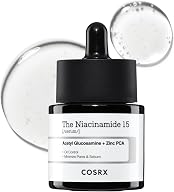
View on Amazon. Amazon shows final price and availability.
What does it pair with?
Niacinamide is easy to layer because it does not need a fussy pH window. That is why it shows up in toners, serums, moisturizers, and sunscreen-adjacent products.
Best pairings
Hyaluronic acid
Niacinamide rebuilds the lipid barrier while hyaluronic acid pulls water into the stratum corneum. The two address different layers of skin hydration without interfering with each other.
Retinol
Retinoids increase transepidermal water loss and decrease ceramide synthesis short-term (Baumann, Ch. 30). Niacinamide directly counteracts both: it upregulates ceramide synthesis and reduces TEWL. The pairing is pharmacologically complementary. Using niacinamide in the AM and retinol in the PM is a common K-beauty approach.
Vitamin C
Despite old advice to separate them, modern stabilized formulations of both work fine together. They target melanin through different mechanisms: vitamin C inhibits tyrosinase, niacinamide blocks melanosome transfer. At very high concentrations of both (above 15% and 10% respectively), applying them at different times of day avoids potential flushing.
The bottom line
Niacinamide is the ingredient to pick when your routine feels scattered. It will not replace a retinoid, BHA, or prescription dark spot treatment, but it makes almost every routine easier to tolerate.
If you only want one active that helps oil, spots, and barrier strength, niacinamide is the safest bet.
Common questions
What concentration of niacinamide should I start with?
Start at 2-5% and use it daily for 4 weeks before deciding whether to increase. Most people get full results at 5%. Going to 10% makes sense only if you are specifically targeting stubborn hyperpigmentation and 5% has not been enough after 8 weeks. The 10% products sometimes cause a mild niacin flush (temporary redness and warmth) in people with reactive skin.
Can niacinamide replace prescription treatments for acne or dark spots?
Not directly. Niacinamide reduces oil production and fades existing pigmentation, but it does not help reduce acne-related bacteria, unblock pores, or inhibit melanin production the way prescription retinoids, salicylic acid, or hydroquinone do. It works best as a supporting ingredient alongside targeted actives, or as a maintenance step after a more aggressive treatment phase has done its job.
How long does niacinamide take to show results?
Sebum reduction is measurable within 2-4 weeks. Brightening effects on hyperpigmentation typically become visible at 4-8 weeks. barrier support improvements in TEWL show up as early as 2 weeks in clinical measurements, though the skin may feel less tight and irritated sooner than that.
Does niacinamide cause purging?
No. Purging is caused by ingredients that accelerate cell turnover, like retinoids and AHAs, which push existing clogged pores to the surface faster. Niacinamide does not increase turnover rate. If you break out after starting a niacinamide product, it is more likely a reaction to another ingredient in the formula or to the product base itself.
Is there a difference between niacinamide in a toner versus a serum?
The concentration matters more than the format. A 5% niacinamide toner and a 5% niacinamide serum deliver the same active at the same dose. Toners are thinner and absorb faster, which suits oily skin. Serums are slightly more viscous and layer well under moisturizer for dry skin. Pick whichever texture fits your routine.
Find products with Niacinamide (Vitamin B3) matched to your skin.