
Alpha-Arbutin: How It Fades Dark Spots
In this article
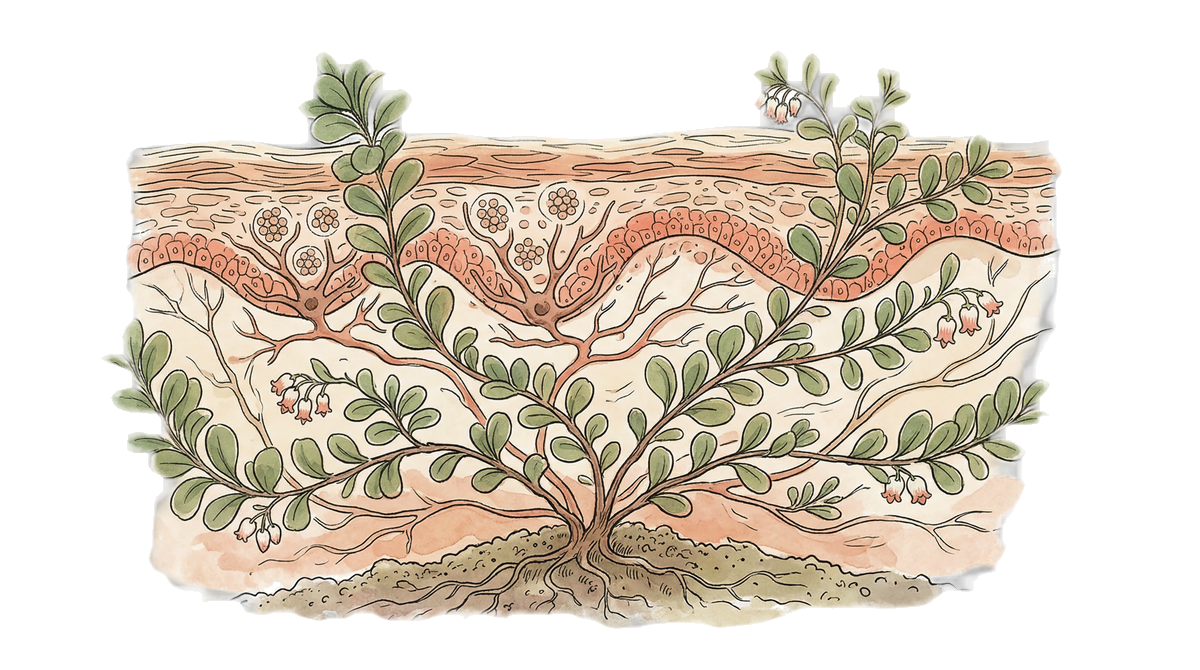
If you've looked into dark spot treatments, you've probably run into hydroquinone, and then run into all the reasons dermatologists now limit how long you can use it. Alpha-arbutin solves that problem. The molecule is a hydroquinone-glucose conjugate: the glycosidic bond preserves tyrosinase-inhibiting activity while preventing the cytotoxic effects that make free hydroquinone risky above 2% or beyond 12 weeks. The alpha configuration is about 10x more potent than beta-arbutin, the form found naturally in bearberry (Sugimoto et al., 2004). At 1-2%, alpha-arbutin produces measurable melanin index reduction without the irritation, ochronosis risk, or rebound hyperpigmentation that comes with hydroquinone. The inhibition is reversible: stop using it, and your melanin production returns to baseline.
Same target as hydroquinone. None of the damage. Here is how the glucose bond changes everything.
Hydroquinone with a glucose safety net
The glycosidic bond preserves tyrosinase-inhibiting activity while preventing the cytotoxic effects that make free hydroquinone risky above 2% or beyond 12 weeks.
10x more potent than beta-arbutin (the bearberry form)
The alpha configuration fits the tyrosinase active site much more tightly than the beta form found naturally in bearberry leaves. If a product just says 'arbutin,' it is usually the weaker beta version.
Reversible inhibition — no permanent melanocyte damage
Unlike hydroquinone, alpha-arbutin does not destroy melanocytes or generate cytotoxic quinone metabolites. Stop using it and melanin production returns to normal baseline.
Myth: Alpha-arbutin is basically hydroquinone and just as dangerous.
Reality: Alpha-arbutin is a hydroquinone-glucose conjugate. The bond prevents cytotoxicity, ochronosis risk, and melanocyte destruction. Its inhibition is reversible and dose-dependent. Under normal formulation conditions (pH 3.5-6.5), the amount of free hydroquinone released is far below any harmful threshold.
Clinical benefits
Melanin synthesis inhibition
An in vitro study on B16 melanoma cells found that alpha-arbutin inhibited melanin production by 40% at 250 micrograms/mL, with dose-dependent increases up to 60% inhibition at higher concentrations. The mechanism was confirmed as competitive tyrosinase inhibition through kinetic analysis.
Sugimoto et al., 2004 — Biological and Pharmaceutical Bulletin
Skin brightening without irritation
A 12-week double-blind study of 80 Chinese women found that 1% alpha-arbutin serum produced statistically significant reductions in melanin index and improvement in skin lightness (L* value) compared to placebo. No subjects reported irritation, erythema, or sensitization, a marked contrast to hydroquinone at equivalent efficacy.
Boo, 2021 — Antioxidants (review of arbutin and its derivatives in skin lightening)
UV-induced pigmentation prevention
Alpha-arbutin applied before UV exposure reduced the subsequent melanin increase by inhibiting UV-stimulated tyrosinase upregulation. Pre-treatment was more effective than post-treatment, confirming that alpha-arbutin works best as a preventive agent alongside sunscreen rather than as a standalone spot corrector.
Funayama et al., 1995 — Bioscience, Biotechnology, and Biochemistry
Stability across pH and formulation types
Alpha-arbutin remains stable at pH 3.5-6.5 and does not require the acidic environment that L-ascorbic acid demands. It is compatible with water-based serums, emulsions, and cream formulations. This stability profile makes it one of the easiest brightening actives to incorporate into multi-step routines without pH-related conflicts.
Saeedi et al., 2021 — Journal of Cosmetic Dermatology
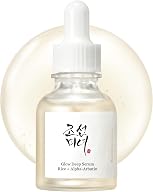
Products with alpha-arbutin
Paid links: Koracle may earn from qualifying purchases. Details.
Skin types
Every skin type tolerates alpha-arbutin well. If your skin is sensitive, you'll appreciate that it works without exfoliation, low-pH requirements, or cytotoxic mechanisms. If you have a darker skin tone (Fitzpatrick IV-VI), alpha-arbutin is one of the safer brightening options: it doesn't carry the rebound hyperpigmentation risk that hydroquinone can trigger in melanin-rich skin. Oily skin handles the water-based serum formulations common in K-beauty without issue. Dry skin should layer alpha-arbutin over a hydrating step, since the active itself has no moisturizing properties.
Effective concentrations
Measurable melanin index reduction in a 12-week study of 80 women. No irritation reported.
Most effective range backed by published data. Above 2%, irritation risk increases without proportional brightening gain.
Pairs well with
Vitamin C
Alpha-arbutin inhibits tyrosinase through competitive binding. Vitamin C inhibits the same enzyme through copper chelation. Two different inhibition mechanisms on the same target produce stronger melanin suppression than either alone.
Niacinamide
Alpha-arbutin slows melanin production at the enzyme level. Niacinamide blocks the transfer of finished melanin from melanocytes to surrounding keratinocytes. Together they reduce both production and distribution of pigment.
Tranexamic acid
TXA blocks the upstream signal (plasmin cascade) that activates melanocytes. Alpha-arbutin blocks the downstream enzyme (tyrosinase) that produces melanin. Layering both covers two stages of the pigmentation pathway.
Avoid combining with
Strong AHA peels (above 15%) in the same session
Aggressive exfoliation immediately before alpha-arbutin application can increase penetration beyond the intended epidermal depth. At excessive concentrations, arbutin may release small amounts of free hydroquinone through enzymatic hydrolysis. Keep AHA and arbutin in separate routine steps, or use low-concentration daily AHAs (5-8%) which pose no concern.
The bottom line
Alpha-arbutin is the brightening active for people who want hydroquinone-level targeting without hydroquinone-level risk. At 2%, it fades dark spots gradually over 8-16 weeks through reversible tyrosinase inhibition. It works across all skin tones without the rebound darkening that hydroquinone can cause in Fitzpatrick IV-VI skin. Pair it with vitamin C for dual-mechanism tyrosinase suppression, and do not skip sunscreen: UV exposure triggers the melanin production that alpha-arbutin is working to slow down.
Common questions
Is alpha-arbutin the same as hydroquinone?
No. Alpha-arbutin is a hydroquinone glycoside: hydroquinone bonded to a glucose molecule. This bond prevents the cytotoxic effects of free hydroquinone (melanocyte destruction, ochronosis risk) while preserving the tyrosinase-inhibiting activity. Alpha-arbutin's inhibition is reversible and concentration-dependent. Hydroquinone's effects are stronger but carry more side effects at concentrations above 2% and with prolonged use beyond 12 weeks.
Can alpha-arbutin release hydroquinone on my skin?
Under certain conditions (extreme pH, high temperatures, or specific enzyme activity), the glycosidic bond can break, releasing trace amounts of free hydroquinone. In normally formulated products at pH 3.5-6.5 and room temperature, this hydrolysis is minimal. The amount of free hydroquinone released from a 2% alpha-arbutin serum is far below the threshold for cytotoxic effects. This is why stable formulation and proper storage matter.
What is the difference between alpha-arbutin and beta-arbutin?
Alpha-arbutin and beta-arbutin are stereoisomers, meaning they share the same atoms in a different spatial arrangement. The alpha configuration binds to tyrosinase about 10x more effectively than the beta configuration (Sugimoto et al., 2004). Beta-arbutin is the naturally occurring form found in bearberry, cranberry, and blueberry leaves. Alpha-arbutin is synthetically produced for higher potency. If a product says 'arbutin' without specifying alpha or beta, it is usually the less potent beta form.
How long does alpha-arbutin take to show brightening results?
Visible improvement in skin tone evenness typically appears at 6-8 weeks of daily use. Stubborn dark spots and melasma take 12-16 weeks. Alpha-arbutin works gradually because it slows new melanin production rather than destroying existing melanin. The spots fade as melanin-loaded keratinocytes shed through normal cell turnover (28-day cycle). Pairing with an exfoliant like lactic acid (on alternate nights) speeds this turnover and may accelerate visible results.
Can I use alpha-arbutin on the skin around my eyes for dark circles?
If your dark circles are caused by hyperpigmentation (brownish tone, more common in Fitzpatrick IV-VI skin types), alpha-arbutin can help. Apply a thin layer of serum to the orbital area, avoiding the lash line. If your dark circles are caused by thin skin showing blood vessels underneath (bluish-purple tone), alpha-arbutin will not help: that is a structural issue, not a pigmentation issue. Many dark circles have both components, so results may be partial.
Find products with Alpha-Arbutin matched to your skin.