
Tranexamic Acid for Dark Spots + Melasma

In this article
You've probably already tried vitamin C for dark spots. Maybe niacinamide too. Those work, but they enter the process after your melanocytes have already been told to overproduce. Tranexamic acid works upstream of all of them. While vitamin C and arbutin inhibit tyrosinase and niacinamide blocks melanosome transfer, TXA prevents the signal that activates your melanocytes. It blocks the conversion of plasminogen to plasmin on keratinocyte surfaces, cutting off the cascade of arachidonic acid and prostaglandins that tells your melanocytes to ramp up after UV exposure or inflammation. A split-face trial showed 3% topical TXA matched 3% hydroquinone for melasma reduction at 12 weeks, with fewer side effects (Ebrahimi & Naeini, 2014). Unlike hydroquinone, TXA can be used continuously; a 24-week extension study found no rebound pigmentation on discontinuation.
Every other brightening ingredient fights melanin after it is made. This one stops the order from being placed.
Works upstream of every other brightening active
Vitamin C and arbutin block tyrosinase. Niacinamide blocks melanosome transfer. TXA prevents the plasmin signal that activates melanocytes in the first place, cutting off pigmentation before it starts.
Matched hydroquinone for melasma at 12 weeks, fewer side effects
A split-face trial found 3% TXA reduced MASI scores by 49%, comparable to 3% hydroquinone on the other cheek. Unlike hydroquinone, TXA can be used continuously with no mandatory break.
No exfoliation, no pH games, no irritation
TXA does not thin the stratum corneum or require low pH to work. Sensitive skin and darker skin tones tolerate it without the rebound or paradoxical darkening risks of stronger brighteners.
Clinical benefits
Melasma severity reduction
A randomized, double-blind, split-face trial of 44 melasma patients found that 3% topical tranexamic acid reduced the MASI (Melasma Area and Severity Index) score by 49% over 12 weeks. This was statistically comparable to 3% hydroquinone applied on the contralateral side, but with fewer side effects.
Ebrahimi & Naeini, 2014 — Journal of Research in Medical Sciences
Post-inflammatory hyperpigmentation (PIH) fading
Tranexamic acid at 2% reduced PIH severity in a 12-week open-label study of 23 subjects with Fitzpatrick skin types IV-VI. The plasmin inhibition mechanism is independent of skin type, which makes TXA effective across all complexions without the depigmentation risks of hydroquinone.
Kanechorn Na Ayutthaya et al., 2012 — Journal of the Medical Association of Thailand
Reduced redness in pigmented lesions
Tranexamic acid decreases vascularization around melasma patches by inhibiting vascular endothelial growth factor (VEGF) in keratinocytes. A clinical study found that the redness component of melasma, measured by erythema index, improved alongside the pigmentation, distinguishing TXA from pure tyrosinase inhibitors that only address brown coloring.
Li et al., 2014 — Dermatologic Surgery
Safe for long-term daily use
Unlike hydroquinone (which carries a risk of ochronosis with prolonged use above 12 weeks), topical tranexamic acid showed no safety concerns in a 24-week extension study. No rebound hyperpigmentation occurred when subjects discontinued use after 6 months.
Kondou et al., 2007 — Journal of Japan Cosmetic Science Society
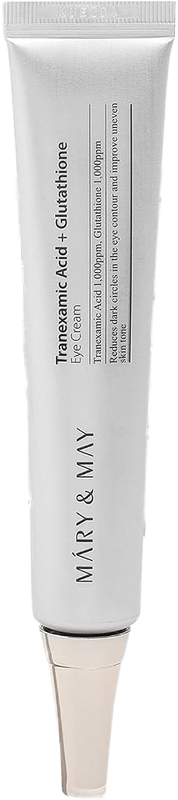
Products with tranexamic acid
Paid links: Koracle may earn from qualifying purchases. Details.
Skin types
Every skin type tolerates topical tranexamic acid. It's one of the few brightening actives specifically recommended for darker skin tones (Fitzpatrick IV-VI), because it doesn't carry the irritation or paradoxical darkening risks of hydroquinone or aggressive AHA peels. If your skin is sensitive, TXA is an especially good fit: it doesn't exfoliate, doesn't lower your skin's pH, and has mild anti-inflammatory properties that work in your favor rather than against you.
Effective concentrations
Effective for melasma and PIH. Most published trials used 2-3%.
Higher concentrations have not shown proportionally better results in published data.
Pairs well with
Niacinamide
TXA blocks plasmin-mediated melanocyte activation upstream; niacinamide blocks melanosome transfer downstream. The two target different stages of the pigmentation pathway and produce additive brightening effects.
Vitamin C
Vitamin C inhibits tyrosinase (melanin production enzyme); TXA inhibits the signal telling melanocytes to produce melanin in the first place. Layering both covers two independent steps in the pigmentation cascade.
Sunscreen
UV exposure is the primary trigger for the plasmin cascade that TXA blocks. Without daily SPF 30+, UV-driven melanocyte stimulation overwhelms TXA's inhibitory effect. The two are inseparable for treating hyperpigmentation.
The bottom line
TXA is the brightening active with the best safety profile for long-term use. It does not exfoliate, lower pH, or irritate. You can use it daily without cycling on and off. It works on melasma and PIH across all skin tones. The catch: it only blocks new pigment from forming. Existing dark spots fade as melanin-loaded keratinocytes shed through normal turnover. For faster results, pair TXA with a tyrosinase inhibitor like vitamin C or alpha-arbutin, and wear SPF 30+ daily.
Common questions
How does tranexamic acid differ from vitamin C and arbutin for dark spots?
They work at different points in the pigmentation pathway. Vitamin C and arbutin inhibit tyrosinase, the enzyme that converts tyrosine into melanin inside the melanocyte. Tranexamic acid works before that step: it blocks the plasmin signal that tells melanocytes to activate in the first place. Because TXA targets a different mechanism, it can be layered with tyrosinase inhibitors for a stronger combined effect.
Is topical tranexamic acid the same as the prescription blood-clotting medication?
Same molecule, different application. Oral tranexamic acid is prescribed at 650-1300mg doses to prevent excessive bleeding during surgery or heavy menstruation. Topical TXA at 2-5% stays in the epidermis and does not reach systemic circulation in meaningful amounts. The topical form has no documented effect on blood clotting. If you are taking oral anticoagulants, mention your TXA skincare use to your prescriber as a precaution.
How long does tranexamic acid take to fade dark spots?
The Ebrahimi & Naeini trial showed a 49% reduction in melasma severity at 12 weeks. Most users see visible improvement starting at 6-8 weeks. Unlike hydroquinone, which works faster but must be cycled on and off, TXA can be used continuously without a mandatory break. Results improve gradually over 3-6 months of consistent use.
Can I use tranexamic acid during pregnancy?
Topical TXA has not been studied in pregnant women, so there is no published safety data for this specific use. Oral TXA is classified as pregnancy category B in some countries (no evidence of harm in animal studies, but no controlled human data). Consult your OB-GYN before adding any new active ingredient during pregnancy. Many dermatologists consider topical TXA a lower-risk option than retinoids or hydroquinone, but that is a clinical judgment call.
Does tranexamic acid work on all types of dark spots?
TXA works best on melasma and PIH (post-inflammatory hyperpigmentation), both driven by melanocyte hyperactivity in the epidermis. It is less effective on dermal pigmentation (deep melasma, certain birthmarks) because the melanin is below the reach of topical products. Solar lentigines (sun spots) respond to TXA but more slowly than to glycolic acid peels or laser treatment. For stubborn spots that do not respond to 3-6 months of TXA, see a dermatologist for deeper treatment options.
Find products with Tranexamic Acid matched to your skin.