
The Best K-Beauty Routine for Dry, Hyperpigmentation Skin in 2026
Fading dark spots on dry skin requires a gentler approach. Your barrier can't handle aggressive brighteners, so we layer mild ones under rich moisture. ceramide-heavy layering at night supports your barrier faster than any single cream. A centella toner with the 7-skin method is your shortcut.
Koracle is skincare education, not medical or dermatology advice. Patch-test new products. Ask a licensed dermatologist about acne, rosacea, eczema, allergic reactions, pregnancy concerns, or symptoms that persist.
Paid links: Koracle may earn from qualifying purchases. Details.
Top picks for your skin
Paid links: Koracle may earn from qualifying purchases. Details.
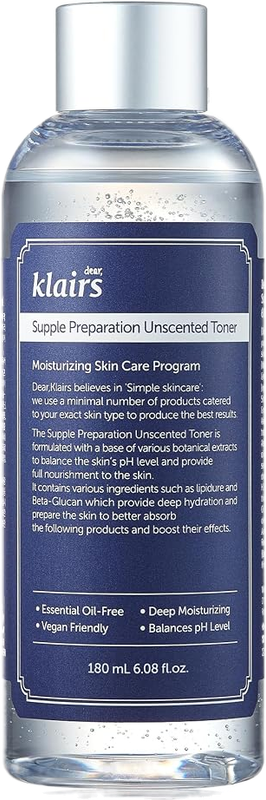
Morning pigment support: Beta-Glucan helps target uneven tone while the routine keeps irritation in check.
Key ingredients: Beta-Glucan, Sodium Hyaluronate, Centella Asiatica Extract
Morning pigment support: Niacinamide helps target uneven tone while the routine keeps irritation in check.
Key ingredients: Niacinamide, Vitamin C (Ascorbic Acid)
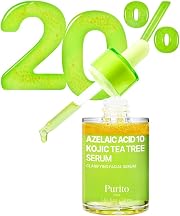
Morning pigment support: Azelaic Acid helps target uneven tone while the routine keeps irritation in check.
Key ingredients: Azelaic Acid, Niacinamide, Kojic Acid
Morning barrier support: Niacinamide helps keep the skin barrier steady so treatment steps are easier to tolerate.
Key ingredients: Niacinamide, Centella Asiatica
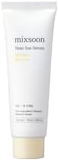
Morning photoprotection: daily sunscreen is the anchor for pigment control and UV-triggered tone changes.
Key ingredients: Niacinamide
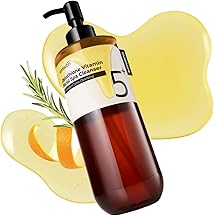
Recommended for your dark spots: Ascorbic Acid - matches the reviewed ingredient list
Key ingredients: Ascorbic Acid, Helianthus Annuus (Sunflower) Seed Oil, Tocopherol
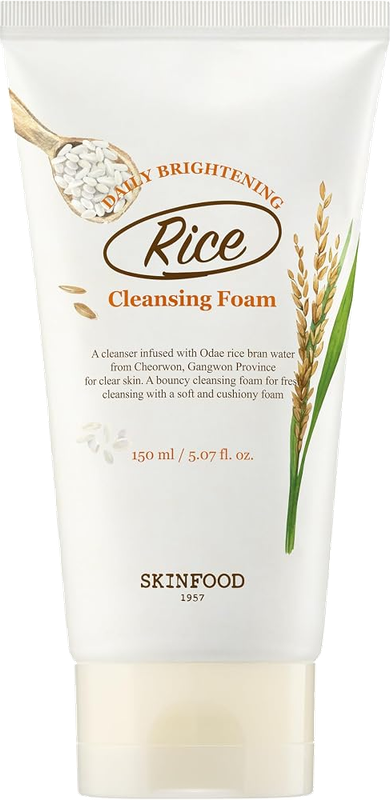
Recommended for your dark spots: Rice Extract - matches the reviewed ingredient list
Key ingredients: Rice Extract, Rice Bran Oil, Panthenol
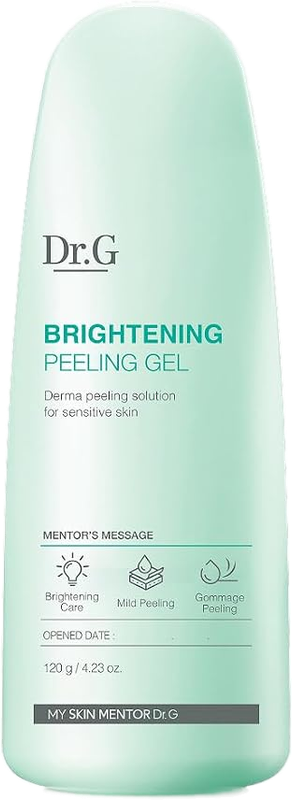
Night renewal: Cellulose adds gentle weekly smoothing without over-stacking daily actives.
Key ingredients: Cellulose, Vitamin C
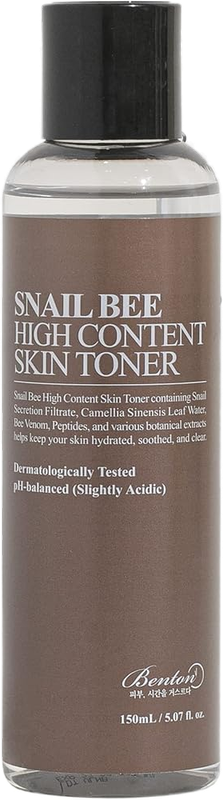
Night barrier support: Snail Secretion Filtrate helps keep the skin barrier steady so treatment steps are easier to tolerate.
Key ingredients: Snail Secretion Filtrate, Bee Venom, Niacinamide
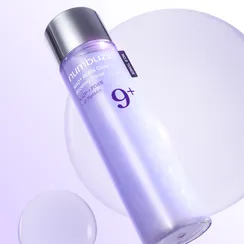
Night pigment support: Niacinamide helps target uneven tone while the routine keeps irritation in check.
Key ingredients: Niacinamide
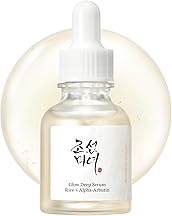
Night pigment support: Alpha-Arbutin helps target uneven tone while the routine keeps irritation in check.
Key ingredients: Alpha-Arbutin, Rice Extract, Niacinamide
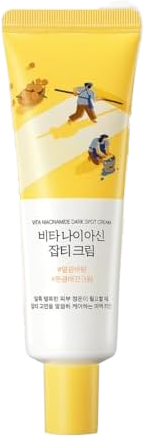
Night barrier support: Niacinamide helps keep the skin barrier steady so treatment steps are easier to tolerate.
Key ingredients: Niacinamide
Why this routine works
Dry skin with dark spots needs brightening plus comfort. Irritated dry skin can make discoloration look more obvious.
Why this routine fits
Dry skin has a weaker moisture barrier (the outer layer that locks water in). Fixing that barrier comes first. Alpha-arbutin layered under a rich cream fades spots while keeping your barrier strong. Harsh brighteners like high-dose vitamin C can backfire on dry skin because they need a low pH that strips moisture. Ceramide-heavy layering at night rebuilds your barrier faster than any single product. A centella toner with the 7-skin method is a good shortcut for both hydration and calming.
Do not let brightening become a drying routine. Pigment work goes better when the barrier stays calm.
How to use the routine
AM note
Use brightening serum, enough moisturizer, and sunscreen every single morning.
PM note
Use night steps to support repair so dark spot actives stay tolerable.
What to expect
Week 1
Skin should feel calmer and less stripped.
Weeks 2-4
Oil, texture, or tightness should start to shift.
Weeks 6-8
Tone and resilience are easier to judge.
Why these ingredients show up
Ingredient logic
Tranexamic acid
StudiedBlocks the signal from UV rays that triggers new pigment production. Gentle, no peeling, and works in rich cream formulas that suit dry skin.
Best for Dry skin; works in rich cream bases; low irritation with no peeling
Niacinamide
ProvenBlocks the pigment handoff that creates visible dark spots, while boosting your skin's moisture barrier at the same time.
Best for Dry skin with a weak barrier; pairs directly with hyaluronic acid and ceramide moisturizers
Vitamin C (ascorbyl glucoside)
StudiedYour skin converts this vitamin C form into the active version on contact. It fades spots the same way, but it's more stable and less drying.
Best for Dry skin that reacts to low-pH L-ascorbic acid; longer shelf life in emulsion textures
Alpha-arbutin
StudiedSlowly and gently inhibits the enzyme that makes dark pigment. No peeling, no dryness. Safe for long-term daily use.
Best for Gentle, long-term spot fading without irritation; well-tolerated on dry skin
Azelaic acid
ProvenGoes after overactive pigment cells while calming inflammation. Gentler than hydroquinone with similar spot-fading results.
Best for Dry skin with redness or rosacea alongside dark spots
How products were chosen
Why these products won
Dry skin with dark spots needs brightening actives in moisturizing formats. Thin watery serums evaporate too fast on dry skin. We score tranexamic acid, niacinamide, and gentle vitamin C derivatives highest. Cream and emulsion textures rank above gels.
Build a dark spot routine for dry skin.
Answer 9 questions. Koracle checks fit, conflicts, texture, and evidence.
Build my routine →Common questions
Can I use a hydrating routine and still target dark spots, or do I have to pick one focus?
You can do both at once. Niacinamide, tranexamic acid, and vitamin C are all water-soluble and work well in hydrating serums and moisturizers. Dry skin benefits most when brightening ingredients come in cream or emulsion textures rather than thin, watery serums. The one exception: high-concentration L-ascorbic acid needs a low-pH formula that can feel drying. Vitamin C derivatives like ascorbyl glucoside handle richer formulas better.
Do niacinamide and hyaluronic acid work well together for dry skin with dark spots?
They complement each other directly. Hyaluronic acid pulls water into the skin and supports barrier function. Niacinamide also strengthens the barrier by increasing ceramide production. A stronger barrier means faster cell turnover, which speeds spot fading. Apply hyaluronic acid first to damp skin, then layer niacinamide over it. Both tolerate most other actives and have low irritation potential.
What does tranexamic acid actually do for dark spots on dry skin?
Tranexamic acid blocks the signaling pathway from UV exposure that tells your melanocytes (pigment-producing cells) to ramp up melanin output. At 2 to 5 percent, it's one of the gentler brightening actives available. It doesn't peel, doesn't need a low pH, and works in rich cream bases that dry skin actually likes. A 2017 double-blind trial found topical 5 percent tranexamic acid reduced melanin levels comparably to hydroquinone with fewer side effects.
How do I moisturize and fade dark spots at the same time? Is there a layering order?
Apply actives before moisturizers. Cleanse, apply any hydrating toner or essence, then your brightening serum (niacinamide, vitamin C, or tranexamic acid), then seal with a moisturizer. In the AM, finish with SPF. In the PM, if you use a retinoid or exfoliating acid, apply that after your brightening serum and before moisturizer. For very dry skin, slugging (a thin layer of an occlusive like petrolatum over your PM routine) won't deactivate the brightening actives underneath.
Can I use brightening products on my whole face or just on the dark spots?
Both approaches work. Full-face application evens out overall tone and prevents new spots from forming. Spot-treating saves product and makes sense for isolated marks. Most dermatologists recommend full-face use for gentle ingredients like niacinamide and tranexamic acid, since they're mild enough for daily all-over application. Save spot-only treatment for stronger actives like hydroquinone.
How we pick products
Dry skin with dark spots needs brightening actives in moisturizing formats. Thin watery serums evaporate too fast on dry skin. We score tranexamic acid, niacinamide, and gentle vitamin C derivatives highest. Cream and emulsion textures rank above gels.
See your full formula-checked routine with product swaps and price tiers.
View Full RoutineWant a routine tailored to your skin?
Take the 2-minute quiz and Koracle checks formulas, evidence, texture, and conflicts.
Build my hyperpigmentation routine