
Vitamin E (Tocopherol) for Skin: Benefits
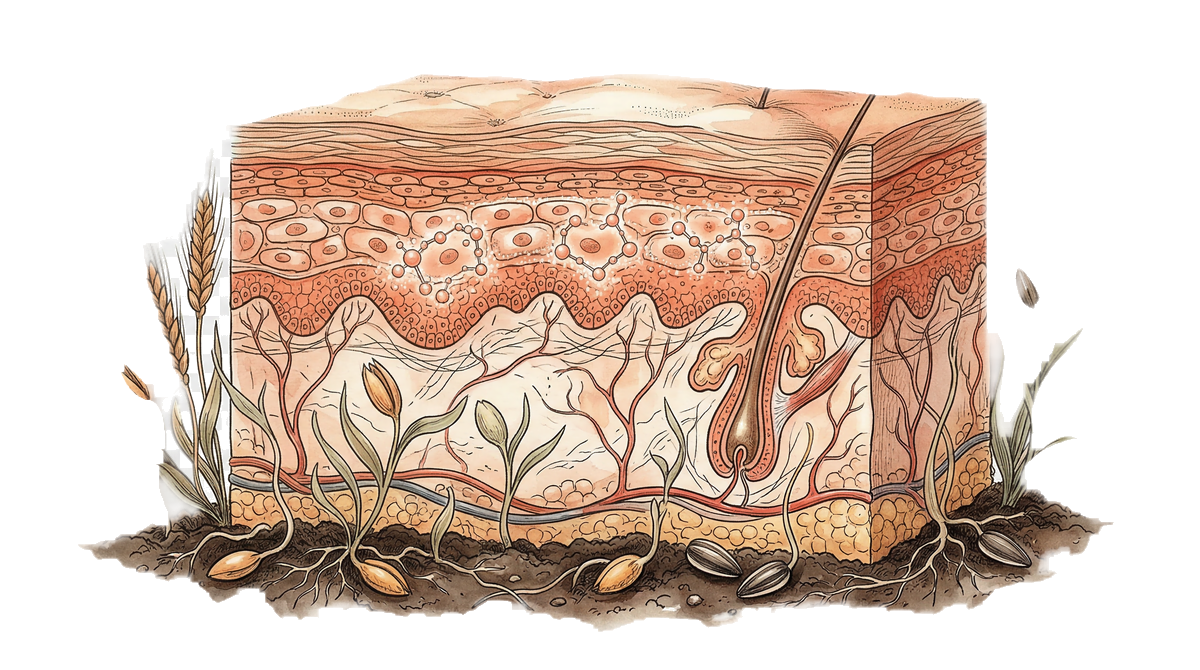
In this article
Your vitamin C serum almost certainly contains vitamin E, and that's not accidental. Vitamin E is your skin's primary fat-soluble antioxidant, embedded in cell membranes where it intercepts lipid peroxyl radicals before they can cascade and destroy the membrane. UV radiation constantly generates reactive oxygen species that attack the polyunsaturated fatty acids in your cell membranes. Vitamin E stops that chain reaction. Lin et al. (2003) showed the combination of 15% vitamin C, 1% vitamin E, and 0.5% ferulic acid quadrupled photoprotection compared to vitamin C alone. The reason they're always paired: vitamin E is consumed neutralizing radicals, and vitamin C regenerates it back to its active form. That recycling loop is the whole point.
The antioxidant that vitamin C cannot work without. Here's why they're always formulated together.
Intercepts lipid peroxyl radicals in cell membranes
Alpha-tocopherol donates a hydrogen atom to lipid peroxyl radicals, stopping the chain reaction that would otherwise destroy the cell membrane. One molecule of vitamin E can neutralize two peroxyl radicals.
Reduces UV-induced erythema and sunburn cells
Topical vitamin E at 2% reduced UV-induced erythema by 42% in a controlled human study. The protection is additive with sunscreen, not a replacement for it.
Vitamin C regenerates oxidized vitamin E
When vitamin E neutralizes a radical, it becomes a tocopheroxyl radical. Ascorbic acid (vitamin C) donates an electron to recycle it back to active alpha-tocopherol. This is why C+E formulations outperform either alone.
Myth: Vitamin E fades scars.
Reality: A randomized, double-blind study by Baumann and Spencer (1999) in Dermatologic Surgery found that topical vitamin E had no effect on surgical scar appearance and caused contact dermatitis in 33% of subjects. The scar-fading claim has no clinical support. Vitamin E's documented benefits are antioxidant protection and moisturizing, not scar treatment.
Clinical benefits
Synergistic photoprotection with vitamin C
A controlled study on porcine skin showed that 15% L-ascorbic acid + 1% alpha-tocopherol + 0.5% ferulic acid provided 4-fold greater protection against UV-induced erythema and sunburn cell formation compared to 15% L-ascorbic acid alone. The addition of vitamin E doubled the protection; ferulic acid doubled it again.
Lin et al., 2005, Journal of the American Academy of Dermatology
Lipid peroxidation prevention
Alpha-tocopherol reduced malondialdehyde (a lipid peroxidation marker) by 56% in UV-irradiated human skin explants. The protection was concentration-dependent, with 1% showing significant effects.
Thiele et al., 2005, Journal of Investigative Dermatology
Moisturizing through lipid barrier support
Tocopherol integrates into the stratum corneum lipid matrix and reduces transepidermal water loss. A 4-week study of 40 subjects showed TEWL reduction of 16% with 2% tocopherol cream compared to vehicle.
Baumann, Cosmetic Dermatology Ch. 34
Anti-inflammatory effect
Alpha-tocopherol inhibits protein kinase C (PKC) activity, reducing inflammatory signaling in UV-exposed keratinocytes. This contributes to the anti-erythema effect observed in photoprotection studies.
Azzi & Stocker, 2000, Progress in Lipid Research
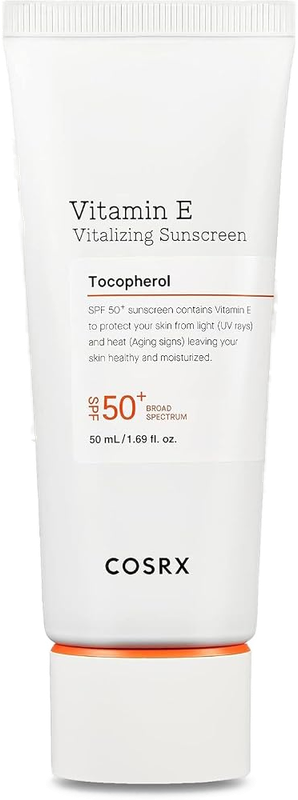
Products with vitamin e
Paid links: Koracle may earn from qualifying purchases. Details.
Skin types
Vitamin E suits dry, normal, and combination skin well. Its oil-soluble nature can feel heavy on oily skin, but at the 0.5–1% found in most C+E serums, this is rarely a real-world issue. Sensitive skin tolerates it well at 1–2%. The contact dermatitis documented by Baumann and Spencer (1999) occurred at high concentrations on wounded skin, not in standard daily use. If you have a nickel allergy, you may have heightened vitamin E sensitivity; patch test first.
Effective concentrations
The standard concentration in vitamin C serums. Enough for the regeneration synergy.
Stand-alone vitamin E serums and moisturizers. Good for dry and mature skin.
Rich oils and balms. Can feel heavy. May cause milia in acne-prone skin if used around the eyes.
Pairs well with
Vitamin C (L-ascorbic acid)
The classic antioxidant pair. Vitamin C regenerates oxidized vitamin E, and together they provide 4x the UV protection of vitamin C alone. This synergy is one of the most well-documented in dermatology.
Ferulic acid
Ferulic acid stabilizes both vitamin C and E in formulation and doubles the photoprotective effect of the C+E combination. The trio (C+E+ferulic) is the gold standard antioxidant formula.
Retinol
Vitamin E protects retinol from oxidative degradation and reduces retinol-induced irritation through its anti-inflammatory properties. Apply vitamin E in the morning and retinol at night.
Avoid combining with
Vitamin K creams
Tocopherol can interfere with vitamin K-dependent coagulation factors. This matters for vitamin K creams used on bruising or rosacea. Separate by 12 hours.
The bottom line
Vitamin E is one of the most well-studied antioxidants in dermatology. Its role in protecting cell membranes from lipid peroxidation is beyond dispute. As a standalone ingredient, it moisturizes and provides mild photoprotection. Its real power is in combination with vitamin C, where it multiplies UV protection and gets regenerated in return. Most people get enough vitamin E from a good vitamin C serum that includes it, rather than needing a separate vitamin E product.
Common questions
Does vitamin E help fade scars?
No. A randomized, double-blind study (Baumann & Spencer, 1999, Dermatologic Surgery) found topical vitamin E had no effect on surgical scar appearance. 33% of participants developed contact dermatitis from the vitamin E application. This is one of the most persistent skincare myths. Vitamin E is an antioxidant, not a scar treatment.
What is the difference between tocopherol and tocopheryl acetate?
Alpha-tocopherol is the active antioxidant form. Tocopheryl acetate is an ester that is more shelf-stable but must be converted by skin esterases to active tocopherol after absorption. Tocopheryl acetate is cheaper and more common in drugstore products. For maximum antioxidant effect, look for alpha-tocopherol in airless packaging.
Can vitamin E cause breakouts?
At high concentrations (5%+) in heavy oil bases, vitamin E can contribute to milia (small cysts) around the eyes and comedones on acne-prone skin. At the 0.5-2% found in most serums, this is rarely an issue. If you are breakout-prone, choose a lightweight serum with vitamin E rather than a vitamin E oil.
Do I need a separate vitamin E product?
Usually not. Most quality vitamin C serums already include vitamin E at 0.5-1% for the synergistic photoprotection effect. A separate vitamin E product is useful for very dry skin that needs the additional moisturizing lipid, or for night use as an occlusive layer.
Find products with Vitamin E matched to your skin.