
Tea Tree Oil for Acne: Evidence-Based Guide
In this article
Tea tree oil (Melaleuca alternifolia) has one of the strongest evidence bases of any botanical ingredient for acne treatment. Bassett et al. (1990) published the study that put it on the map: a randomized trial of 124 patients comparing 5% tea tree oil gel to 5% benzoyl peroxide lotion. Both reduced inflamed and non-inflamed acne lesions significantly after 3 months. Tea tree took longer to start working (onset at week 4 versus week 2 for benzoyl peroxide), but caused fewer side effects: 44% of the benzoyl peroxide group reported dryness, scaling, or burning versus 6% of the tea tree group. The active compound is terpinen-4-ol, a monoterpene that disrupts bacterial cell membranes. Tea tree oil must contain at least 30% terpinen-4-ol and less than 15% 1,8-cineole (which causes irritation) to meet the ISO 4730 standard.
One of the few botanicals that has gone head-to-head with a pharmaceutical in a randomized trial. It held its own.
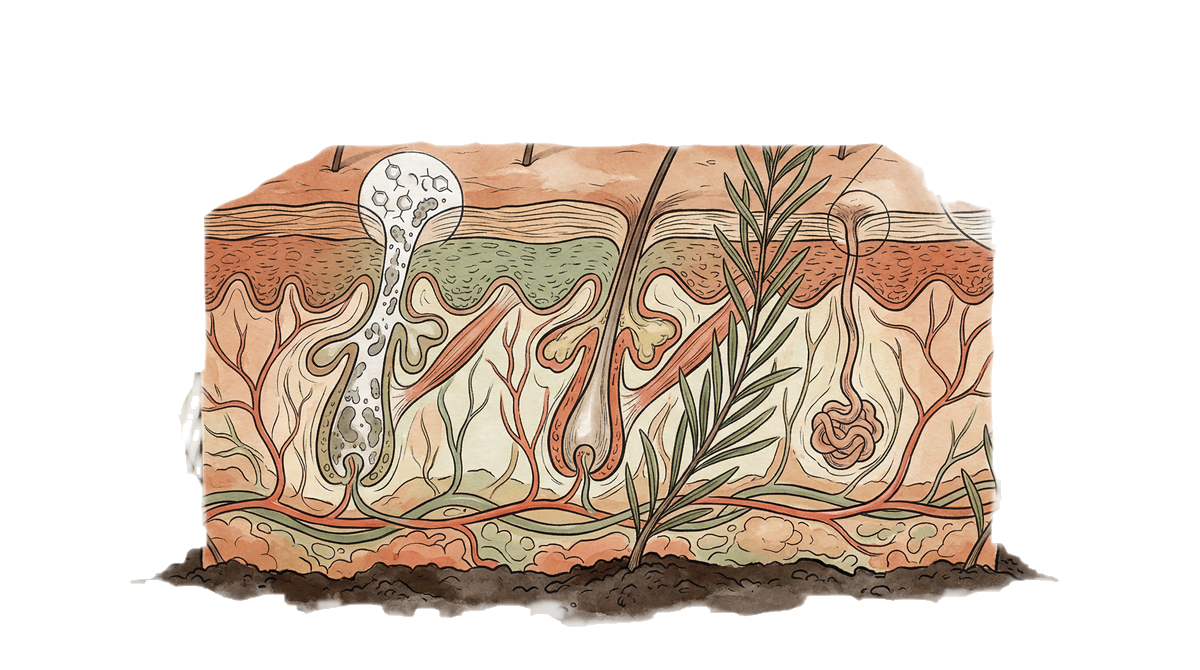
Terpinen-4-ol disrupts P. acnes cell membranes
The monoterpene inserts into bacterial phospholipid bilayers, increasing membrane permeability and causing cell lysis. Active against P. acnes, S. aureus, S. epidermidis, and Malassezia furfur.
5% gel matched 5% benzoyl peroxide in a 124-patient trial
Both reduced total acne lesions significantly over 3 months. Tea tree had slower onset (4 weeks vs. 2 weeks) but dramatically fewer side effects (6% vs. 44% reporting dryness, burning, or scaling).
Anti-inflammatory action beyond antimicrobial
Terpinen-4-ol suppresses TNF-alpha and IL-1beta production in monocytes. This dual antimicrobial plus anti-inflammatory action is why tea tree reduces the redness of inflamed acne, not just the bacterial count.
Myth: You can apply pure (100%) tea tree oil directly to acne spots.
Reality: Undiluted tea tree oil causes contact dermatitis in a significant percentage of users. Hammer et al. (2006) documented allergic contact dermatitis rates increasing with concentration above 25%. The 5% studied by Bassett et al. was formulated in a gel base, not applied neat. Applying pure essential oil to broken skin risks chemical burns and sensitization. Stick to 5% formulations.
Clinical benefits
Acne lesion reduction comparable to benzoyl peroxide
A single-blind randomized trial of 124 patients compared 5% tea tree oil gel to 5% benzoyl peroxide lotion over 3 months. Both significantly reduced inflamed and non-inflamed lesion counts. Tea tree had slower onset but less than one-seventh the side effect rate (6% vs. 44% for dryness, scaling, burning).
Bassett et al., 1990, Medical Journal of Australia
Broad-spectrum antimicrobial activity
Tea tree oil showed bactericidal activity against P. acnes (MIC 0.12% v/v), S. aureus (MIC 0.25% v/v), and antifungal activity against Malassezia furfur (MIC 0.06% v/v). The broad spectrum means it addresses bacterial acne and fungal acne (pityrosporum folliculitis) simultaneously.
Hammer et al., 2003, Journal of Antimicrobial Chemotherapy
Anti-inflammatory cytokine suppression
Terpinen-4-ol at 0.01% (v/v) suppressed TNF-alpha production by 50% and IL-1beta by 35% in LPS-stimulated human monocytes. This is a direct anti-inflammatory effect independent of the antimicrobial action.
Hart et al., 2000, Inflammation Research
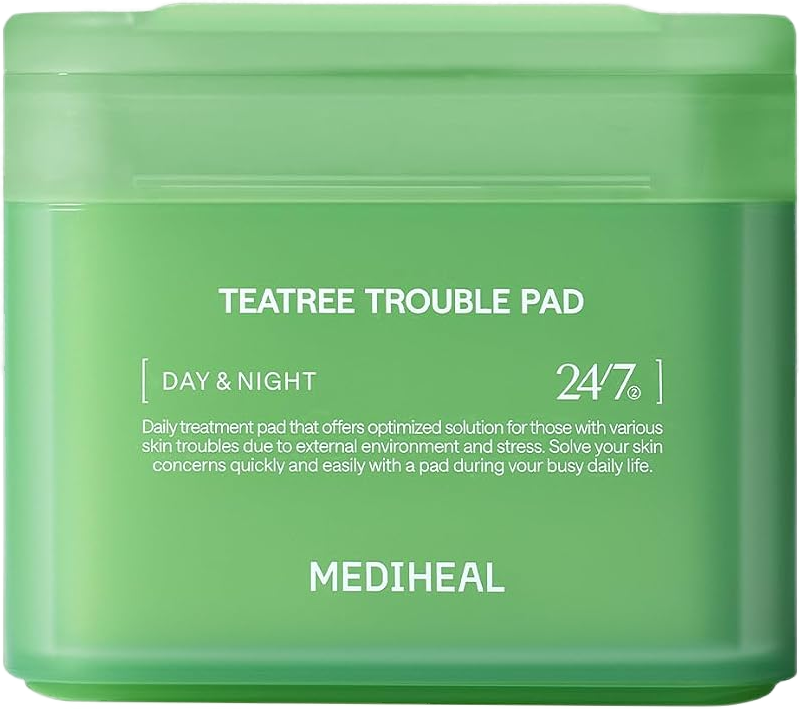
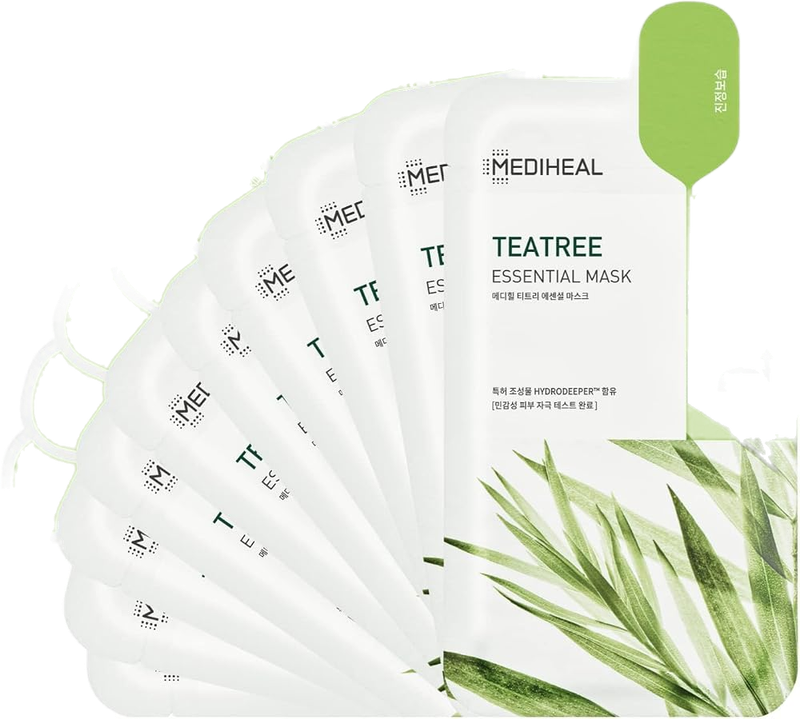
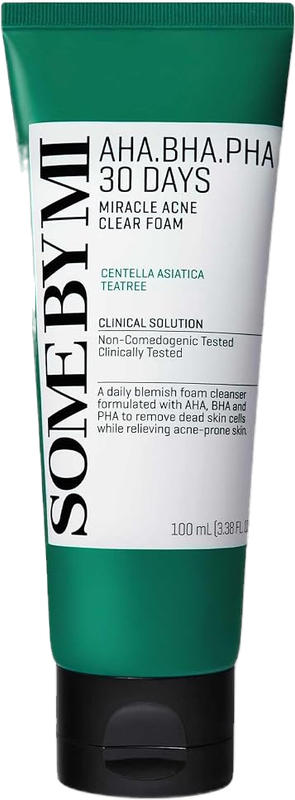
Products with tea tree
Paid links: Koracle may earn from qualifying purchases. Details.
Skin types
Tea tree oil is best for oily and acne-prone skin. It can be drying at higher concentrations, so dry skin should avoid it or limit use to spot treatment. Sensitive skin should start at 1-2% and monitor for contact dermatitis. Combination skin can apply it to the oily T-zone while keeping it away from dry cheeks. Tea tree oil is one of the most common causes of allergic contact dermatitis among essential oils. Patch test before first use.
Effective concentrations
Low enough to use daily without drying. Found in toners and lightweight serums.
The concentration from the Bassett et al. trial. Gels and spot treatments. This is the target for acne-prone skin.
Higher concentrations increase irritation risk. Apply only to active breakouts, not whole face. Avoid on sensitive or eczema-prone skin.
Pairs well with
Niacinamide
Niacinamide regulates sebum production and strengthens the barrier while tea tree handles the antimicrobial work. Niacinamide's anti-inflammatory properties also buffer tea tree's potential for irritation.
Centella asiatica
Centella soothes the inflammation and promotes recovery of post-acne marks while tea tree prevents new breakouts. A calming and prevention combination.
Salicylic acid
BHA unclogs pores (addresses keratinization) while tea tree kills bacteria (addresses P. acnes). They target different acne pathogenesis factors. Use BHA first (lower pH), then tea tree product on top.
Avoid combining with
Benzoyl peroxide (simultaneous application)
Both are antimicrobials targeting P. acnes. Using both at the same time increases drying and irritation without proportional benefit. Alternate: benzoyl peroxide in the morning, tea tree at night.
Retinoids (on same area, same time)
Retinoids thin the epidermis and increase sensitivity. Adding tea tree oil on retinoid-thinned skin raises the risk of contact dermatitis. Use on alternate nights or on different areas of the face.
The bottom line
Tea tree oil at 5% is one of the best-studied natural acne treatments. The Bassett et al. comparison to benzoyl peroxide is a legitimate randomized trial, not folk medicine. It works more slowly but with far fewer side effects. The limitation: tea tree only addresses the bacterial component of acne (P. acnes). It does not unclog pores (retinoids do that) or regulate hormonal sebum (spironolactone does that). For mild to moderate inflammatory acne, 5% tea tree gel is a reasonable first-line topical, especially for people who react badly to benzoyl peroxide.
Common questions
Is tea tree oil as effective as benzoyl peroxide for acne?
At 5%, tea tree oil produced similar acne lesion reduction to 5% benzoyl peroxide over 3 months in the Bassett et al. (1990) trial. The key differences: tea tree takes longer to start working (4 weeks vs. 2 weeks), but causes far fewer side effects (6% vs. 44% reporting irritation). For mild to moderate acne, they are comparable. For severe nodulocystic acne, benzoyl peroxide has more supporting data.
Can tea tree oil cause allergic reactions?
Yes. Tea tree oil is one of the top causes of allergic contact dermatitis among essential oils. Hammer et al. (2006) documented that oxidized tea tree oil (exposed to air and light) has higher sensitization rates than fresh oil. Store tea tree products away from heat and light, and always patch test before applying to the face.
Does tea tree oil help with fungal acne?
Yes. Tea tree oil has documented antifungal activity against Malassezia furfur (MIC 0.06% v/v), the yeast responsible for pityrosporum folliculitis (fungal acne). The 5% concentration effective against bacterial acne is also effective against fungal overgrowth.
Can I use tea tree oil every day?
At 1-5% in a formulated product (gel, toner, serum), yes. Daily use at these concentrations is well tolerated by most skin types. Pure tea tree oil should never be applied daily to the full face. Monitor for cumulative dryness or sensitization over the first 2 weeks.
Find products with Tea Tree matched to your skin.