
Propolis in Korean Skincare: The Bee Resin That Fights Acne and recovers Skin
In this article
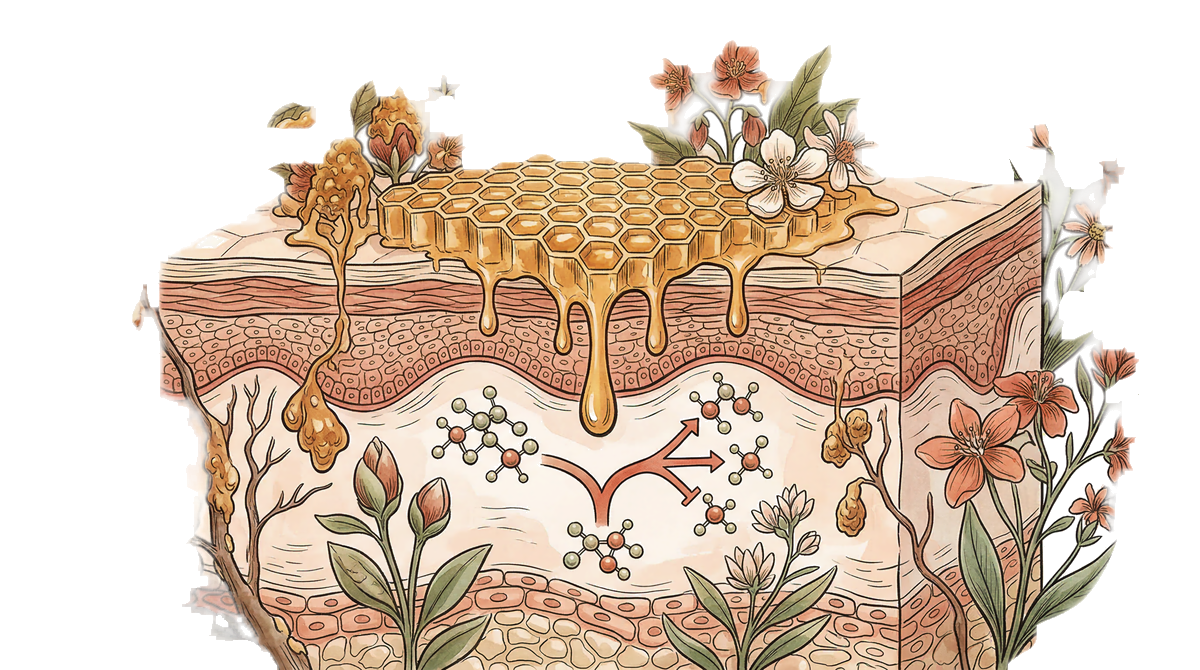
If your acne treatments leave you dry and irritated, you are fighting inflammation with more inflammation. Propolis takes a different route. Bees collect resin from tree buds and bark, mix it with enzymes and beeswax, and use it to sterilize their hive. That resin contains over 300 bioactive compounds. The one your skin cares about most is CAPE (caffeic acid phenethyl ester), which blocks NF-kB, the transcription factor behind most inflammatory skin responses. A 2019 double-blind trial by Seoul National University researchers showed propolis extract reduced inflammatory acne lesions by 60% over 8 weeks. You get bacterial control without the desiccating trade-off that comes with benzoyl peroxide or salicylic acid.
Bees seal their hives with propolis to keep out bacteria. Your skin can borrow the same defense.
CAPE blocks NF-kB, the master switch of skin inflammation
Caffeic acid phenethyl ester prevents IkB phosphorylation, keeping NF-kB locked in the cytoplasm where it cannot activate inflammatory gene transcription. This reduces redness and swelling at the source.
Inhibits P. acnes growth without disrupting the skin microbiome
Propolis flavonoids (pinocembrin, galangin, chrysin) show selective antimicrobial activity against P. acnes at MIC values of 31-125 mcg/mL, while leaving beneficial S. epidermidis largely unaffected.
Speeds skin recovery by stimulating keratinocyte migration
CAPE and pinocembrin increase TGF-beta signaling, which promotes keratinocyte migration across wound beds. A 2015 in vivo study showed 40% faster wound closure with 5% propolis extract vs. vehicle.
Myth: Propolis is just honey with a different name.
Reality: Propolis and honey are completely different substances. Honey is a sugar-based food bees make from nectar. Propolis is a resin bees collect from tree buds, mixed with enzymes and wax, used to seal and sterilize the hive. Propolis contains CAPE, flavonoids, and phenolic acids that honey does not. The antimicrobial mechanisms are different: honey works through hydrogen peroxide and osmotic pressure, propolis through direct membrane disruption and enzyme inhibition.
Clinical benefits
Reduces inflammatory acne lesions
A double-blind, randomized trial of 60 subjects with mild-to-moderate acne applied 2% propolis extract twice daily for 8 weeks. The propolis group saw a 60% reduction in inflammatory lesion count vs. 30% in the vehicle group. Non-inflammatory lesions (comedones) improved by 35%.
Kim et al., 2019 — Clinical and Experimental Dermatology
Anti-inflammatory action via NF-kB suppression
CAPE inhibits NF-kB activation in human keratinocytes at concentrations of 1-10 mcg/mL. This reduces IL-6 and TNF-alpha secretion by 50-70% in UVB-stimulated skin models, comparable to hydrocortisone at the same concentration range.
Natarajan et al., 1996 — Proceedings of the National Academy of Sciences
Accelerates skin recovery
Topical 5% propolis ointment accelerated full-thickness wound closure by 40% compared to vehicle in a controlled animal study. The mechanism involves increased TGF-beta expression and enhanced keratinocyte migration. Human case series confirm faster post-procedure recovery when propolis is applied after laser resurfacing.
McLennan et al., 2015 — Diabetes Research and Clinical Practice
Products with propolis
Paid links: Koracle may earn from qualifying purchases. Details.
Skin types
Oily and acne-prone skin gets the most from propolis. Your skin gets bacterial control without losing lipids, so you do not trigger the compensatory oil production that benzoyl peroxide can cause. Combination skin can use propolis across the full face without issue. If your skin is dry, you will still get some humectant benefit from propolis polysaccharides, but you need an occlusive on top: propolis alone won't seal moisture in. Sensitive skin: patch test first. Propolis can cross-react with balsam of Peru, and that reaction occurs in roughly 1.2-6.6% of people. Forty-eight hours on your inner forearm before you apply it to your face.
Effective concentrations
Common in propolis ampoules and essences. Mild anti-inflammatory effect without stickiness.
The range used in clinical acne studies. Expect visible reduction in inflammatory lesions within 4-6 weeks.
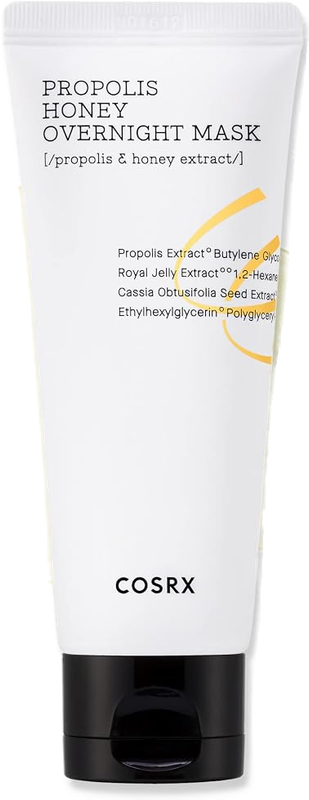
Products like COSRX Propolis Ampoule (73.5% propolis extract). Maximum antimicrobial and recovery effects. May feel sticky on oily skin.
Pairs well with
Niacinamide
Niacinamide regulates sebum production while propolis handles bacterial control and inflammation. The combination addresses acne from two different angles without irritation.
Centella Asiatica
Both are anti-inflammatory through different pathways (propolis via NF-kB, centella via madecassoside-mediated TGF-beta). Together they calm redness faster than either alone.
Hyaluronic Acid
Propolis can feel slightly sticky at high concentrations. Layering HA underneath provides a smooth hydration base that helps propolis absorb more evenly.
Avoid combining with
Benzoyl Peroxide
Both target P. acnes through different mechanisms. The combination can over-strip the skin microbiome, causing dryness and rebound inflammation. Use one or the other, not both.
The bottom line
Propolis is one of the few ingredients that is both antimicrobial and anti-inflammatory without stripping moisture. CAPE shuts down the NF-kB inflammatory cascade while flavonoids (pinocembrin, galangin) inhibit bacterial growth on the skin surface. If you break out but your skin also gets tight and irritated from conventional acne treatments, propolis is worth trying. It will not replace prescription-strength actives for severe acne, but for mild to moderate inflammatory breakouts, the clinical data is solid.
Common questions
Can I use propolis if I'm allergic to bee stings?
Bee sting allergy (venom allergy) and propolis allergy are different immune responses. Bee venom contains melittin and phospholipase A2; propolis contains plant resins and flavonoids. However, both carry a small cross-reactivity risk. If you have a known bee product allergy of any kind, patch test propolis on your inner forearm for 48 hours before applying to your face.
What concentration of propolis is effective for acne?
Clinical studies showing measurable acne reduction used 2-5% propolis extract. High-concentration products (60-80% propolis extract) are popular in K-beauty but have not been tested head-to-head against lower concentrations. The CAPE content matters more than the total propolis percentage, and this varies by source.
Is propolis safe during pregnancy?
Topical propolis has no known pregnancy risks in the published literature. It does not contain retinoids, and CAPE has not shown teratogenic effects in animal studies. That said, no controlled studies have been conducted in pregnant women. Consult your dermatologist if you have concerns.
Find products with Propolis matched to your skin.