
Peptides in Korean Skincare: Signal, Carrier, and Neurotransmitter-Inhibiting Types
In this article
Your skin already uses peptides as support signals: when collagen breaks down, the fragments that result tell your fibroblasts to make more. Synthetic peptides exploit that feedback loop by mimicking those fragments without requiring actual collagen destruction first. Robinson et al. (2005) measured a 117% increase in type I collagen from palmitoyl pentapeptide-4 (Matrixyl) over 12 weeks. But peptides are not one category. There are at least three functional types in skincare: signal peptides that trigger fibroblast firmer-looking skin support, carrier peptides like GHK-Cu that deliver copper to wound sites to activate repair enzymes, and neurotransmitter-inhibiting peptides like acetyl hexapeptide-3 (Argireline) that reduce the muscle micro-contractions behind expression lines.
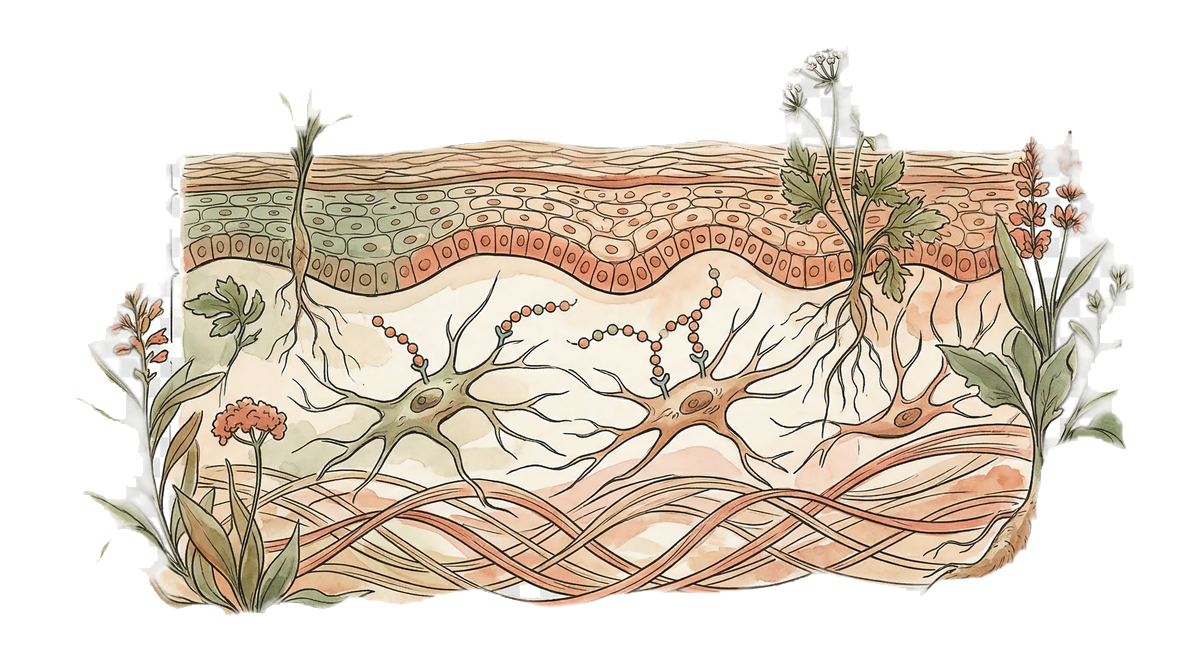
Your skin reads collagen fragments as a repair signal. Peptides exploit that feedback loop.
Signal peptides mimic collagen breakdown products
When collagen degrades, the fragments (matrikines) signal fibroblasts to produce replacement collagen. Synthetic signal peptides like palmitoyl pentapeptide-4 replicate this signal without requiring actual collagen breakdown.
GHK-Cu delivers copper to activate wound repair enzymes
The tripeptide glycyl-L-histidyl-L-lysine binds copper ions and delivers them to tissue, where copper activates superoxide dismutase and lysyl oxidase (needed for collagen cross-linking). GHK-Cu levels decline by 60% between age 20 and 60.
Argireline inhibits SNARE complex formation in muscles
Acetyl hexapeptide-3 competes with SNAP-25 in the SNARE complex, partially blocking acetylcholine release at the neuromuscular junction. The effect is much weaker than botulinum toxin but measurable in split-face studies.
Myth: Peptide serums work like Botox in a bottle.
Reality: Argireline reduces SNARE complex function by about 27% in lab conditions. Botulinum toxin blocks it by nearly 100%. A 10% Argireline study showed 30% wrinkle depth reduction over 30 days, compared to 80-90% with Botox injections. Peptides are a mild relaxing effect, not paralysis. They also do not reach the same depth as injected Botox.
Clinical benefits
firmer-looking skin support stimulation
A 12-week randomized trial of 93 women found palmitoyl pentapeptide-4 (Matrixyl) at 4% increased type I firmer-looking skin support by 117% and type IV collagen by 327% compared to placebo. Wrinkle depth decreased by 36% as measured by profilometry.
Robinson et al., 2005, International Journal of Cosmetic Science
skin recovery and skin support (GHK-Cu)
GHK-Cu at 1-4 ppm accelerated wound closure by 33% in a controlled trial and increased angiogenesis (new blood vessel formation) around the wound site. The copper delivery activates lysyl oxidase, required for collagen and elastin cross-linking.
Pickart et al., 2015, BioMed Research International
Expression wrinkle reduction
Argireline at 10% reduced peri-orbital wrinkle depth by 30% over 30 days in a 10-subject study. The mechanism (SNARE complex disruption) is the same as botulinum toxin but much weaker. The effect reverses when the product is stopped.
Blanes-Mira et al., 2002, International Journal of Cosmetic Science
Skin firmness and elasticity improvement
A combination of palmitoyl tripeptide-1 and palmitoyl tetrapeptide-7 (Matrixyl 3000) improved skin firmness by 23% and elasticity by 15% after 8 weeks in a 30-subject study. The two peptides target both firmer-looking skin support and inflammation reduction.
Sederma clinical study data, 2004
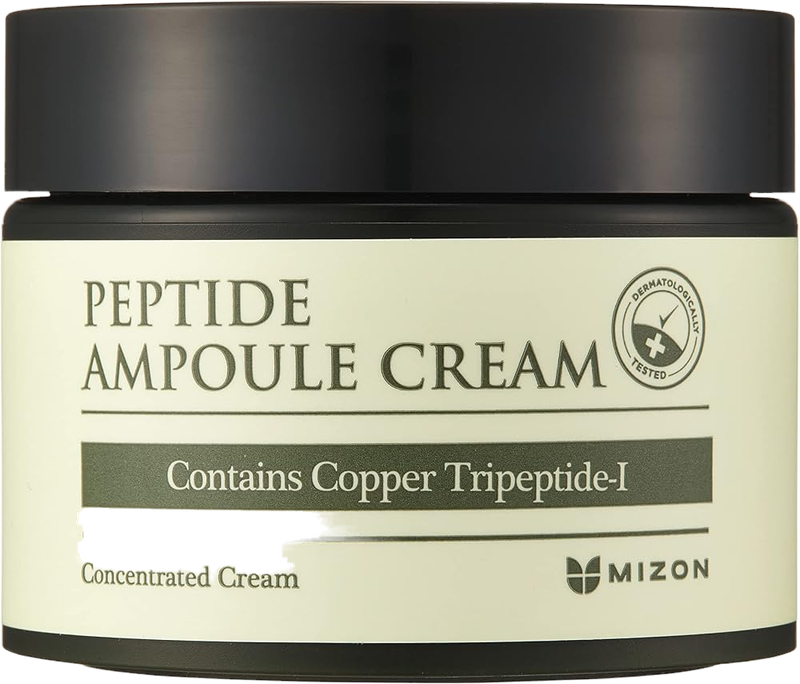
Products with peptides
Paid links: Koracle may earn from qualifying purchases. Details.
Skin types
Peptides work for every skin type. They do not cause photosensitivity, exfoliation, or dryness, which makes them the go-to anti-aging option for sensitive skin that cannot tolerate retinol or vitamin C. One precaution: copper peptide (GHK-Cu) at high concentrations can irritate sensitive or rosacea-prone skin. Stick to the 1–4 ppm range and monitor the first two weeks.
Effective concentrations
Active at very low concentrations. Higher doses can cause irritation due to copper content.
The range used in clinical studies showing collagen increase. Most K-beauty peptide serums target this range.
10% showed 30% wrinkle depth reduction in studies. Below 5% the effect is minimal.
Pairs well with
Hyaluronic acid
HA hydrates the epidermis while peptides signal deeper support processes. No interaction issues. Standard K-beauty layering: HA essence under peptide serum.
Niacinamide
Niacinamide supports barrier ceramide synthesis and reduces inflammation. Peptides support firmer-looking skin. Both are stable at similar pH ranges (5-7) and layer well together.
Ceramides
Ceramides repair the lipid barrier while peptides repair the protein matrix beneath it. Together they address both the structural and barrier components of aging skin.
Avoid combining with
Direct acids (AHA/BHA) in the same step
Low pH (below 3.5) can hydrolyze peptide bonds, breaking them into individual amino acids that lose their signaling function. Apply acids first, wait 20 minutes, then apply peptides. Or use them at different times of day.
Vitamin C (L-ascorbic acid) at low pH
L-ascorbic acid formulations at pH 2.5-3.5 can degrade peptides. Ascorbyl glucoside and magnesium ascorbyl phosphate at pH 5-7 are fine to combine.
The bottom line
Signal peptides (Matrixyl) have the strongest evidence for topical collagen stimulation. Carrier peptides (GHK-Cu) have good wound-recovery data but limited anti-aging trials. Neurotransmitter-inhibiting peptides (Argireline) show modest wrinkle reduction in studies, but the 'Botox in a bottle' marketing overstates the effect. Peptides are gentler than retinoids and work through a different pathway, so they're a good option for people who cannot tolerate retinol. The main limitation is stability: peptides degrade in the presence of strong acids and certain preservatives.
Common questions
Which type of peptide is best for anti-aging?
Signal peptides (Matrixyl, palmitoyl tripeptide-1) have the strongest clinical evidence for collagen stimulation. They directly trigger fibroblasts to produce more collagen and elastin. GHK-Cu is best for skin recovery and overall skin remodeling. Argireline is specific to expression wrinkles only. For general anti-aging, start with a Matrixyl-based serum.
Can I use peptides with retinol?
Yes. Peptides and retinol target collagen through different pathways (matrikine signaling vs. retinoic acid receptor activation). They are additive. Apply retinol first (it needs low pH), wait for absorption, then apply peptide serum. Or use retinol at night and peptides in the morning.
How long do peptides take to show results?
Signal peptides (Matrixyl) show measurable collagen increase at 4 weeks, with visible wrinkle improvement at 8-12 weeks. Argireline shows faster results for expression lines (2-4 weeks) but the effect is smaller. GHK-Cu shows wound-recovery benefits within 1-2 weeks.
Are copper peptides safe for everyday use?
At standard concentrations (1-4 ppm), yes. GHK-Cu is used daily in many K-beauty serums. At higher concentrations, copper can generate free radicals and cause irritation. Follow product directions. If you notice redness or tingling, reduce to every other day.
Do peptides replace retinol?
Not exactly. Retinol has decades of clinical data and stronger proven effects on photodamage, wrinkle depth, and collagen density. Peptides are gentler and work through a different mechanism. For people who cannot tolerate retinol (sensitivity, pregnancy, rosacea), peptides are the best alternative. For maximum anti-aging, use both.
Find products with Peptides matched to your skin.