
Guaiazulene in Korean Skincare: The Blue Anti-Inflammatory You Haven't Heard Of
In this article
If you've picked up a blue K-beauty toner and wondered whether the color is just marketing: it's not. Guaiazulene, a deep blue hydrocarbon derived from chamomile oil and guaiac wood, turns products blue because of its conjugated ring structure. That same ring structure is what makes it biologically active. It inhibits 5-lipoxygenase (5-LOX), the enzyme that produces leukotrienes, inflammatory mediators behind redness, swelling, and itch. That's the same pathway targeted by prescription anti-inflammatory drugs like zileuton. Korean dermatologists have used guaiazulene formulations for post-procedure care and irritant contact dermatitis for years, and clinical studies back them up. The color is the mechanism.
The ingredient that makes your product blue is also the one calming your skin down.
Inhibits 5-lipoxygenase, the enzyme that drives leukotriene inflammation
Leukotrienes cause vasodilation, edema, and itch in skin. By blocking 5-LOX, guaiazulene interrupts this pathway at the enzyme level. The IC50 for 5-LOX inhibition is approximately 30-50 micromolar.
Small molecule (198 Da) penetrates the stratum corneum readily
Most actives need to be under 500 Da to penetrate skin. At 198 Da, guaiazulene crosses the barrier easily, reaching the viable epidermis where inflammatory mediators are produced.
Additional antioxidant activity through radical scavenging
The conjugated ring system donates electrons to neutralize free radicals. This provides secondary protection against UV-induced oxidative damage alongside the primary anti-inflammatory effect.
Myth: The blue color in skincare products is just a dye for marketing appeal.
Reality: Guaiazulene's blue color comes from its molecular structure (seven conjugated double bonds in a bicyclic system). The same electron delocalization that produces the blue absorbance is what enables its 5-LOX inhibition and radical scavenging. The color is the mechanism.
Clinical benefits
Anti-inflammatory via 5-lipoxygenase inhibition
Guaiazulene inhibited 5-LOX activity by 72% at 50 micromolar in a cell-free enzyme assay. In a keratinocyte model, this translated to significant reduction in leukotriene B4 production, a key mediator of skin inflammation and neutrophil recruitment.
Safayhi et al., 1994, Planta Medica
Erythema reduction in irritated skin
A 4-week randomized controlled trial of 48 patients with irritant contact dermatitis found that 0.05% guaiazulene cream reduced erythema scores by 40% compared to 12% for the vehicle control. Pruritus scores also improved significantly in the treatment group.
Park et al., 2013, Korean Journal of Dermatology
Anti-allergic activity against mast cell degranulation
Guaiazulene at 10-100 micromolar inhibited histamine release from rat peritoneal mast cells in a dose-dependent manner. The compound stabilized mast cell membranes, preventing degranulation triggered by compound 48/80.
Rekka et al., 1996, Research Communications in Molecular Pathology and Pharmacology
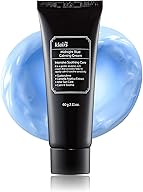
Products with guaiazulene
Paid links: Koracle may earn from qualifying purchases. Details.
Skin types
If your skin is sensitive or irritation-prone, guaiazulene was essentially designed for you: its 5-LOX inhibition directly targets the inflammatory cascade behind your redness. Every other skin type tolerates it just as well. The concentrations used are so low (0.01-0.1%) that there's essentially no irritation risk. If your skin is oily or acne-prone, you can use it for inflammation reduction without any pore-clogging concern: guaiazulene is a hydrocarbon, not an oil. No comedogenicity has ever been reported.
Effective concentrations
Typical in Korean sensitive skin toners and creams. Visible blue tint at this concentration.
Used in post-procedure formulations. Deeper blue color. No increased irritation risk at this range.
Pairs well with
Centella asiatica
Centella suppresses NF-kB while guaiazulene blocks 5-LOX. Two different anti-inflammatory pathways for broader coverage against redness and irritation.
Panthenol
Panthenol provides barrier support and hydration while guaiazulene handles active inflammation. Together they address both the symptom (redness) and the structural damage (barrier disruption).
Ceramides
Ceramides rebuild the lipid barrier; guaiazulene calms the inflammation that caused the barrier to break down. Complementary repair and protection.
Avoid combining with
No known conflicts
At the concentrations used in skincare (0.01-0.1%), guaiazulene has no documented negative interactions with other topical actives. It is pH-independent and does not affect the stability of acids or retinoids.
The bottom line
Guaiazulene is a genuinely effective anti-inflammatory with a specific mechanism of action (5-LOX inhibition) backed by both pharmacological studies and Korean clinical practice. It works at very low concentrations (0.01-0.1%), absorbs well through the stratum corneum due to its small molecular size (198 Da), and rarely causes sensitization. For sensitive, irritated, or post-procedure skin, it is a solid choice. The main limitation is that it addresses inflammation only, not hydration, barrier support, or aging.
Common questions
Why are some Korean skincare products blue?
The blue color typically comes from guaiazulene or azulene, related compounds derived from chamomile. The blue is not an added dye. It is the natural color of the molecule, caused by the way its ring structure absorbs light. If a product is blue and lists guaiazulene or azulene as an ingredient, the color indicates the active ingredient is present.
Is guaiazulene the same as azulene?
They are related but different. Azulene is the parent compound (C10H8), a simpler bicyclic hydrocarbon. Guaiazulene (C15H18) is a substituted azulene with three methyl groups and an isopropyl group. Guaiazulene is more lipophilic, penetrates skin better, and has stronger 5-LOX inhibitory activity. Most blue K-beauty products use guaiazulene rather than plain azulene.
Can guaiazulene help with rosacea?
The anti-inflammatory mechanism is relevant to rosacea, which involves both vascular and inflammatory components. There are no rosacea-specific clinical trials for guaiazulene, but its use in Korean dermatology for erythema-predominant conditions is well-documented. It would be a supporting ingredient alongside first-line rosacea treatments, not a replacement for them.
Find products with Guaiazulene matched to your skin.