
Squalane vs Plant Oils: Which Actually Hydrates Without Clogging

In this article
Your feed keeps telling you facial oils are the fix for dry skin. Rosehip for glow. Jojoba for balance. Squalane for everyone. They all get shelved together under "facial oil," as if the category itself does the work.
It doesn't. Squalane and plant oils behave differently on your skin, and one of them is dramatically less likely to clog your pores.
TL;DR
Squalane mimics your skin's own sebum and rates 0-1 on the comedogenic scale. That makes it the safest oil for oily and acne-prone skin. Plant oils vary widely, and some (coconut, wheat germ) reliably trigger breakouts. Neither actually hydrates on its own. They seal in water that's already there.
Why "facial oil" is doing too much work as a category
The word "oil" hides more than it reveals. Squalane is a saturated hydrocarbon. Rosehip oil is a triglyceride packed with linoleic and linolenic acids. Coconut oil is mostly lauric acid. These molecules do not behave the same way on your face.
Comedogenicity, the tendency to clog pores, comes down to molecular size, fatty acid profile, and how quickly the oil oxidizes on skin. Squalane sits at the low end of every one of those axes. Coconut oil sits near the top.
Calling squalane and coconut oil both "facial oils" is like calling water and vodka both "clear drinks."
How squalane actually works
Squalane is the hydrogenated version of squalene, a lipid your sebaceous glands already produce. Your natural sebum is roughly 12-13% squalene (Pappas, 2009). When you apply squalane topically, your skin recognizes it. It absorbs quickly, spreads thin, and doesn't sit on the surface as a heavy film.
Because it's hydrogenated (the double bonds saturated with hydrogen), it's chemically stable. It won't oxidize into the irritating peroxides that raw squalene forms when exposed to air and UV. That oxidation, by the way, is one of the pathways linked to comedone formation in acne-prone skin (Ottaviani et al., 2010).
Squalane's comedogenic rating is 0-1 across dermatological testing. In plain English: it's one of the least pore-clogging oils you can put on your face.
Paid links: Koracle may earn from qualifying purchases. Details.
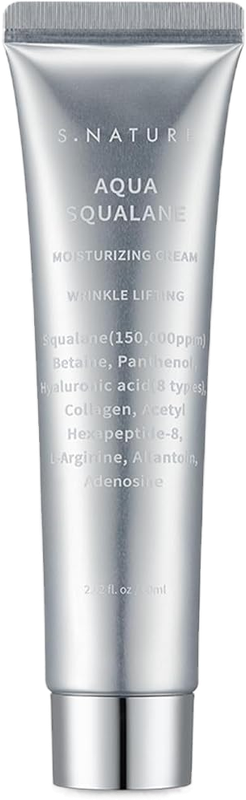
View on Amazon. Amazon shows final price and availability.
Where plant oils actually help and where they don't
Plant oils are not villains. They're just less predictable. Rosehip oil is high in linoleic acid, which acne-prone skin tends to be deficient in (Downing et al., 1986). That's a real mechanism, and it's why rosehip works for some people with breakouts.
Argan and marula sit in the middle: emollient, decent fatty acid profiles, moderate comedogenicity. They soften texture and reduce transepidermal water loss. Fine for dry or normal skin. Riskier if you're already breaking out.
Then there's the bottom of the list. Coconut oil rates a 4 on the comedogenic scale. Wheat germ rates a 5. These reliably trigger breakouts in acne-prone skin, and no amount of "natural" marketing changes the chemistry.
Ratings compiled from Fulton (1989) and Dermatology Research and Practice reviews
The claim that neither one hydrates
Here's the part the "facial oil for dry skin" content leaves out: oils don't hydrate. Hydration means water in the skin. Oils are lipids. They can't add water to a system.
What they do is occlude and emolliate. Occlusion slows down transepidermal water loss, the process where water evaporates from your skin into the air. Emollients smooth the gaps between corneocytes so skin feels softer. Both are useful. Neither is hydration in the technical sense.
A 2003 study in the International Journal of Cosmetic Science showed that occlusive oils applied to dry skin reduced TEWL by up to 30% but did not increase stratum corneum water content unless paired with a humectant (Rawlings & Harding, 2004).
If your skin feels tight after squalane alone, that's why. You need a humectant (hyaluronic acid, glycerin, panthenol) underneath to give the squalane water to trap.
Not sure if your dryness is dehydration or barrier damage?
Answer 9 questions. Koracle checks fit, conflicts, texture, and evidence.
Build my routine →How to actually use squalane
Order matters more than product count. Apply your humectant first on damp skin, then seal with squalane or a squalane-containing cream. That's the sequence that gets you hydration plus barrier protection.
For oily skin, pure squalane oil at night is often enough. For dry or barrier-compromised skin, a squalane-based cream layered over your serums does more work.
Paid links: Koracle may earn from qualifying purchases. Details.
View on Amazon. Amazon shows final price and availability.
The bottom line
If you're oily, combination, or acne-prone and want to try a facial oil, start with squalane. It mimics your own sebum, rates 0-1 for comedogenicity, and stays stable on the shelf. Plant oils can work, but they're a coin toss for breakout-prone skin, and coconut oil isn't a coin toss at all. And remember: no oil hydrates. Layer it over a humectant, or you're just sealing dry skin in place.
Common Questions
Is squalane better than rosehip oil for oily skin?↓
For oily and acne-prone skin, yes. Squalane has a comedogenic rating of 0-1 and mimics your own sebum, while rosehip oil is high in linoleic acid but also contains fatty acids that some breakout-prone skin reacts to. Squalane is the safer starting point.
Can plant oils actually hydrate skin?↓
Not directly. Oils are occlusives and emollients, not humectants. They trap water that's already in your skin and soften the surface, but they don't add water. You still need a humectant like hyaluronic acid or glycerin underneath.
Will squalane clog my pores?↓
Extremely unlikely. Squalane rates 0-1 on the comedogenicity scale, and clinical use in acne-prone patients shows no increase in comedone formation. If you break out from a 'squalane' product, the culprit is usually another ingredient in the formula.
What's the difference between squalene and squalane?↓
Squalene (with an 'e') is the unstable form your skin produces naturally. It oxidizes quickly. Squalane (with an 'a') is the hydrogenated, shelf-stable version used in skincare. Same molecular backbone, much longer shelf life.
Turn what you learned into a routine that fits your skin.
Answer a few questions and Koracle will check formula fit, budget, tolerance, and routine order.
Build my formula-checked routine