
PDRN in Skincare: Repair Signal or Marketing Shortcut?

In this article
You've seen the claim a hundred times this year: salmon DNA serums that "reprogram" your skin, "trigger repair," or "do what injectables do, without the needle." The before-and-afters look great. The price tags are climbing.
Here's the thing PDRN marketing rarely mentions: almost all the strong clinical data is from injections, not creams. That doesn't mean topical PDRN is useless. It means the claim on the bottle and the claim from the study are not the same claim.
TL;DR
Topical PDRN is a decent hydrator and a plausible mild repair signal, but the dramatic clinic results come from injection, not from a serum sitting on your stratum corneum. Use it as a barrier-support layer, not as a retinol replacement.
What PDRN actually is
PDRN stands for polydeoxyribonucleotide, which is a fancy way of saying short fragments of DNA. The cosmetic version is sourced from salmon sperm or trout roe, broken down into chains of roughly 50 to 1,500 base pairs.
Two things make PDRN interesting on paper. It binds to the A2A adenosine receptor on skin cells, which is involved in tissue repair and inflammation control. And the fragments themselves act as a small pool of nucleotides, the raw material your cells use to build new DNA when they divide.
So when a brand says PDRN "supports cellular repair," the mechanism isn't invented. The question is whether enough of it gets where it needs to go when you smooth it on your face.
The clinic data is real, but it's not from a cream
This is where the marketing gets slippery. When a PDRN serum cites "clinical studies," those studies are almost always testing injected PDRN (brand names like Rejuran, Plinest) at the dermal level.
Injected PDRN has solid evidence. A 2022 review in the Journal of Cosmetic Dermatology (Khan et al.) found measurable improvements in skin elasticity, wrinkle depth, and post-acne scarring after a series of intradermal sessions. A 12-week trial showed roughly 15 to 20% improvement in dermal density measured by ultrasound after four sessions of intradermal PDRN.
Topical studies exist but are smaller, often industry-funded, and almost always measure hydration and barrier markers rather than dermal restructuring. The honest read is that topical PDRN behaves like a sophisticated humectant with possible mild signaling activity, not like a needle-free version of the in-office treatment.
The receptor PDRN binds to lives in the dermis. Your serum mostly does not.
Why the molecule struggles to get in
PDRN fragments are large by skincare standards. A typical chain weighs 50 to 1,500 kilodaltons, while ingredients that penetrate well, like niacinamide or panthenol, sit under 1 kDa.
Big molecules can still do useful work on the skin surface. They sit in the stratum corneum, hold water, support the barrier, and can interact with the outermost keratinocytes. That's a real benefit, especially if your skin is compromised or irritated.
What they generally don't do is reach the dermal fibroblasts in meaningful quantity. Some brands try to solve this with liposomes, peptide carriers, or fragmented "c-PDRN" (shorter chains). These can help a little. They don't turn a topical into an injection.
A 2023 split-face study of a topical 0.5% PDRN serum (Park et al., Skin Research and Technology) found 18% improvement in skin hydration and a modest decrease in TEWL after 8 weeks, but no statistically significant change in wrinkle depth versus the vehicle control.
What topical PDRN is actually good at
Once you stop expecting it to act like the injectable, topical PDRN starts to make sense as a category. It's hydrating, it's gentle, and it pairs well with the actives that actually do irritate your skin.
If your barrier is roughed up from retinol, tret, or over-exfoliation, PDRN sits comfortably in the lineup. The receptor activity may be modest at the surface, but the humectant effect is real, and PDRN tends to layer well without pilling.
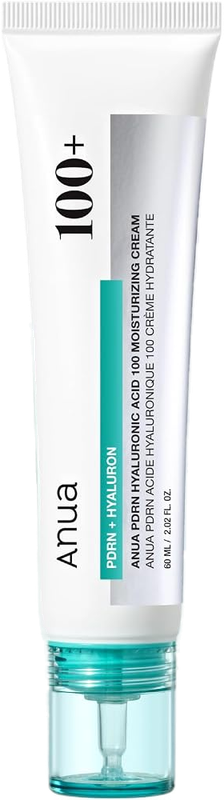
For barrier-focused PDRN creams, the Anua PDRN Hyaluronic Acid 100 Moisturizing Cream pairs PDRN with hyaluronic acid in a format that's actually meant to occlude and seal, which is where topical PDRN earns its keep.
Paid links: Koracle may earn from qualifying purchases. Details.
View on Amazon. Amazon shows final price and availability.
If you want PDRN in a treatment step rather than a moisturizer, the REJURAN Recover c-PDRN Lifting Ampoule uses the shorter c-PDRN chains, which at least argue for slightly better penetration. The price tier matches the marketing, so go in clear-eyed.
Paid links: Koracle may earn from qualifying purchases. Details.
View on Amazon. Amazon shows final price and availability.
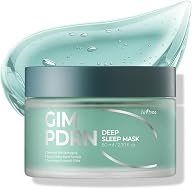
For an overnight format, the IsNtree Gim PDRN Deep Sleep Mask is the easiest place to test whether PDRN does anything noticeable for your skin, since sleep masks extend contact time.
Paid links: Koracle may earn from qualifying purchases. Details.
View on Amazon. Amazon shows final price and availability.
Not sure if PDRN belongs in your routine?
Answer 9 questions. Koracle checks fit, conflicts, texture, and evidence.
Build my routine →How to use it without overpaying
A few rules keep you out of the marketing trap.
Treat PDRN as a barrier and hydration step, not as your anti-aging active. If your routine doesn't already have retinol or a peptide doing the structural work, adding PDRN won't fill that gap.
Layer it after your acids or retinoids, not before. PDRN's calm-and-hydrate profile is most useful when something else has just irritated your skin.
Don't pay luxury prices for early-tier evidence. A reasonable PDRN cream at the $25 to $40 tier is a fair bet on a plausible mechanism. A $120 PDRN serum is paying for the in-clinic story, which your face is not receiving.
The bottom line
Topical PDRN is a real ingredient with a plausible mechanism and modest topical evidence, mostly for hydration and barrier support. The dramatic results in the marketing decks come from intradermal injection, which is a different product, a different delivery, and a different conversation. Use PDRN where it earns its place, layered with hydration after your actives, and keep retinol or peptides as the actual anti-aging workhorse in your routine.
Common Questions
Is topical PDRN the same as the injectable version dermatologists use?↓
No. Injected PDRN reaches the dermis directly and has clinical data behind it. Topical PDRN sits mostly in the upper skin layers, where the molecule is too large to reach the same receptors at the same dose. The mechanism overlaps; the delivery does not.
Is PDRN actually salmon DNA?↓
Yes. Most cosmetic PDRN is sourced from salmon sperm or trout roe DNA, fragmented into shorter polynucleotide chains. The fish source matters less than the molecular weight and concentration in the formula.
Can I use PDRN with retinol or acids?↓
Yes, and the pairing is one of the better arguments for using topical PDRN. PDRN is gentle and hydrating, so it offsets some of the irritation from retinoids or exfoliants. Apply PDRN after the active, not before.
How long until I see results from a PDRN serum or cream?↓
Hydration and a calmer skin feel show up within a few days. Anything firmness or wrinkle related, if it shows up at all topically, takes 8 to 12 weeks of consistent use, and the effect size is modest compared to retinol.
Turn what you learned into a routine that fits your skin.
Answer a few questions and Koracle will check formula fit, budget, tolerance, and routine order.
Build my formula-checked routine