
Niacinamide + Retinol: Can You Actually Layer Them?

In this article
You've probably seen the warning: don't mix niacinamide and retinol. The science doesn't back it up. The real question isn't whether you can use them together. It's how to layer them so you get niacinamide's barrier support without losing retinol's renewal effect.
TL;DR
These two work better together than apart. Niacinamide strengthens the barrier retinol temporarily disrupts, which cuts the irritation that makes most people quit retinol before it has a chance to work. Apply niacinamide first, wait a minute, then apply retinol.
Niacinamide and retinol are one of the best-supported combinations in evidence-based skincare.
Where the "don't mix" myth came from
The warning traces back to a 1960s study on nicotinic acid, a different form of vitamin B3, combined with ascorbic acid at high temperatures. The reaction produced niacin, which can cause flushing. That finding got translated into skincare advice, passed down through forums until it calcified into fact. The problem: topical niacinamide isn't nicotinic acid, and your face isn't a test tube at 60°C.
For retinol specifically, there was never a credible mechanism for antagonism. The two molecules don't compete for the same receptors, and neither degrades the other in formulation. What persisted was a general anxiety about layering actives — not a real interaction.
How each ingredient actually works
When retinol hits your skin, enzymes convert it to retinoic acid. That binds to nuclear retinoid receptors and turns up cell turnover, collagen synthesis, and the breakdown of clumped melanin. It's also why it causes irritation: faster turnover temporarily compromises your barrier.
Paid links: Koracle may earn from qualifying purchases. Details.
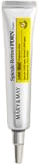
Recently checked. Amazon shows final price and availability.
Niacinamide works on a different axis. Your skin cells convert it into NAD+ and NADP+, two coenzymes involved in ceramide synthesis and cellular energy. Topically, it increases ceramide content, reduces transepidermal water loss, and blocks melanin transfer. Stronger barrier, less redness, more even tone.
These mechanisms don't conflict. They complement each other — which is exactly why formulators started pairing them.
Why the combination reduces retinol irritation
A 2010 study in the Journal of Cosmetic Dermatology found that applying niacinamide before a retinoid reduced transepidermal water loss and visible irritation compared to the retinoid alone. The mechanism: niacinamide reinforces the lipid barrier that retinol temporarily disrupts, so water loss and inflammation stay lower.
This matters practically. Most people quit retinol during the retinization period — the first 4–8 weeks of flaking and sensitivity. Niacinamide shortens and softens that window, which makes long-term adherence much more likely. And retinol results require adherence. You don't see the collagen-building effects until month three or four.
Not sure if your skin can handle retinol yet?
Answer 9 questions. Koracle checks fit, conflicts, texture, and evidence.
Build my routine →The correct layering order
Apply niacinamide first, on clean skin. It's water-soluble and goes on before heavier or oil-based products. Give it about 60 seconds to absorb, then apply retinol on top.
Don't overthink the wait time. The "wait 30 minutes between actives" rule exists for pH-sensitive pairings — vitamin C layered under low-pH acids, for example. Niacinamide is stable across a broad pH range and retinol doesn't require a specific pH to function. Back-to-back application is fine.
Moisturizer goes last. If your retinol is in a cream base, you may not need a separate one on those nights. Or layer a bland occlusive on top to further reduce irritation — a technique sometimes called sandwiching.
Starting slow if you're new to retinol
Even with niacinamide in your routine, retinol benefits from a ramp-up. Start at 0.1–0.25% two nights a week. If your skin tolerates it after two weeks, move to every other night, then nightly. Your skin needs time to adjust its turnover rate without tipping into inflammation.
Niacinamide at 4–5% is the sweet spot for barrier support. Higher concentrations (10%+) don't offer clear additional benefit for most people and can cause their own flushing in sensitive skin.
One thing to avoid: stacking other irritants on the same night as retinol. If you use an AHA or BHA, keep it on alternate evenings. Niacinamide can go either night — it doesn't conflict with either.
A niacinamide serum worth pairing
Paid links: Koracle may earn from qualifying purchases. Details.
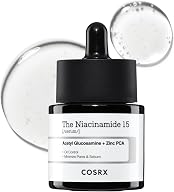
View on Amazon. Amazon shows final price and availability.
The bottom line
Niacinamide and retinol are one of the best-supported combinations in evidence-based skincare. Apply niacinamide first, retinol second, both consistently. The pairing reduces irritation and improves your odds of sticking with retinol long enough to see real results.
Related: Ceramides — Why the Lipid Ratio Matters · Salicylic Acid (BHA) — Pore Clearing Explained · AHA — How Glycolic and Lactic Acids Work · Dry + Anti-Aging Routine · Combination + Anti-Aging Routine
Common Questions
Do I need to wait between applying niacinamide and retinol?↓
No. Apply niacinamide first, let it absorb for about a minute, then apply retinol. There's no chemical reason to wait longer, and back-to-back application is well tolerated in clinical studies.
Will niacinamide cancel out retinol?↓
No — the warning traces back to a misread of a 1960s study on a different compound. Niacinamide and retinol work through completely separate pathways: niacinamide builds your barrier, retinol accelerates cell turnover. Neither deactivates the other.
Can I use a single product that combines both?↓
Yes, and often it's the easiest route. Combination formulas are pH-balanced for both actives and typically include soothing ingredients. Look for retinol concentrations of 0.1–0.3% if you're new to it.
Turn what you learned into a routine that fits your skin.
Answer a few questions and Koracle will check formula fit, budget, tolerance, and routine order.
Build my formula-checked routine