
Does Green Tea Extract Really Prevent Sebum Oxidation?
In this article
Your green tea toner promises "sebum oxidation control," and the TikTok reviewer swore it stopped her blackheads from coming back. The bottle has a soft green gradient. The claim sounds like chemistry. It's the kind of product story that feels true before you check it.
Here's the part the label leaves out: sebum oxidation is a specific chemical reaction, and green tea extract has never been shown to stop it on human skin.
TL;DR
Green tea's EGCG genuinely reduces sebum production and calms inflammation, but there is no clinical evidence that topical green tea prevents the oxidation step that darkens blackheads. Use it for oil control and redness. Use sunscreen for oxidation.
What "sebum oxidation" actually means
Sebum oxidation is not a vague wellness concept. It refers to a specific reaction: squalene, the main lipid in your sebum, reacts with oxygen and UV light to form squalene peroxides. Those peroxides are what turn a clogged pore from pale yellow to grey-black, and they're pro-inflammatory enough to worsen acne lesions (Ottaviani et al., 2006).
So when a product claims to prevent sebum oxidation, it needs to do one of two things. It has to reduce squalene in the sebum you produce, or it has to neutralize the reactive oxygen species that attack squalene once it's on your skin.
Green tea has a plausible story for both. The evidence for either is thinner than the marketing suggests.
What the EGCG research actually shows
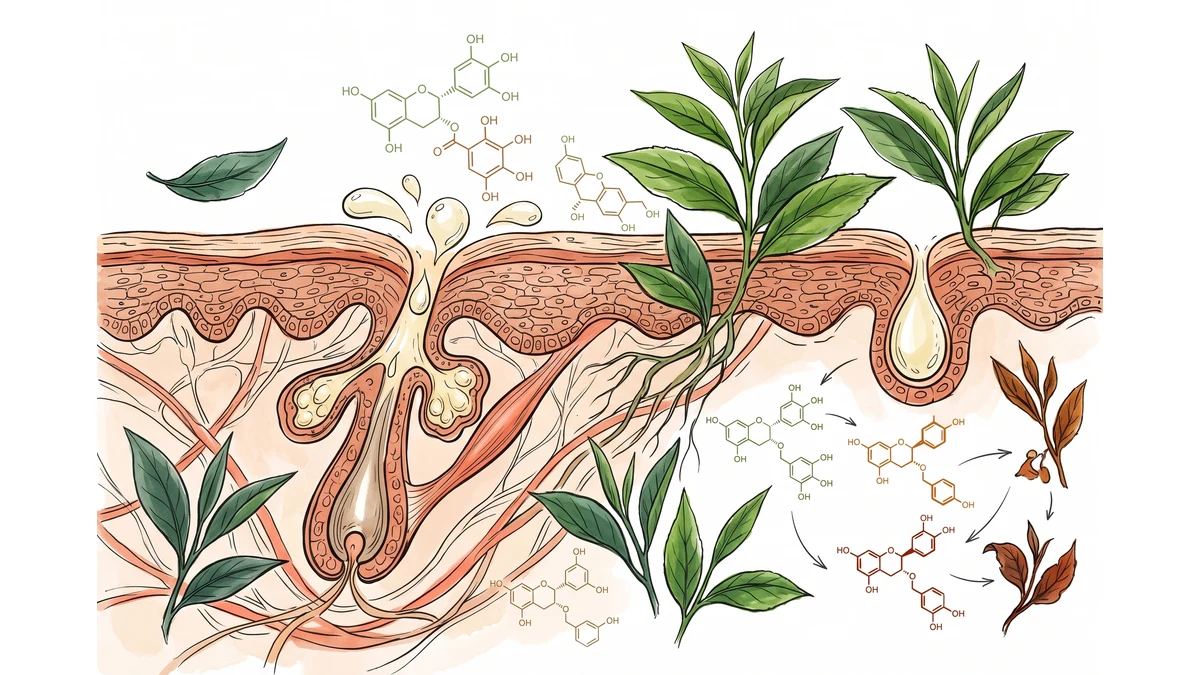
Epigallocatechin gallate, or EGCG, is the polyphenol green tea is famous for. It's a real antioxidant in a test tube, and it does reduce sebum production in a few small human studies. The most cited one used a 3% green tea polyphenon extract twice daily for 8 weeks and showed meaningful reduction in sebum secretion and acne lesion count (Yoon et al., 2013).
That is a study about sebum quantity, not sebum oxidation. The distinction matters. Less sebum means less substrate to oxidize, which is helpful. But no controlled trial has measured squalene peroxide levels on skin before and after topical green tea. The oxidation-prevention claim is an extrapolation from petri-dish antioxidant assays, and skin is not a petri dish.
Less sebum on your face is not the same as unoxidized sebum inside your pores.
Why the pore is a hard place to protect
The oxidation happens where your antioxidants can't reach. Squalene peroxidation is driven by UV, visible light, and ozone hitting sebum at the skin surface and inside the pore opening. To interrupt that reaction, a topical antioxidant needs to sit at the sebum-air interface in a stable, active form for hours.
EGCG oxidizes quickly once exposed to air and light. That's the same reason your matcha browns if you leave it out. Cosmetic formulators know this, which is why most green tea products lean on the leaf water or a low-percentage extract for feel and fragrance rather than a stabilized high-dose active.
"Green tea neutralizes sebum oxidation on contact." Antioxidant activity in vitro does not equal antioxidant protection in a pore. The EGCG in most toners is neither concentrated enough nor stable enough to sit on your skin all day quenching squalene peroxides.
What green tea is actually good for
Green tea earns its place in an oily-skin routine, just not for the reason the label claims. The evidence is solid for two things: mild sebum reduction over weeks of use, and topical anti-inflammatory activity that calms the red halo around active breakouts (Saric et al., 2016).
If your skin runs oily and reactive, a lightweight green tea emulsion is a reasonable morning layer. It hydrates without occluding, and the polyphenols do quiet the low-grade inflammation that keeps breakouts lingering.
Paid links: Koracle may earn from qualifying purchases. Details.
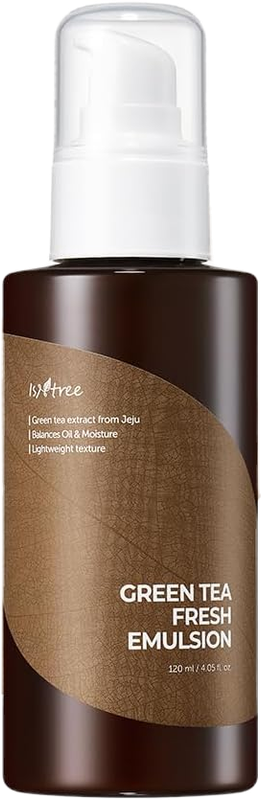
View on Amazon. Amazon shows final price and availability.
Not sure if green tea is the right calming ingredient for your skin?
Answer 9 questions. Koracle checks fit, conflicts, texture, and evidence.
Build my routine →What actually prevents sebum oxidation
Sunscreen. That is the honest answer. UV and visible light are the primary drivers of squalene peroxidation, and the only intervention with consistent human evidence for reducing it is broad-spectrum SPF worn daily (Ekanayake-Mudiyanselage et al., 2003).
If your goal is fewer dark blackheads and less inflammatory acne driven by oxidized lipids, the routine order is:
The bottom line
Green tea extract is a legitimate ingredient with modest clinical support for sebum reduction and inflammation, and it deserves a spot in an oily-skin routine. But the "sebum oxidation prevention" claim is marketing that outran the evidence. If you want to keep pores from darkening, the boring answer wins: clear the pore, then wear sunscreen.
Common Questions
Does green tea extract stop blackheads from forming?↓
Not directly. Blackheads are hardened sebum plugs, and oxidation is only part of why they darken. Green tea's EGCG reduces sebum output and inflammation in small studies, but there is no clinical evidence that topical green tea prevents the oxidation step inside a pore.
How much EGCG does a green tea toner actually deliver?↓
Most K-beauty green tea products list Camellia sinensis leaf extract or leaf water high on the ingredient list, but the standardized EGCG content is rarely disclosed. The clinical study on sebum used a 3% polyphenon extract, which is stronger than most cosmetic formulations.
Should I still use a green tea product?↓
Yes, if you like the texture and your skin runs oily or reactive. Green tea is a legitimate anti-inflammatory and mild sebum modulator. Just do not expect it to keep your pores from oxidizing throughout the day.
What actually prevents sebum oxidation?↓
Sunscreen is the closest thing. UV and visible light drive squalene peroxidation, which is the specific oxidation reaction that darkens sebum. A well-formulated SPF does more for oxidized pores than any antioxidant toner.
Turn what you learned into a routine that fits your skin.
Answer a few questions and Koracle will check formula fit, budget, tolerance, and routine order.
Build my formula-checked routine