
How Ceramides Rebuild the Skin Barrier: The Biochemistry Explained

In this article
If your skin feels tight after cleansing, stings when you apply actives, or has gone from "normal" to "suddenly reactive," the problem is almost always your barrier. And the molecule most likely missing from it is ceramide.
Ceramides make up about 50% of the lipid matrix that holds your stratum corneum together. When that matrix thins out, water escapes and irritants get in. Topical ceramides work because they're the same molecules your skin already uses.
TL;DR
Ceramides are lipid molecules that fill the space between your skin cells, sealing in water and keeping irritants out. Topical ceramides repair a damaged barrier within days, but only when formulated alongside cholesterol and fatty acids in the right ratio. Look for ceramide NP or AP paired with cholesterol, not ceramide-only formulas.
What ceramides actually are
A ceramide is a sphingolipid: a sphingosine backbone bonded to a fatty acid. Your skin produces at least 12 distinct ceramide subtypes, named by structure (NP, AP, EOS, and so on). They're manufactured in the granular layer of your epidermis, packaged into lamellar bodies, and extruded into the space between corneocytes as those cells mature.
The result is the "brick and mortar" model you've probably heard. Corneocytes are the bricks. Ceramides, cholesterol, and free fatty acids are the mortar. Remove the mortar and the wall leaks.
Why the lipid ratio matters more than the ceramide itself
This is where most ceramide marketing misleads you. A serum boasting "five ceramide types" isn't necessarily better than one with a single ceramide paired with cholesterol and palmitic acid.
Man et al. (1996) showed that applying ceramides alone to a damaged barrier actually delayed recovery compared to no treatment. Your skin needs all three lipid classes in roughly a 3:1:1 ratio (ceramides:cholesterol:fatty acids) to assemble functional lamellae. Add only ceramides and you disrupt the stoichiometry.
A follow-up study (Zettersten et al., 1997) confirmed that the physiologic 3:1:1 ratio restored barrier function faster than petrolatum alone in aged skin.
The biochemistry of barrier repair
When your barrier is intact, transepidermal water loss (TEWL) sits around 5 g/m²/hour on the face. Over-exfoliate with AHAs or push retinoids too fast and TEWL can triple. Your skin registers that water loss as a signal and responds by ramping up lipid synthesis in the granular layer.
Topical ceramides short-circuit the wait. Applied in the correct ratio, they're taken up into the lamellar body pathway and extruded alongside endogenous lipids (Mao-Qiang et al., 1995). Within 24 hours you see measurable TEWL reduction. Within two weeks the lamellar structure under electron microscopy looks nearly normal.
This is also why ceramide moisturizers stack so well with retinoids and acids. The actives accelerate turnover. The ceramides replace the lipids that turnover strips out.
Think your barrier might be the issue?
Answer 9 questions. Koracle checks fit, conflicts, texture, and evidence.
Build my routine →Who benefits most
If your skin is dry, sensitive, eczema-prone, or mid-way through a retinoid ramp-up, you'll feel ceramides working within a week. The tight-after-cleansing feeling disappears, and actives stop stinging.
If your skin is oily and acne-prone, ceramides still matter, but your endogenous production is usually adequate. You'll see the biggest benefit after a course of benzoyl peroxide or isotretinoin, both of which suppress barrier lipid synthesis. Chamlin et al. (2002) documented that ceramide-dominant moisturizers reduced flare frequency in atopic dermatitis by 74% over three weeks.
How to read a ceramide label
Look for ceramide NP, AP, EOP, or NS on the INCI list. These are the physiologic subtypes. Next to them, you want cholesterol and at least one fatty acid (palmitic, stearic, linoleic). Phytosphingosine and sphingosine are precursors that your skin can convert, and they count toward the ceramide pool.
Ignore the marketing number. "Five ceramide types" on the front of the bottle tells you nothing about ratio. Check the ingredient list for cholesterol within the first ten ingredients. If it's missing, the formula is underbuilt.
Concentration for ceramides themselves is typically 0.1% to 2%. You don't need more. The rate-limiting step is assembly into lamellae, not raw ceramide supply.
A ceramide moisturizer worth using
Paid links: Koracle may earn from qualifying purchases. Details.
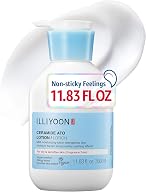
View on Amazon. Amazon shows final price and availability.
The bottom line
Ceramides work because they're identical to the lipids your skin already makes, but they only work when paired with cholesterol and fatty acids in something close to a 3:1:1 ratio. Pick a moisturizer that lists cholesterol alongside ceramide NP or AP. Use it twice daily, and expect visible barrier recovery within two weeks.
Related: Panthenol — The Barrier Ingredient You're Probably Overlooking · Hyaluronic Acid — What It Actually Does · Snail Mucin — Evidence and Use Cases · Dry + Hydration Routine · Sensitive + Hydration Routine
Common Questions
Do topical ceramides actually reach the skin barrier?↓
Yes, when formulated with cholesterol and free fatty acids in the right ratio. Ceramides applied alone have limited penetration, but a 3:1:1 ratio of ceramides, cholesterol, and fatty acids integrates into the stratum corneum lipid lamellae within hours.
Which ceramide type matters most?↓
Ceramide NP (formerly ceramide 3) and ceramide AP are the most abundant in healthy skin and the most commonly used in K-beauty formulas. You don't need to chase rare ceramide subtypes. What matters is the lipid ratio, not the subtype count on the label.
How long until ceramides repair the barrier?↓
Measurable reductions in transepidermal water loss appear within 24 hours of application. Full barrier recovery from damage (over-exfoliation, retinoid irritation) typically takes 2 to 4 weeks of consistent use.
Turn what you learned into a routine that fits your skin.
Answer a few questions and Koracle will check formula fit, budget, tolerance, and routine order.
Build my formula-checked routine