
Bakuchiol as a Retinol Alternative: What the Evidence Actually Shows
In this article
Your feed has been telling you bakuchiol is "nature's retinol." Same results, no irritation, safe in pregnancy, works on sensitive skin. It's the ingredient your dermatologist won't tell you about.
Here's what that claim leaves out: the entire comparison rests on one small trial with 44 people. That doesn't make bakuchiol bad. It makes the marketing louder than the evidence.
TL;DR
Bakuchiol has real anti-aging data, but the "as effective as retinol" claim comes from a single 44-person study. It's a reasonable option if retinol wrecks your skin. It's not a like-for-like swap.
Where the retinol comparison actually comes from
The entire "bakuchiol equals retinol" story traces to one paper. Dhaliwal et al. (2019) ran a 12-week double-blind trial with 44 participants. Half used 0.5% bakuchiol twice daily. Half used 0.5% retinol once daily. Both groups showed similar reductions in wrinkle surface area and hyperpigmentation. The retinol group reported more scaling and stinging.
That's the study. One trial. Forty-four people. A different application frequency between arms.
Compare that to retinol's evidence base: hundreds of trials across four decades, dose-response curves, mechanism mapped down to gene expression, effect sizes replicated across skin types and age groups. Bakuchiol has a handful of studies. Retinol has a library.
Similar in one 44-person study is not the same as equivalent in the evidence base.
How bakuchiol actually works
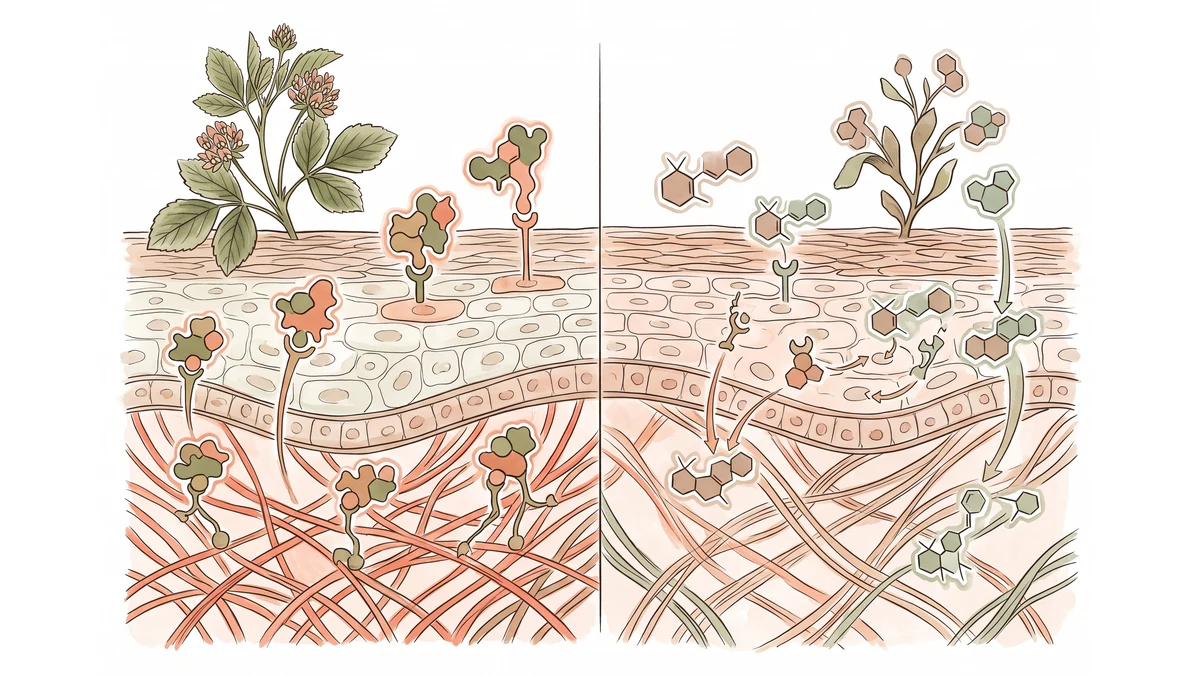
Bakuchiol is not a retinoid. It's a meroterpene extracted from the seeds of Psoralea corylifolia, a plant used in Ayurvedic medicine. Its molecular structure looks nothing like retinol.
But here's the interesting part. Chaudhuri & Bojanowski (2014) showed bakuchiol upregulates similar genes as retinol in cultured skin cells: types I, III, and IV collagen, plus regulators of cell turnover. Different key, same locks. That's why the surface effects look alike.
What bakuchiol doesn't do is bind retinoid receptors. That matters for two reasons. First, it explains the lower irritation profile: the receptor-driven inflammation cascade that gives retinol its sting isn't triggered. Second, it means bakuchiol doesn't get the receptor-mediated benefits either. Deeper wrinkle remodeling, acne clearance, and stratum corneum thinning are downstream of that receptor activity.
What bakuchiol is genuinely good at
Sensitive skin that can't tolerate retinol has a real option now. If you've tried retinol three times and your barrier tapped out each time, bakuchiol is worth the swap. The Dhaliwal trial found significantly less scaling and stinging. A separate 12-week open-label study (Chaudhuri & Bojanowski, 2014) with 17 participants found reductions in wrinkles, fine lines, and photodamage with 1% bakuchiol twice daily and no significant irritation.
Not sure if bakuchiol or retinol fits your skin?
Answer 9 questions. Koracle checks fit, conflicts, texture, and evidence.
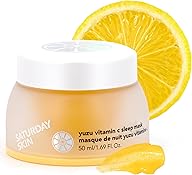
Build my routine →Bakuchiol also plays nicely in a routine. No sun sensitivity concerns like retinol. No documented conflict with vitamin C, acids, or niacinamide. You can layer it morning or night. If your barrier is fragile, that flexibility matters more than a marginal efficacy edge.
Paid links: Koracle may earn from qualifying purchases. Details.
View on Amazon. Amazon shows final price and availability.
Where the claim falls apart
Three specific gaps in the "just as good as retinol" story.
The dosing wasn't parallel. Dhaliwal's bakuchiol group applied twice daily. The retinol group applied once. If you doubled the retinol frequency, we don't know what the comparison would look like. Nobody has run that trial.
The endpoints were surface-level. Wrinkle surface area and pigmentation are visible outcomes, but retinol's deeper claim is dermal remodeling: measurable increases in dermal collagen density on biopsy (Kafi et al., 2007). Bakuchiol hasn't been tested at that depth.
The population was narrow. Dhaliwal's participants were mostly female, mostly aged 40-65, mostly light-to-medium skin tones. Retinol's evidence base spans skin types I-VI and both sexes across age ranges.
The Dhaliwal (2019) trial is the single strongest piece of evidence for bakuchiol as a retinol alternative, and it's a 44-person, 12-week, single-center study with mismatched application frequencies between arms. Treat it as a promising signal, not a settled question.
Who should actually pick bakuchiol
Your skin decides this, not the marketing. Reach for bakuchiol if retinol has repeatedly triggered flaking, stinging, or barrier breakdown you can't work through with a slow ramp. Reach for it if you're pregnant or breastfeeding and want something with anti-aging data that isn't a retinoid. Reach for it if your skin runs sensitive-reactive and every actives introduction feels like a gamble.
Reach for retinol if your skin tolerates it, if you want the deepest evidence base for wrinkles and photoaging, or if you're also treating acne. The receptor binding retinol does is genuinely useful for comedone clearance, and bakuchiol has no comparable data there.
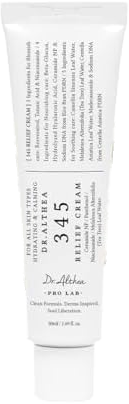
If you're building around a sensitive-skin routine, the moisturizer matters more than the active. A well-formulated barrier cream lets bakuchiol do its work without your skin fighting back.
Paid links: Koracle may earn from qualifying purchases. Details.
View on Amazon. Amazon shows final price and availability.
The bottom line
Bakuchiol has real data behind it, but "nature's retinol" oversells a single small trial. It's a smart pick if retinol doesn't work for your skin, and a reasonable pick during pregnancy. It's not a scientifically equivalent swap for anyone whose skin already tolerates retinol well. Match the active to your skin, not to the claim your feed is repeating.
Common Questions
Is bakuchiol as effective as retinol?↓
In the one head-to-head trial (Dhaliwal et al., 2019), 0.5% bakuchiol matched 0.5% retinol on wrinkle depth and pigmentation after 12 weeks. That's a single 44-person study. Retinol has decades of larger trials behind it. Similar in one study is not equal in the evidence base.
Can I use bakuchiol with retinol together?↓
Yes. They work through different pathways and there's no known conflict. Some formulas pair them so bakuchiol can buffer retinol irritation, but the combination isn't better-studied than retinol alone.
Is bakuchiol safe during pregnancy?↓
Bakuchiol has no known retinoid activity and isn't on standard pregnancy avoidance lists, but there's no pregnancy-specific safety data either. Ask your OB before assuming natural means safe.
How long until I see results from bakuchiol?↓
The main clinical trials showed measurable changes in fine lines and pigmentation at 12 weeks. Expect the same timeline as any retinoid: three months minimum before you judge it.
Turn what you learned into a routine that fits your skin.
Answer a few questions and Koracle will check formula fit, budget, tolerance, and routine order.
Build my formula-checked routine