
Exosomes in Korean Skincare: The Newest Frontier in Cell Signaling for Skin
In this article
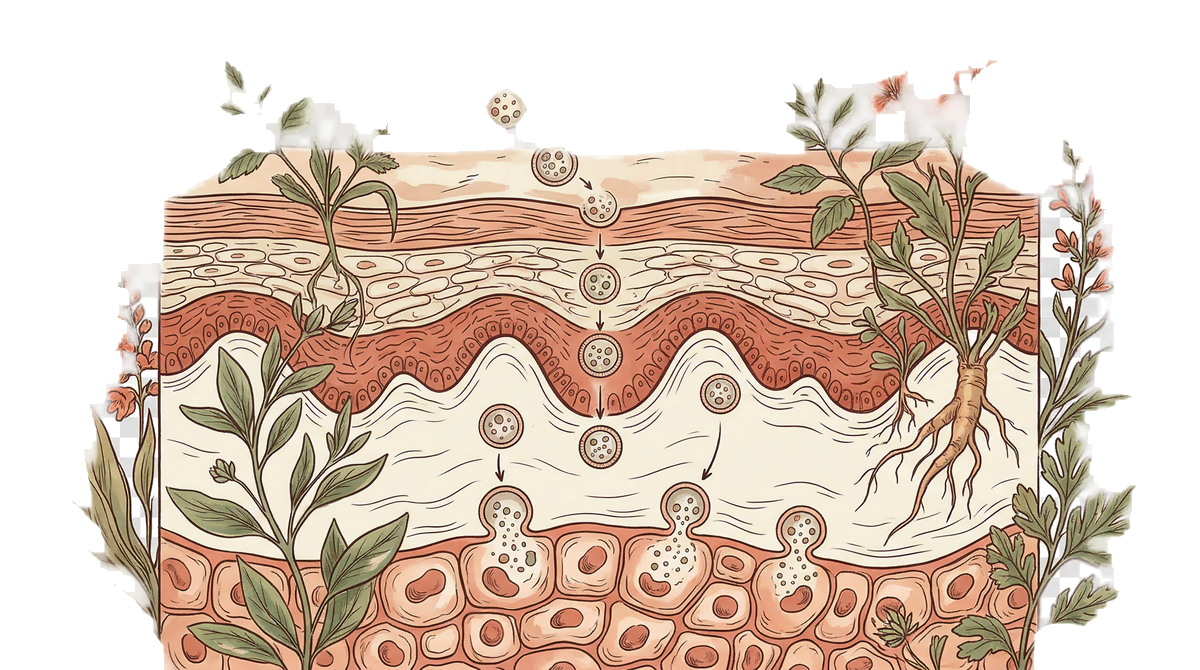
Your cells talk to each other by sending tiny packages of molecular instructions. Those packages are exosomes. At 30-150 nanometers, they are small enough to travel between cells, carrying growth factors, mRNA, microRNA, lipids, and proteins. When an exosome fuses with a target cell, it unloads that cargo directly into the cytoplasm. The target cell reads the instructions and changes its behavior accordingly. In skin recovery research, stem cell-derived exosomes accelerated wound closure by 40-50% in animal models (Zhang et al., 2015). Korean skincare brands were first to commercialize exosomes for cosmetic use, sourcing them from plant stem cells (ginseng, rice, green tea) rather than the human stem cells used in wound care. The delivery mechanism is biologically compelling. The cosmetic evidence is still early. That distinction matters.
Cells talk to each other by sending tiny packages of instructions. Exosomes are those packages.
Nanoscale vesicles (30-150 nm) that carry growth factors, mRNA, and microRNA
Exosomes are membrane-bound vesicles released by cells into the extracellular space. They contain a curated cargo of proteins, lipids, mRNA, and microRNA that reflects the parent cell's identity and state. When they fuse with a target cell, they deliver that cargo directly, altering the target cell's gene expression.
Bypass the stratum corneum through their lipid bilayer structure
Exosomes have a phospholipid bilayer membrane structurally similar to cell membranes and the stratum corneum's lipid lamellae. This allows them to merge with skin lipids and potentially deliver their cargo deeper than most active ingredients can reach. The penetration data is still being validated.
K-beauty sources exosomes from plant stem cells, not human tissue
Korean cosmetic exosomes are primarily derived from ginseng callus, rice bran, or green tea stem cells. These plant-derived exosomes carry different cargo (polyphenols, plant growth factors, plant microRNA) than human stem cell exosomes used in medical settings. The cosmetic efficacy may differ from medical wound-recovery studies.
Myth: Plant exosomes deliver the same benefits as human stem cell exosomes.
Reality: Plant exosomes and human exosomes are fundamentally different in their cargo. Human adipose-derived stem cell exosomes carry human growth factors (EGF, FGF, VEGF), human mRNA, and human microRNA that directly regulate human cell behavior. Plant exosomes carry plant-specific molecules (polyphenols, phytohormones, plant microRNA). Some plant microRNAs may survive and function in human cells (cross-kingdom regulation), but this is a contested area of biology. The skin recovery data from medical literature is from human-derived exosomes, not plant-derived.
Clinical benefits
Accelerated skin recovery in preclinical models
Human adipose-derived stem cell exosomes applied to full-thickness wounds in animal models accelerated wound closure by 40-50% compared to controls. The mechanism involved exosome-delivered miR-21 (which promotes fibroblast migration) and miR-125b (which modulates inflammation). Note: these are medical-grade human exosomes, not cosmetic plant-derived exosomes.
Zhang et al., 2015 — Frontiers in Cell and Developmental Biology
Superior penetration due to lipid bilayer structure
Exosomes' phospholipid bilayer is structurally compatible with the stratum corneum's lipid lamellae. In vitro skin penetration studies using fluorescently labeled exosomes showed detectable penetration to the viable epidermis within 6 hours of application, deeper than most peptides or proteins at equivalent molecular weights.
Shen et al., 2022 — Journal of Controlled Release
Anti-inflammatory cargo reduces UV-induced skin damage
Ginseng-derived exosomes reduced UVB-induced MMP-1 expression by 35% and IL-6 secretion by 40% in human dermal fibroblast cultures. The anti-inflammatory effect was attributed to polyphenol and triterpene cargo specific to ginseng exosomes. This is one of the few studies using plant-derived exosomes relevant to cosmetic application.
Kim et al., 2022 — Journal of Ginseng Research
Products with exosomes
Paid links: Koracle may earn from qualifying purchases. Details.
Skin types
Exosome fusion is theoretically skin-type agnostic: it occurs regardless of your sebum production or barrier state. Post-procedure skin is the most evidence-supported use case. When your barrier is temporarily disrupted after microneedling, laser, or a deep peel, exosomes have direct access to viable cells without needing to cross intact stratum corneum. For intact skin, the penetration data is less settled. If your skin is sensitive, patch test first: the biological activity of exosome cargo is batch-variable and not yet standardized, so reactivity is harder to predict than with established actives.
Effective concentrations
Most K-beauty exosome products do not disclose exosome concentration. Look for products that specify exosome count (e.g., 10 billion per mL) rather than just listing 'exosome' in the ingredients.
The concentration range used in skin recovery research. Cosmetic products may contain significantly less.
Pairs well with
Peptides
Exosomes deliver signaling cargo; peptides activate surface receptors. The combination provides both intracellular and extracellular signaling for firmer-looking skin support.
Centella Asiatica
Centella provides anti-inflammatory triterpenes (madecassoside, asiaticoside) that complement the growth factor and microRNA cargo in exosomes. Good for post-procedure recovery.
Hyaluronic Acid
HA provides the hydration matrix that newly stimulated cells need. Exosomes deliver growth signals; HA delivers the water those cells require to function.
Avoid combining with
Low-pH acids (in the same application step)
Exosomes are lipid bilayer vesicles that can be disrupted by very low pH environments (below 3.5). Apply acid toners first, wait for them to dry, then apply exosome products. This is a formulation stability concern, not a skin interaction.
The bottom line
Exosomes represent a genuinely new approach to skincare delivery. The biological mechanism is well-established in medical research: exosomes deliver functional cargo (growth factors, RNA, proteins) directly into target cells. The skin recovery data from medical-grade exosomes is convincing. The gap is between medical-grade exosomes (from human stem cells, used in clinical wound care) and cosmetic-grade exosomes (from plant cells or bacterial cultures, used in K-beauty products). Plant-derived exosomes carry different cargo than human stem cell exosomes, and the clinical evidence for cosmetic skin improvement is preliminary. This is an ingredient to watch, not one to bet your routine on yet.
Common questions
Are cosmetic exosomes the same as medical-grade exosomes?
No. Medical-grade exosomes are derived from human stem cells (adipose, mesenchymal, umbilical cord) and carry human growth factors and regulatory RNA. Cosmetic exosomes in K-beauty are typically derived from plant stem cells (ginseng, rice, green tea) or bacterial cultures and carry plant-specific cargo. The wound-recovery clinical data is from medical-grade exosomes. Cosmetic exosome efficacy data is still emerging.
Are exosome skincare products regulated?
Exosome skincare falls into a regulatory gray area. In Korea, they are regulated as cosmetics as long as they do not make drug claims. In the US, the FDA has issued warning letters to some exosome therapy clinics (injectable exosomes) but has not specifically addressed topical cosmetic exosomes. Plant-derived exosomes face fewer regulatory concerns than human-derived ones.
How do I know if an exosome product actually contains exosomes?
Look for products that specify: the source organism, the particle count (e.g., 10 billion per mL), and characterization data (size distribution, protein markers). Products that simply list 'exosome' without these details may contain minimal or poorly characterized vesicles. This is a new ingredient category without established quality standards.
Find products with Exosomes matched to your skin.