
Birch Sap in K-Beauty: Hydration Benefits
In this article
In early spring, birch trees push mineral-rich water from their roots up to the branches at high pressure. That xylem fluid, collected before the leaves open, is birch sap. It is mostly water (about 98%), but the remaining 2% carries 17 amino acids, manganese, zinc, magnesium, calcium, potassium, and trace amounts of betulin and betulinic acid. Koreans and Nordic people have consumed it as a spring tonic for generations. K-beauty brands adopted it as a hydration base, and ROUND LAB's Birch Juice line made it mainstream. The evidence base is modest compared to niacinamide or hyaluronic acid. But the mineral profile and amino acid content are real, and for lightweight everyday hydration, your skin will notice the difference from plain water.
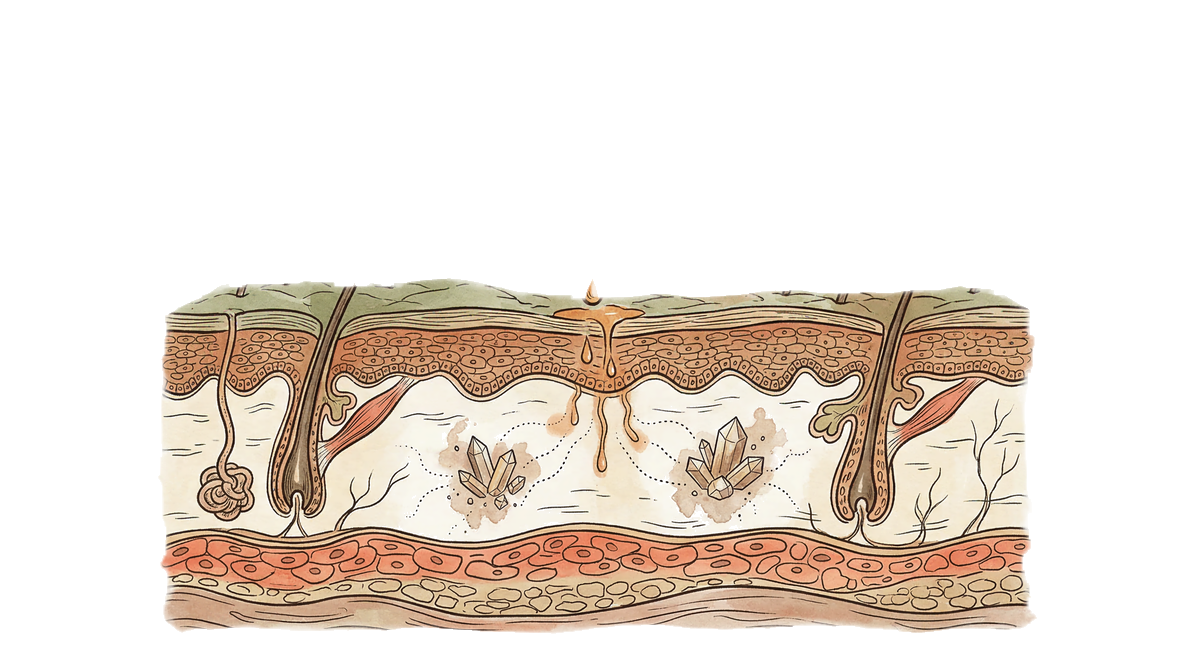
Trees push mineral-rich water from roots to branches every spring. K-beauty bottles it.
Mineral-rich hydration: manganese, zinc, magnesium, calcium
Birch sap's mineral profile includes enzymatic cofactors (Mn, Zn, Mg) that support skin barrier enzymes. The concentrations are low (0.5-2% total dissolved solids), but in a hydrating toner applied daily, the cumulative mineral delivery is meaningful.
Contains betulin and betulinic acid with anti-inflammatory potential
Betulin from birch bark shows anti-inflammatory activity in cell culture studies by inhibiting NF-kB and COX-2. Birch sap contains trace amounts. The concentrations in skincare products are likely too low for significant anti-inflammatory effects, but they may contribute to the soothing properties users report.
17 amino acids provide skin-conditioning humectant effects
The amino acid profile includes proline, glycine, and alanine, which are components of the skin's natural moisturizing factor (NMF). Topical amino acids at these concentrations supplement the NMF and improve stratum corneum hydration.
Myth: Birch sap is a potent active ingredient that treats skin conditions.
Reality: Birch sap is a nutrient-rich hydrator, not a treatment active. Its mineral and amino acid concentrations are real but low (0.5-2% total dissolved solids). It provides gentle hydration and skin conditioning. For treating acne, hyperpigmentation, or aging, you need dedicated actives. Birch sap is the base, not the treatment.
Clinical benefits
Mineral-enriched hydration
Analysis of Betula platyphylla sap shows manganese (2-10 ppm), zinc (0.5-3 ppm), magnesium (10-50 ppm), and calcium (20-80 ppm). These minerals are cofactors for stratum corneum enzymes and antioxidant pathways. Daily application via toners delivers cumulative mineral supplementation to the skin surface.
Kallio et al., 1989 — Journal of Food Science
Amino acid-based skin conditioning
Birch sap contains 17 amino acids that overlap with the skin's NMF composition. A cosmetic ingredient study showed that plant-derived amino acid solutions at 0.1-0.5% improved stratum corneum hydration by 15-20% over 4 weeks, measured by corneometry.
Rawlings & Harding, 2004 — Dermatologic Therapy
Anti-inflammatory potential from betulin compounds
Betulin, a triterpene found in birch bark and trace amounts in birch sap, inhibits NF-kB activation and COX-2 expression in keratinocyte cell culture. A clinical study of 1% betulin emulsion showed faster skin recovery and reduced inflammation in superficial skin wounds compared to vehicle.
Ebeling et al., 2014 — PLoS ONE
Skin types
Oily skin gets the most from birch sap's texture: water-based, no oil, no sticky film. It absorbs immediately and layers easily under everything else. Sensitive skin tolerates it well: low allergenic potential, and the amino acid profile is soothing rather than stimulating. Dry skin can use birch sap as a hydrating layer, but you need an occlusive on top. Birch sap pulls water in; it does not seal it. Combination skin gets lightweight hydration without the heaviness that tends to congest the T-zone.
Effective concentrations
Replaces or supplements purified water. Provides mineral and amino acid delivery alongside hydration.
Products like ROUND LAB Birch Juice (78% birch sap). Maximum mineral delivery, very lightweight texture.
Pairs well with
Hyaluronic Acid
Birch sap's amino acids supplement the NMF while HA provides strong hygroscopic moisture binding. Different hydration mechanisms stack well together.
Centella Asiatica
Both are soothing, hydrating ingredients with anti-inflammatory potential. Birch sap provides the mineral base, centella provides the triterpene actives. Good combination for irritated skin.
Niacinamide
Birch sap's mineral cofactors support the enzymatic pathways that niacinamide enhances (NAD+ synthesis, ceramide production). The combination addresses hydration and barrier support simultaneously.
Avoid combining with
No known conflicts
Birch sap has no pH-dependent activity and no known negative interactions with common skincare ingredients. It is primarily a hydrating vehicle.
The bottom line
Birch sap is a pleasant, lightweight hydrator with genuine mineral and amino acid content. It works well as a water-phase base in hydrating toners and essences. Do not expect it to treat specific skin conditions. Its strength is gentle, mineral-rich hydration that layers well under other actives. It is not a substitute for HA, niacinamide, or ceramides when those ingredients are needed. Think of birch sap as a good vehicle for hydration, not a powerhouse active.
Common questions
Is birch sap the same as birch bark extract?
No. Birch sap is the xylem fluid from inside the trunk, collected in spring. Birch bark extract is made from the outer bark and contains much higher concentrations of betulin and betulinic acid. Bark extract is more of an active ingredient; sap is more of a hydrating base.
Can I use birch sap if I have a birch pollen allergy?
Birch pollen allergy is a response to Bet v 1 protein in birch pollen. Birch sap does not contain Bet v 1 in significant amounts. Cross-reactivity is theoretically possible but clinically rare for topical application. Patch test if you have severe birch pollen allergy.
Does birch sap do anything that plain water doesn't?
Yes, but the difference is subtle. Birch sap delivers minerals and amino acids that purified water lacks. These compounds supplement the skin's NMF and provide cofactors for barrier enzymes. It is a better hydration vehicle than plain water, but not dramatically so.
Find products with Birch Sap matched to your skin.