
Beta-Glucan: Hydration, recovery & Calm Skin
In this article
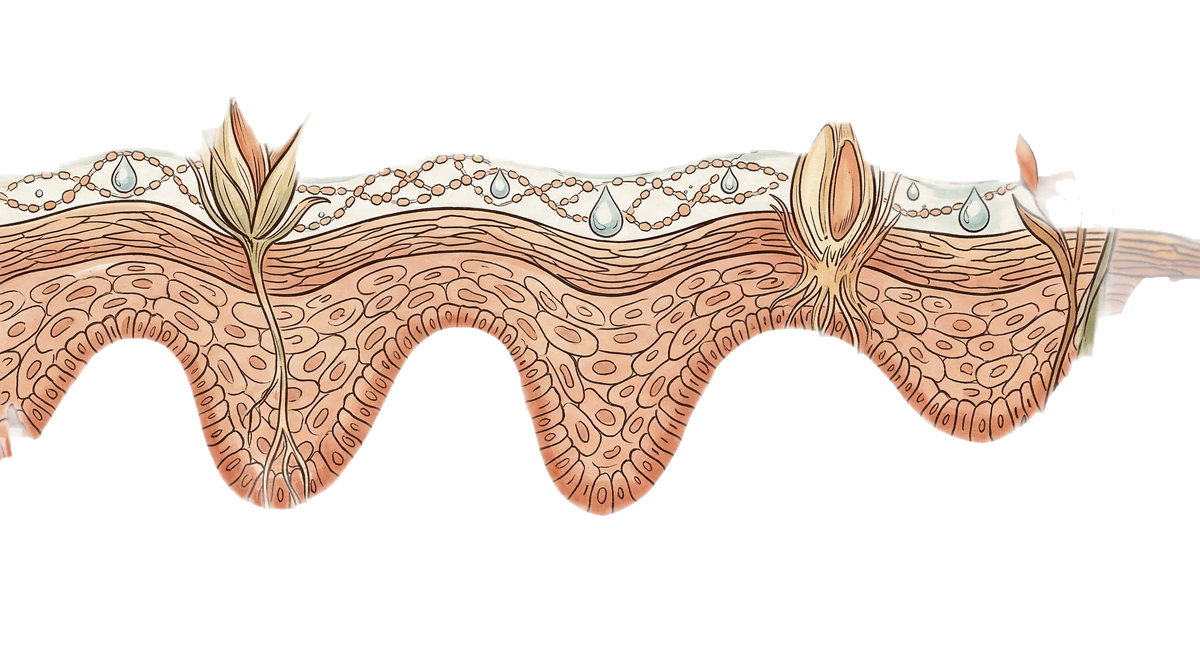
Beta-glucan does not get the credit it deserves, probably because its mechanism is harder to explain than hyaluronic acid's. But Pillai et al. (2005) showed that 0.1% beta-glucan cream matched 0.1% hyaluronic acid cream for skin hydration at 8 hours post-application, corneometry reading for corneometry reading. The hydration is real. What HA cannot do (but beta-glucan can) is activate your Langerhans cells through the Dectin-1 receptor. Yeast-derived beta-1,3-glucan binds that pattern recognition receptor, triggering phagocytosis, cytokine release, and T-cell activation. Your skin goes into recovery mode. That immune modulation is why beta-glucan shows up in both everyday hydration toners and post-procedure recovery creams. It earns its place in both.
It hydrates like hyaluronic acid. It recovers like centella. Meet beta-glucan.
Matches hyaluronic acid for hydration at the same concentration
Pillai et al. (2005) compared 0.1% beta-glucan cream to 0.1% HA cream in a 20-subject study. Corneometry readings at 2, 4, and 8 hours post-application showed no statistically significant difference in skin hydration between the two.
Activates Langerhans cells and macrophages via Dectin-1 receptor
Beta-1,3-glucan from yeast binds the Dectin-1 pattern recognition receptor on Langerhans cells, triggering phagocytosis, cytokine release, and T-cell activation. This immune boost accelerates skin recovery and pathogen defense in the skin.
Film-forming polysaccharide reduces TEWL and soothes irritation
The large beta-glucan molecules that cannot penetrate the stratum corneum form a moisture-retaining film on the surface. This film reduces TEWL by 15-25% and provides immediate soothing relief for irritated skin through physical barrier protection.
Myth: Beta-glucan is basically just another name for hyaluronic acid.
Reality: They both hydrate, but through different mechanisms. Hyaluronic acid is a glycosaminoglycan that holds 1,000x its weight in water through carboxyl and hydroxyl group hydration. Beta-glucan is a polysaccharide that hydrates through film formation and hydrogen bonding, plus activates Langerhans cells via Dectin-1. HA is a pure humectant; beta-glucan is a humectant with immune-modulating activity. They are complementary, not interchangeable.
Clinical benefits
Hydration comparable to hyaluronic acid
A controlled study compared 0.1% beta-glucan cream to 0.1% hyaluronic acid cream in 20 subjects. Corneometry measurements at 2, 4, and 8 hours post-application showed equivalent hydration levels between the two ingredients. Beta-glucan achieved this through film-formation rather than HA's hygroscopic mechanism.
Pillai et al., 2005 — International Journal of Cosmetic Science
Accelerates skin recovery via Langerhans cell activation
Yeast-derived beta-1,3-glucan activates Langerhans cells through the Dectin-1 receptor, triggering a wound-recovery cascade. A clinical study of surgical wounds treated with beta-glucan gel showed 30% faster re-epithelialization compared to standard wound care over 14 days.
Zykova et al., 2014 — BioMed Research International
Anti-inflammatory and soothing
Oat-derived beta-glucan at 0.5% reduced UV-induced erythema by 25% in a 20-subject study, measured by chromameter 24 hours post-UV exposure. The mechanism involves both the physical barrier film reducing UV penetration and the immune modulation dampening the inflammatory response.
Baumann, Cosmetic Dermatology Ch. 35 — Oatmeal
Products with beta-glucan
Paid links: Koracle may earn from qualifying purchases. Details.

Skin types
Every skin type tolerates beta-glucan. Oily skin gets lightweight gel-based hydration that absorbs cleanly without a greasy film. Dry skin gets film-forming moisture retention that stacks well under heavier emollients. Sensitive skin gets the anti-inflammatory and soothing effect without any irritation risk. If you have recently had laser, a chemical peel, or microneedling, beta-glucan is one of the best things you can apply: the Langerhans cell activation speeds re-epithelialization, and the film-forming properties protect the disrupted barrier while it recovers. It is non-comedogenic with no known irritation potential.
Effective concentrations
Common in multi-ingredient serums. Provides background hydration and mild soothing.
The concentration range where hydration equals HA and Langerhans cell activation begins. Effective for post-procedure recovery.
Maximum film-forming and immune-modulating effect. Common in dedicated calming or recovery products.
Pairs well with
Hyaluronic Acid
Different hydration mechanisms (film-formation vs. hygroscopic water binding). Layering both provides superior moisture retention than either alone.
Centella Asiatica
Beta-glucan activates Langerhans cells for immune recovery; centella stimulates fibroblasts via TGF-beta. The combination accelerates wound repair through two complementary pathways.
Niacinamide
Niacinamide strengthens the lipid barrier (ceramide synthesis) while beta-glucan provides surface hydration and immune support. Good combination for barrier support routines.
Avoid combining with
No known conflicts
Beta-glucan is compatible with all common skincare ingredients including acids, retinoids, vitamin C, and other actives. It has no pH-dependent activity and no documented negative interactions.
The bottom line
Beta-glucan is an underrated ingredient that provides hydration comparable to hyaluronic acid plus immune activation that HA cannot offer. The dual mechanism (humectant + Dectin-1 activation) makes it particularly useful for skin that needs both moisture and recovery support: post-procedure skin, barrier-compromised skin, or skin recovering from irritation. It is well-tolerated across all skin types, non-comedogenic, and has no known interactions with other actives. The main limitation is that most K-beauty products use oat-derived beta-glucan (film-forming, hydrating) rather than yeast-derived beta-1,3-glucan (immune-activating), so check the source if skin recovery is your priority.
Common questions
Does the source of beta-glucan matter?
Yes. Yeast-derived beta-1,3-glucan has the strongest Dectin-1 receptor activation (immune/skin recovery). Oat-derived beta-1,3/1,4-glucan is best for hydration and anti-inflammatory film formation. Mushroom-derived beta-1,3/1,6-glucan falls between the two. If skin recovery or immune support is your goal, look specifically for yeast-derived sources.
Can I use beta-glucan after a chemical peel?
Beta-glucan is one of the best post-procedure ingredients. Its film-forming properties protect compromised skin, and its Langerhans cell activation speeds re-epithelialization. Wait until any raw or oozing areas have stopped (typically 24-48 hours) before applying.
Is beta-glucan the same as colloidal oatmeal?
Colloidal oatmeal contains beta-glucan as one of its active components, along with avenanthramides, lipids, proteins, and other compounds. Pure beta-glucan is isolated from the oat (or yeast, or mushroom) and delivers a concentrated version of one specific polysaccharide. Colloidal oatmeal is a broader ingredient with more diverse but less concentrated activity.
Find products with Beta-Glucan matched to your skin.