
Artemisia (Mugwort) in Korean Skincare: The Traditional Calming Herb Backed by Science
In this article
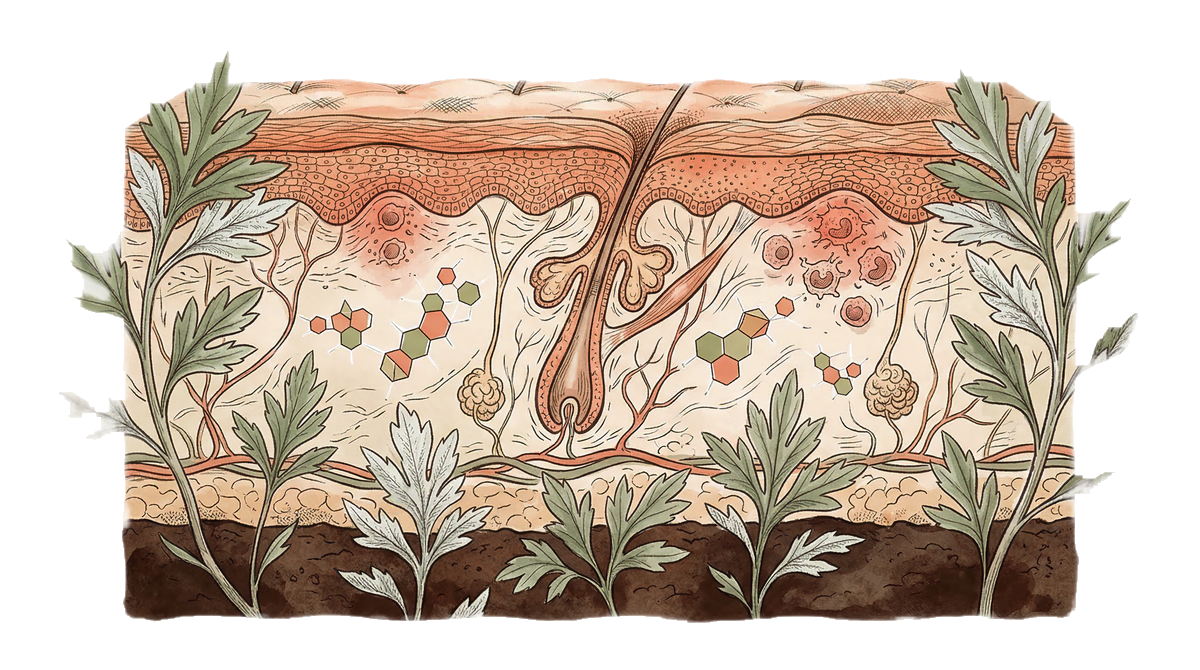
Korean grandmothers have been putting mugwort on irritated skin for centuries. Researchers finally worked out why it helps. Artemisia princeps (ssuk) contains two active flavonoids: eupatilin and jaceosidin. Eupatilin blocks NF-kB by preventing IkB-alpha degradation, which cuts off the inflammatory cascade before cytokines are released. It also suppresses iNOS, reducing the nitric oxide that amplifies oxidative damage. Jaceosidin targets mast cells specifically, blocking the ERK/MAPK pathway and reducing histamine release, which is why artemisia calms the kind of flushing, reactive redness that other anti-inflammatory ingredients miss. Bae et al. (2017) tested 1% artemisia extract on subjects with compromised barriers for 4 weeks: TEWL fell 28%, erythema scores dropped 35%. The traditional use and the pharmacology now point in the same direction.
Korean grandmothers put mugwort on irritated skin for centuries. Researchers finally figured out why it works.
Eupatilin blocks NF-kB and iNOS, the two main inflammatory drivers
Eupatilin prevents IkB-alpha degradation, keeping NF-kB inactive. It also suppresses inducible nitric oxide synthase (iNOS), reducing the nitric oxide that amplifies inflammatory damage in UV-exposed and barrier-compromised skin.
Jaceosidin calms mast cell activation and histamine release
Jaceosidin blocks the ERK/MAPK signaling pathway in mast cells, reducing degranulation and histamine release. This mechanism directly addresses the redness and itching associated with reactive, sensitive skin.
28% TEWL reduction in barrier-damaged skin over 4 weeks
Bae et al. showed that topical artemisia extract strengthened compromised barriers, measured by transepidermal water loss. The barrier support effect was comparable to a 2% ceramide formulation tested in the same study protocol.
Myth: Artemisia and centella do the same thing, so you only need one.
Reality: Both are anti-inflammatory, but through different mechanisms. Centella's madecassoside and asiaticoside work primarily through TGF-beta upregulation (skin recovery and collagen). Artemisia's eupatilin and jaceosidin target NF-kB and ERK/MAPK (inflammation suppression and mast cell calming). The overlap is partial. Using both can address a wider range of inflammatory pathways than either alone.
Clinical benefits
Reduces erythema and TEWL in compromised skin
A 4-week study of 30 subjects with compromised skin barriers applied 1% Artemisia princeps extract twice daily. Erythema scores decreased by 35% and transepidermal water loss decreased by 28% compared to vehicle. The barrier support was attributed to eupatilin's suppression of inflammatory mediators that disrupt lipid lamellae.
Bae et al., 2017 — Journal of Ethnopharmacology
Anti-inflammatory via NF-kB and iNOS suppression
Eupatilin at 10-50 mcM suppressed NF-kB activation by 60-80% in UVB-stimulated keratinocytes and reduced iNOS-derived nitric oxide by 70%. These effects were dose-dependent and comparable to hydrocortisone at equivalent concentrations in the same cell model.
Kim et al., 2015 — Journal of Dermatological Science
Mast cell calming via ERK/MAPK pathway inhibition
Jaceosidin at 25-100 mcM inhibited compound 48/80-induced mast cell degranulation by 40-65% in a dose-dependent manner. Histamine release was reduced by 55% at 50 mcM. This mechanism directly addresses the reactive redness and itching seen in sensitive skin types.
Kim et al., 2008 — Biological and Pharmaceutical Bulletin
Products with artemisia
Paid links: Koracle may earn from qualifying purchases. Details.
Skin types
Sensitive and reactive skin gets the most from artemisia. The dual NF-kB and mast cell mechanism addresses more of what makes your skin flare than most calming ingredients do. Rosacea-prone skin responds especially well to the histamine reduction from jaceosidin. Dry and barrier-compromised skin benefits from the TEWL reduction: the Bae et al. data showed a 28% drop over four weeks, comparable to a 2% ceramide formulation. Oily skin can use it without issue; the extract is water-based and non-comedogenic. One caution: artemisia is in the Asteraceae family, which also includes ragweed, chamomile, and chrysanthemum. If you have confirmed sensitivities to any of these, patch test before applying artemisia to your face.
Effective concentrations
Common as a secondary ingredient in soothing toners and essences. Provides mild anti-inflammatory activity.
The range used in clinical studies. Look for products listing Artemisia princeps extract in the first 5-7 ingredients.
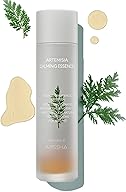
Products like I'm From Mugwort Essence (100% mugwort extract). Maximum calming effect. Well-tolerated even at these levels.
Pairs well with
Centella Asiatica
Different anti-inflammatory pathways (artemisia: NF-kB/ERK, centella: TGF-beta). Together they cover a broader range of inflammatory mediators than either alone.
Panthenol
Panthenol (provitamin B5) promotes skin recovery and barrier support through a different mechanism (lipid synthesis). Combined with artemisia's inflammation suppression, you get calming + repair.
Ceramides
Artemisia reduces the inflammation that disrupts lipid lamellae; ceramides directly rebuild them. The combination addresses barrier damage from both angles.
Avoid combining with
No known conflicts with common skincare ingredients
Artemisia extract has no pH-dependent activity and no documented negative interactions. It is compatible with acids, retinoids, and other actives.
The bottom line
Artemisia is a legitimate calming ingredient with identified active compounds (eupatilin, jaceosidin) and a defined mechanism (NF-kB inhibition, ERK pathway blockade). The clinical data is limited to a few studies, but the anti-inflammatory effects are consistent with the traditional use and the in vitro pharmacology. It is best used for redness-prone and barrier-compromised skin. It will not treat acne, reduce wrinkles, or fade hyperpigmentation. Its lane is calming and barrier support, and it does that well.
Common questions
Is artemisia the same as wormwood?
Sort of. Wormwood is Artemisia absinthium (the ingredient in absinthe). Korean mugwort is Artemisia princeps. They are in the same genus but are different species with different chemical profiles. K-beauty uses A. princeps, which has higher eupatilin content and a longer history of topical use in Korean traditional medicine.
Can I use artemisia with retinol?
Yes. Artemisia's anti-inflammatory activity can help manage the irritation that retinol causes during the adjustment period. Using an artemisia essence before or after retinol is a common K-beauty pairing.
I'm allergic to ragweed. Can I use artemisia?
Ragweed and artemisia are both in the Asteraceae family, and cross-reactivity is documented. If you have a confirmed ragweed allergy, patch test artemisia products on your inner forearm for 48-72 hours before facial application. Discontinue if you experience redness, itching, or swelling.
Find products with Artemisia (Mugwort) matched to your skin.