
Aloe Vera for Skin: What the Evidence Shows
In this article
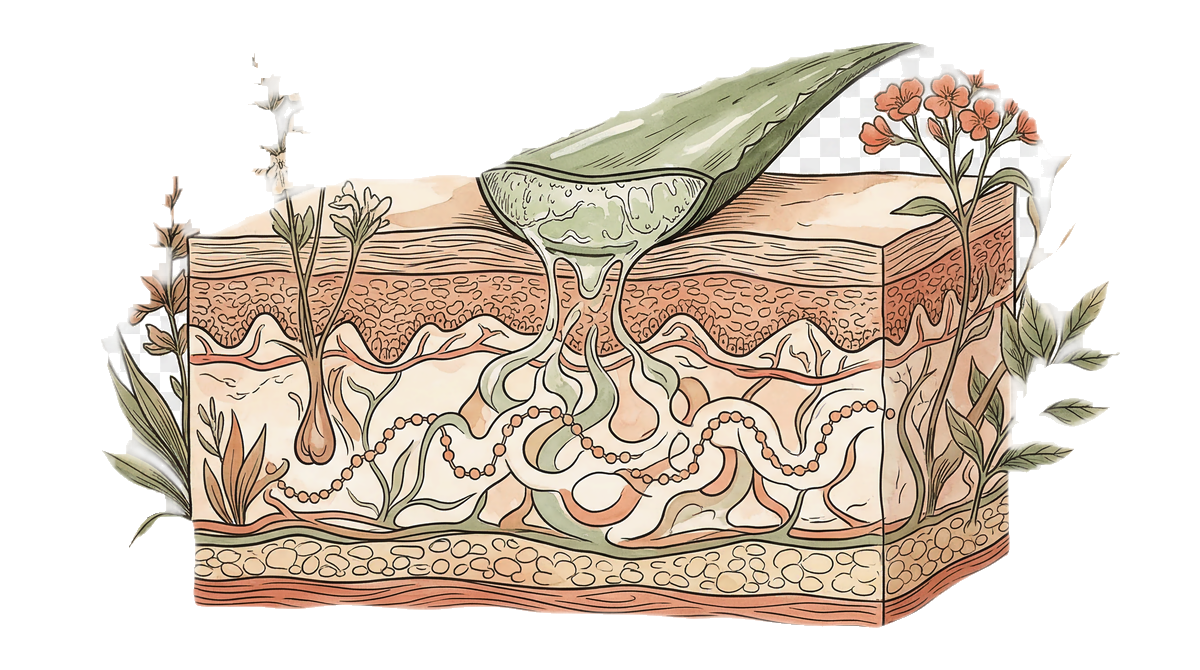
Aloe vera (Aloe barbadensis miller) has been used for skin recovery since ancient Egypt. The gel from the inner leaf contains over 75 active compounds, but the ones that matter for skin are acemannan (a polysaccharide that stimulates macrophage activity and fibroblast growth), aloin (an anthraquinone with anti-inflammatory properties), and a mix of vitamins, amino acids, and salicylic acid. Vogler and Ernst (1999) conducted a systematic review of 10 clinical trials and concluded that aloe vera accelerated acute skin recovery. The burn recovery data is the strongest: Maenthaisong et al. (2007) meta-analyzed 4 controlled trials and found first- and second-degree burns healed 8.7 days faster with aloe vera treatment. For intact, healthy skin, aloe is primarily a moisturizing and anti-inflammatory agent, not a treatment for specific dermatological conditions.
The oldest wound-recovery remedy in recorded history. The burn data holds up in meta-analysis. The everyday skincare claims are more modest.
Acemannan stimulates macrophages and fibroblast growth
The primary polysaccharide in aloe gel, acemannan, binds to mannose receptors on macrophages and triggers cytokine release (IL-6, TNF-alpha at wound-recovery levels). It also promotes fibroblast proliferation and collagen deposition in wound models.
Burns heal 8.7 days faster in controlled trials
A meta-analysis of 4 controlled trials of first- and second-degree burns found aloe vera shortened mean recovery time by 8.7 days. The gel provides a moist wound environment plus the acemannan immune stimulation.
Polysaccharide gel matrix provides occlusive hydration
Aloe gel is 99% water held in a polysaccharide matrix that forms a thin film on skin. This film reduces transepidermal water loss without the heavy feel of oil-based occlusives. Good for oily skin that needs hydration without oils.
Myth: Aloe vera can treat acne, fade dark spots, and reverse aging.
Reality: Aloe vera's clinical evidence is for wound and burn recovery. It has mild anti-inflammatory properties from aloin and salicylic acid content, which may calm inflamed pimples. But it does not inhibit tyrosinase (no brightening mechanism), does not support firmer-looking skin at the levels needed for anti-aging (acemannan's fibroblast stimulation is wound-specific), and has no comedolytic action. Use it for what the evidence supports: hydration, soothing, and minor wound care.
Clinical benefits
Accelerated burn recovery
A meta-analysis of 4 controlled trials found aloe vera gel shortened first- and second-degree burn recovery time by a mean of 8.7 days compared to conventional treatment (silver sulfadiazine or petroleum jelly gauze). The recovery acceleration was consistent across studies.
Maenthaisong et al., 2007, Burns
Anti-inflammatory action via COX-2 inhibition
Aloin and aloe-emodin inhibited COX-2 expression by 40% in LPS-stimulated macrophages at 50 micromol/L. The prostaglandin E2 reduction translates to less redness and swelling at the application site.
Hutter et al., 1996, Journal of Natural Products
Skin hydration through polysaccharide film
A 4-week study of 30 women found aloe vera gel at 0.25% and 0.5% acemannan concentration improved stratum corneum hydration by 14% and 20% respectively, measured by corneometer. The polysaccharide film reduces TEWL without occluding pores.
Dal'Belo et al., 2006, Skin Pharmacology and Physiology
Post-UV soothing
Topical aloe vera gel applied to UV-erythematous skin reduced redness by 25% at 48 hours compared to untreated control sites in a split-body design study of 40 subjects. The anti-inflammatory aloin and the cooling polysaccharide film both contribute to the soothing effect.
Reuter et al., 2008, Skin Pharmacology and Physiology
Skin types
Aloe vera is compatible with all skin types. Oily skin benefits from aloe's water-based, oil-free hydration. Sensitive and sunburned skin benefits from the anti-inflammatory properties. Dry skin may need an additional occlusive on top because aloe gel alone does not seal the barrier as well as oil-based moisturizers. Allergic contact dermatitis to aloe is documented (1-2% of users in patch test studies), primarily from the aloin/anthraquinone fraction. People with Liliaceae family allergies (onion, garlic, tulips) have higher risk.
Effective concentrations
Common in moisturizers and toners. Mild soothing and hydrating effect.
Soothing gels and after-sun products. Enough aloe for meaningful moisturizing and anti-inflammatory action.
Near-pure aloe vera gel. Best for post-sun, post-procedure, and minor burn soothing. Some products claiming '99% aloe' include thickeners and preservatives in the remaining 1%.
Pairs well with
Hyaluronic acid
Both are humectants but work through different mechanisms. HA binds water through carboxyl groups; aloe binds water through polysaccharide chains. Layering both provides denser hydration.
Centella asiatica
Both are calming and wound-recovery ingredients. Centella supports firmer-looking skin through asiaticoside while aloe stimulates immune response through acemannan. Post-procedure skin benefits from both.
Niacinamide
Niacinamide supports barrier ceramide production while aloe provides surface hydration and anti-inflammatory action. Both are lightweight and suit oily skin routines.
Avoid combining with
Strong retinoids on damaged or sunburned skin
Aloe is often applied to irritated or sun-damaged skin. Adding retinoids to already compromised skin worsens irritation. Use aloe for soothing, then resume retinoid use once the skin has recovered.
The bottom line
Aloe vera has legitimate clinical evidence for acute wound and burn recovery. The acemannan polysaccharide stimulates immune cells and fibroblast proliferation through documented pathways. For everyday skincare on intact skin, aloe is a good moisturizer and mild anti-inflammatory, but it is not a targeted treatment for acne, aging, or pigmentation. Use it for post-sun soothing, minor irritation, and lightweight hydration. The concentration matters: many products labeled 'aloe' contain minimal actual gel. Look for aloe vera gel or juice as a top-3 ingredient.
Common questions
Is fresh aloe from the plant better than store-bought aloe gel?
Fresh aloe leaf gel contains higher acemannan concentrations than most commercial products because acemannan degrades during processing and storage. However, fresh gel also contains aloin in the yellow latex layer between the rind and gel, which can irritate sensitive skin. Commercial processing removes the latex. If you use fresh aloe, carefully separate the clear inner gel from the yellow latex.
Does aloe vera help with acne scars?
Aloe vera accelerates skin recovery in acute injuries (burns, cuts) through acemannan's immune stimulation. For old acne scars (post-inflammatory hyperpigmentation or atrophic scarring), the evidence is weak. Aloe does not inhibit tyrosinase (for pigmentation) or rebuild lost collagen (for atrophic scars) at effective levels. Use targeted ingredients (vitamin C, retinol, azelaic acid) for established acne scars.
Can aloe vera replace moisturizer?
For oily skin in humid climates, yes. Aloe gel provides sufficient hydration through its polysaccharide film without adding oils. For dry skin or dry climates, aloe alone is not enough because it lacks the occlusive lipids needed to seal the barrier. Layer aloe under a ceramide cream or moisturizer for dry skin.
Why does aloe vera gel sometimes cause stinging?
This is usually from added alcohol (ethanol or isopropyl alcohol used as a preservative), fragrance compounds, or the aloin content in less refined gels. Pure inner leaf aloe gel rarely stings. Check the ingredient list for alcohol, fragrance, and dyes. If stinging persists with pure aloe, you may have Liliaceae family sensitivity. Patch test on your forearm first.
Find products with Aloe Vera matched to your skin.