
Can You Use Vitamin C and Niacinamide Together? The Myth That Won't Die

In this article
You've read it a dozen times: don't mix vitamin C and niacinamide. They cancel each other out. They form niacin and turn your skin red. Wait 30 minutes between them. Use one in the morning, the other at night.
Almost none of that is true. The warning traces back to a 1960s study on raw ingredient interactions in a lab beaker, not finished skincare products on human skin. And yet the myth outlived the science that debunked it.
TL;DR
Vitamin C and niacinamide work fine together in modern formulas. The "they cancel out" claim comes from a study on raw materials at high heat, not the stabilized versions in your serum.
Where the myth actually comes from
The original concern is 60 years old and was never about your face. In the 1960s, researchers noticed that when pure L-ascorbic acid and niacinamide sit together in water at high temperatures, they can react to form niacin, a compound that causes flushing when applied to skin.
That is a real reaction. It is also almost impossible to replicate in a modern skincare product. It requires unstabilized ascorbic acid, water, elevated temperature, and a lot of time. Your serum is formulated at room temperature with antioxidants, chelators, and pH controls specifically to prevent that reaction.
The myth persists because "they cancel each other out" is a satisfying rule. It sounds like insider knowledge. But the mechanism people cite for it does not describe what happens in a bottle on your shelf.
The reaction the internet warns about requires conditions your serum was engineered to prevent.
What actually happens on skin
Vitamin C and niacinamide target different parts of the pigmentation pathway, which is why pairing them works.
Vitamin C (L-ascorbic acid) inhibits tyrosinase, the enzyme that starts melanin production. Niacinamide works one step later, blocking the transfer of finished melanosomes from melanocytes to surrounding skin cells. One stops pigment from being made. The other stops it from being delivered.
A 2011 split-face study by Kawada et al. tested 5% niacinamide + vitamin C derivative vs. vehicle on melasma patients. The combination outperformed either single-agent control. No skin reddening from niacin conversion. No cancellation effect.
The pH concern, briefly
You'll also hear that vitamin C needs a pH around 3.5 and niacinamide prefers 5-6, so they can't coexist. This is technically true for the raw ingredients but ignores how finished products are formulated.
When you layer a low-pH vitamin C serum with a niacinamide product, your skin's own pH buffers the interaction within minutes. The niacinamide does not suddenly convert to niacin. The vitamin C does not oxidize on contact. You get both actives working.
If you want to be careful, apply the vitamin C first, let it absorb for a minute or two, then layer niacinamide. That is more than enough separation.
Not sure if your current routine has actives working against each other?
Answer 9 questions. Koracle checks fit, conflicts, texture, and evidence.
Build my routine →When there is a real reason to separate them
There are two situations where using them at different times of day makes sense, and neither involves a chemical conflict.
The first is tolerance. If your skin is new to actives, stacking a 20% vitamin C with a strong niacinamide serum on the same morning can be too much. Splitting them (C in the AM, niacinamide in the PM) gives your barrier a break.
The second is stinging. Low-pH vitamin C can sting on freshly cleansed skin. If that bothers you, applying niacinamide first as a buffer layer, then vitamin C on top, works. This is the opposite of what most guides say, and it is fine.
For most people with an established routine, layering them in either order in the same session works.
Products that already prove the point
If the interaction were really dangerous, K-beauty formulators would not put both in the same bottle. They do, constantly.
Look at any modern brightening serum and you'll often find niacinamide sitting alongside a vitamin C derivative like 3-O-ethyl ascorbic acid or ascorbyl glucoside, plus supporting antioxidants. These formulas are stable, tested, and designed for daily use.
For a niacinamide-forward moisturizer that pairs well with a separate vitamin C serum in your routine:
Paid links: Koracle may earn from qualifying purchases. Details.

View on Amazon. Amazon shows final price and availability.
If your skin is sensitive and you want the barrier support without a high active load:
Paid links: Koracle may earn from qualifying purchases. Details.
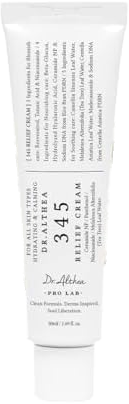
View on Amazon. Amazon shows final price and availability.
The bottom line
The vitamin C + niacinamide warning is one of the most durable myths in skincare, and it's built on a study that never applied to finished products. You can layer them, mix them, or use a serum that contains both. Watch your skin's tolerance, not the internet's chemistry rumors.
Common Questions
Will vitamin C and niacinamide turn my skin yellow?↓
Only if you're using unstable L-ascorbic acid at high concentrations and letting it sit on skin for hours in the presence of niacinamide, at temperatures well above room temp. In any modern K-beauty formula, no.
Should I wait between applying vitamin C and niacinamide?↓
No. You can layer them back-to-back or use a product that contains both. The 30-minute wait rule is a myth carried over from the pH-conflict misunderstanding.
Which should I apply first if I'm using separate products?↓
Apply vitamin C first because it works best on clean skin at a lower pH, then niacinamide. But the order matters less than most guides suggest.
Can I use both morning and night?↓
Yes. Many people use vitamin C in the AM for antioxidant protection under sunscreen, and niacinamide in the PM. Using both twice a day is also fine for most skin types.
Turn what you learned into a routine that fits your skin.
Answer a few questions and Koracle will check formula fit, budget, tolerance, and routine order.
Build my formula-checked routine