
Does Collagen in Skincare Actually Work? A Look at the Evidence

In this article
Your moisturizer says "collagen-infused." The serum promises to "replenish lost collagen." The sheet mask claims to "restore youthful firmness." If collagen creams actually rebuilt the collagen scaffold under your skin, dermatology would look very different.
The molecule is real. The mechanism on the label is not.
TL;DR
Topical collagen molecules are too large to penetrate intact skin, so they can't rebuild the collagen your body has lost. They work as decent surface humectants, nothing more. If you want actual collagen support, use retinoids, vitamin C, and sunscreen.
The claim, and what it leaves out
Brands love collagen because the word does the selling for them. You already know collagen is the protein that keeps skin firm. You already know you lose about 1% per year after age 25 (Shuster et al., 1975). So a cream that puts collagen back in seems like obvious math.
The math breaks at the stratum corneum.
Native collagen is a triple-helix protein with a molecular weight of roughly 300,000 Daltons. The general penetration threshold for intact skin is around 500 Daltons (Bos & Meinardi, 2000). That's not a small gap. Collagen is roughly 600 times larger than what your skin barrier will let through.
Topical collagen sits on top of your skin. It does not slip underneath and join the scaffold.
Even "hydrolyzed collagen," which is broken down into smaller fragments, doesn't reassemble into structural collagen once it's on your face. Your fibroblasts build collagen from individual amino acids they make themselves. They don't import pre-made protein through the epidermis.
What collagen in your cream actually does
It works as a humectant, which is a real but modest job. Hydrolyzed collagen binds water at the skin's surface, similar to glycerin or hyaluronic acid. That creates a temporary plumping effect: skin looks smoother for a few hours because the surface is better hydrated.
This is why collagen creams often "work" in the mirror. You see the hydration effect and assume it's the structural claim delivering. It isn't.
The label says "replenishes collagen." The mechanism is surface hydration. Those are not the same claim, and the second one is the only one supported by evidence.
A 2008 review in Skin Pharmacology and Physiology concluded that topical collagen functions as a moisturizing agent only, with no evidence of dermal penetration or stimulation of endogenous collagen synthesis (Sionkowska et al., 2008).
What actually rebuilds collagen
Your fibroblasts respond to signals, not to imported protein. The ingredients with the strongest evidence work by telling skin cells to make more collagen on their own.
Retinoids have the deepest evidence base. A landmark 2007 study found that topical 0.4% retinol applied three times a week increased procollagen I expression and improved fine wrinkles in photoaged skin after 24 weeks (Kafi et al., 2007). The mechanism is well-mapped: retinoic acid binds nuclear receptors, which upregulate the genes for procollagen.
Paid links: Koracle may earn from qualifying purchases. Details.
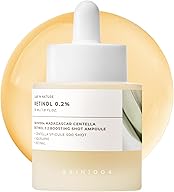
View on Amazon. Amazon shows final price and availability.
Vitamin C (L-ascorbic acid) is required as a cofactor for the enzymes that crosslink collagen fibers. Without it, the collagen your fibroblasts make is structurally weaker. A 2002 RCT showed 10% L-ascorbic acid improved photoaged skin appearance and increased dermal collagen markers after 12 weeks (Humbert et al., 2003).
Paid links: Koracle may earn from qualifying purchases. Details.
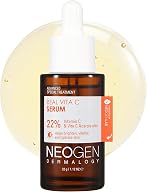
View on Amazon. Amazon shows final price and availability.
Peptides like Matrixyl (palmitoyl pentapeptide-4) signal fibroblasts to increase collagen production. The molecules are small enough to penetrate, and the effect size is real but modest. A 2005 study found a palmitoyl-peptide complex reduced wrinkle depth by around 17% over 6 months (Robinson et al., 2005). Smaller than retinol's effect, but a useful add-on for people who can't tolerate retinoids.
Paid links: Koracle may earn from qualifying purchases. Details.
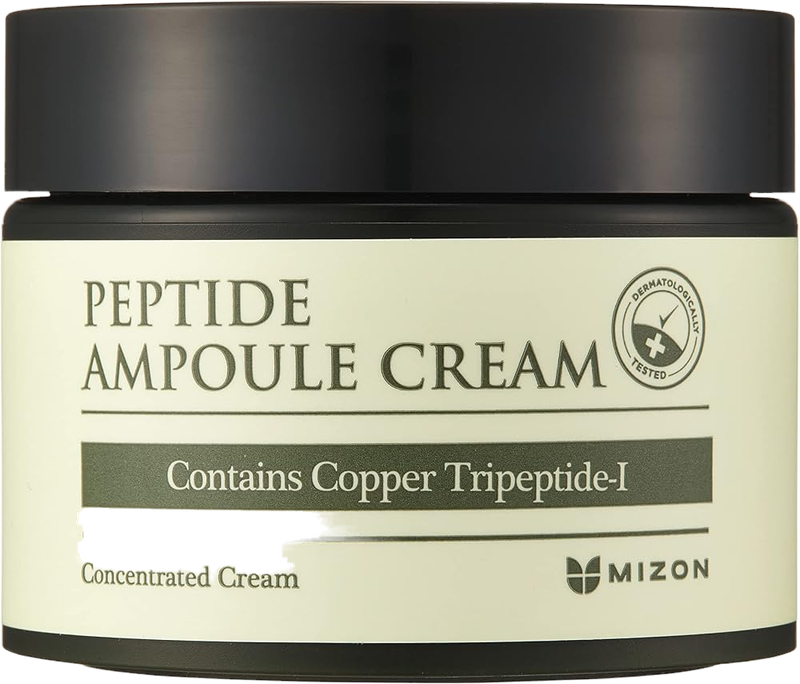
View on Amazon. Amazon shows final price and availability.
Sunscreen is the unglamorous one that does the most work. UV exposure activates matrix metalloproteinases (MMPs), which actively degrade existing collagen. A 4.5-year RCT found that daily broad-spectrum sunscreen use led to 24% less skin aging versus discretionary use (Hughes et al., 2013). You can't build new collagen faster than UV breaks it down.
Paid links: Koracle may earn from qualifying purchases. Details.
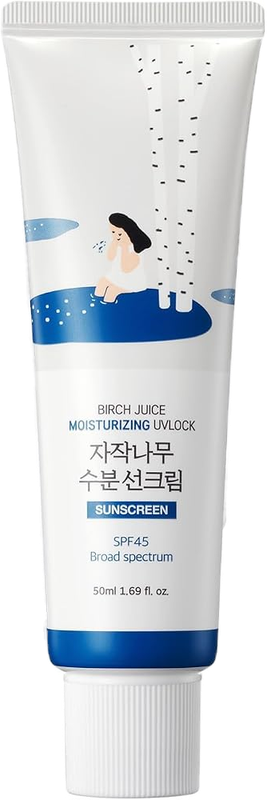
View on Amazon. Amazon shows final price and availability.
Not sure which collagen-supporting actives your skin can actually tolerate?
Answer 9 questions. Koracle checks fit, conflicts, texture, and evidence.
Build my routine →When a collagen cream is still a fine choice
If your skin is dry and you like the texture, the product isn't a scam. It's just doing a different job than the label implies. Hydrolyzed collagen is a respectable humectant, and many "collagen creams" are well-formulated moisturizers with glycerin, ceramides, and squalane doing the actual work.
The problem is opportunity cost. If you're spending your serum budget on collagen because you think it's rebuilding your dermis, you're skipping the ingredients that actually do that job. A retinol at night and a vitamin C in the morning will outperform any topical collagen, full stop.
The bottom line
Topical collagen hydrates the surface. It does not rebuild the collagen under your skin, because the molecule is too large to get there and your fibroblasts don't import pre-made protein anyway. For real collagen support, the evidence points to retinoids, vitamin C, peptides, and daily sunscreen. Use the collagen cream if you like how it feels, but don't let it take the slot a retinol should be filling.
Common Questions
If topical collagen doesn't rebuild collagen, why is it in so many products?↓
Hydrolyzed collagen is a decent humectant. It sits on the surface and holds water, which makes skin look plumper for a few hours. That's a real effect, just not the structural rebuild the label implies.
What actually boosts collagen production in skin?↓
Retinoids have the strongest evidence, followed by vitamin C (L-ascorbic acid), peptides like Matrixyl, and daily sunscreen to stop further collagen breakdown. These signal your fibroblasts to make new collagen rather than trying to deliver it from outside.
Do collagen drinks or supplements work better than creams?↓
The oral evidence is stronger than topical, but still mixed. A few RCTs show modest improvements in elasticity and hydration after 8 to 12 weeks, but most are industry-funded and use proprietary peptide blends. Don't expect dramatic results.
Is marine collagen better than bovine collagen in skincare?↓
Neither penetrates intact skin. The molecular weight is still too large regardless of source. Marine collagen is sometimes broken down into smaller peptides, but at that point you're using peptides, not collagen.
Turn what you learned into a routine that fits your skin.
Answer a few questions and Koracle will check formula fit, budget, tolerance, and routine order.
Build my formula-checked routine