
Toner Pads vs Liquid Toner: Same Ingredients, Different Results?
In this article
You saw the pad version of your favorite toner and assumed it was the liquid, pre-portioned. Same ingredient list, same brand, higher price. TikTok told you the pad "does more," and you weren't sure whether to believe it.
The pad does do more. But the reason isn't what the marketing implies, and the extra work isn't always what your skin wants.
TL;DR
Toner pads and liquid toners with the same INCI deliver different results because of format, not chemistry. The pad adds mechanical exfoliation, changes the dose per swipe, and often uses a higher active concentration to compensate for cotton absorption.
The claim: same ingredients, same outcome
This is the assumption worth testing. If two products share an ingredient list, they should behave the same way on your skin. That's how most people read a label, and it's how most brand comparisons are written.
But the ingredient list tells you what's in the bottle. It doesn't tell you how much reaches your skin, how long it sits there, or what happens during the 15 seconds you spend swiping.
Format is a variable. On a pad, it's a big one.
Why pads exfoliate even without acids
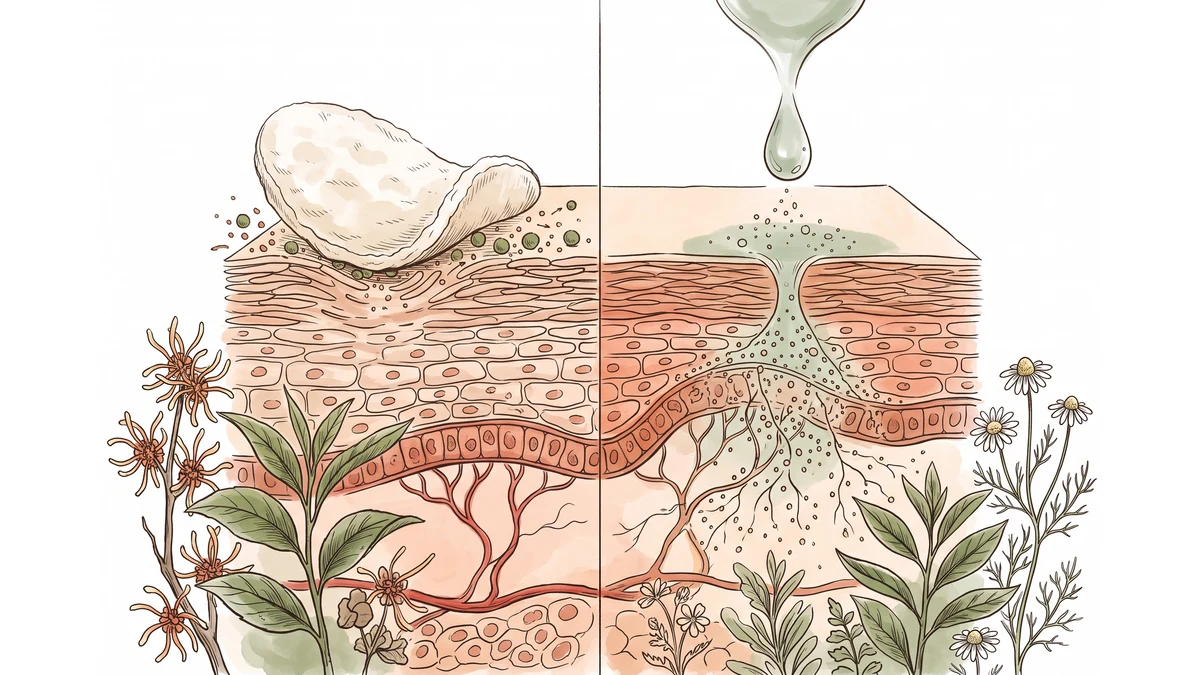
The cotton itself is doing work. Every swipe is mild mechanical exfoliation, the same category as a soft washcloth or a konjac sponge. On a smooth pad, this is gentle. On an embossed or dual-textured pad (one side quilted, one side smooth), it's meaningfully more abrasive.
This matters because a lot of Korean toner pads pair a chemical exfoliant, usually PHA, BHA, or lactic acid, with a textured surface. You're getting chemical exfoliation and physical exfoliation in the same 10 seconds.
A study on mechanical exfoliation by Rodan et al. (2016) found that even soft nonwoven fabrics increase stratum corneum turnover measurably when used daily, independent of any active ingredient in the solution. The friction alone is enough to shift results.
The liquid version of the same toner, pressed in by hand, skips the friction entirely. Same acid, same pH, different exfoliation load.
The dose problem nobody talks about
Cotton is thirsty. When you soak a pad in toner, a meaningful fraction of the liquid stays trapped in the fibers. It never reaches your skin. Brands that formulate pre-soaked pads know this, so they often bump the active concentration up to compensate.
That's why a pad labeled "5% niacinamide" and a liquid labeled "5% niacinamide" from the same brand can behave differently. The pad may deliver less to your face per swipe because cotton keeps some. Or it may deliver more, because the formula was concentrated to survive the transfer.
You can't tell from the box.
The ingredient list tells you what's in the bottle. It doesn't tell you what reaches your skin.
Pouring your own liquid toner onto a cotton round doesn't replicate the pre-soaked version either. You'll typically over-saturate, meaning most of the product stays in the cotton and you waste half the bottle in a month.
When pads actually make sense
Pads earn their price in three situations. First, exfoliating toners where you want the mechanical assist, on oily or congested skin that tolerates it. Second, targeted acid treatments where dose control matters (one pad = one use, no guessing). Third, travel, where a jar of pads is easier than a bottle.
If your skin is sensitive, dry, or barrier-compromised, the friction is working against you. A hydrating toner pressed in with your palms delivers more product to your face and less irritation. Follow it with something that rebuilds the barrier instead of exfoliating it further.
Paid links: Koracle may earn from qualifying purchases. Details.
View on Amazon. Amazon shows final price and availability.
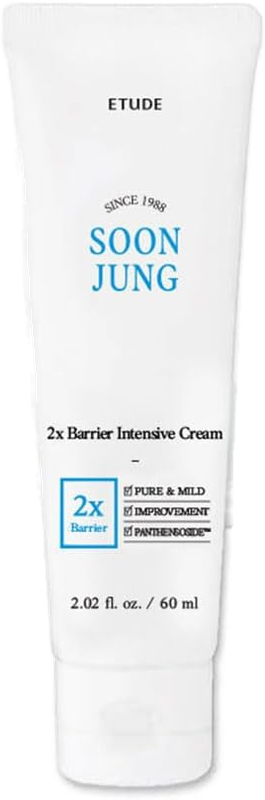
For dehydrated or reactive skin that reacted badly to a pad-based routine, a panthenol-forward cream like Etude SoonJung will calm the friction damage in a few days.
When liquid toner wins
Hand application isn't inferior. It's a different tool. Pressing toner in with your palms warms the product, opens capillaries slightly, and puts more of the formula on your skin instead of a cotton fiber. For hydrators, essences, and anything you want to layer (the 7-skin method depends on this), liquid is the better format.
Paid links: Koracle may earn from qualifying purchases. Details.
View on Amazon. Amazon shows final price and availability.
Missha's Artemisia Calming Essence is a good example: a soothing, low-active formula that's designed to be pressed in, not swiped. Putting it on a pad would waste it.
Not sure which toner format your skin actually needs?
Answer 9 questions. Koracle checks fit, conflicts, texture, and evidence.
Build my routine →The bottom line
Toner pads and liquid toners aren't interchangeable, even when the ingredient list matches. Pads add mechanical exfoliation and change how much active reaches your skin. Use pads when you want that extra friction and dose control. Use liquid when you want to layer, calm, or hydrate without abrading. The format is the treatment, and the delivery method is doing real work.
Common Questions
Do toner pads exfoliate more than liquid toners?↓
Yes, but the reason isn't the formula. The physical swipe of the pad adds mild mechanical exfoliation on top of any acids in the liquid. That's why identical INCI lists can feel more aggressive in pad form.
Can I pour liquid toner onto a cotton pad and get the same effect?↓
Close, but not identical. Pre-soaked pads are engineered with a specific fluid-to-fiber ratio, so the dose per swipe is consistent. DIY-soaked pads usually deliver more product per pass and waste more into the cotton.
Are toner pads worth the higher price?↓
If the pad is textured and formulated as a leave-on treatment, yes. If it's a smooth pad soaked in a standard hydrating toner, you're mostly paying for convenience and packaging.
Should sensitive skin avoid toner pads?↓
Not avoid, but choose carefully. Skip embossed or dual-textured pads and any with high-percentage acids. A smooth pad with a soothing hydrator is fine, often gentler than rubbing with hands.
Turn what you learned into a routine that fits your skin.
Answer a few questions and Koracle will check formula fit, budget, tolerance, and routine order.
Build my formula-checked routine