
Snail Mucin vs Hyaluronic Acid: Do You Need Both?
In this article
TikTok will tell you snail mucin is "hyaluronic acid with better marketing." It isn't. But the opposite claim, that snail mucin is a miracle ingredient that makes hyaluronic acid obsolete, isn't right either.
Both are humectants. Both pull water into your skin. That's where the similarity ends.
TL;DR
Hyaluronic acid is a single molecule that grabs water fast. Snail mucin is a mixture that hydrates slowly and also supports barrier repair. You don't need both, but they layer well if you do.
What the "they're the same" claim leaves out
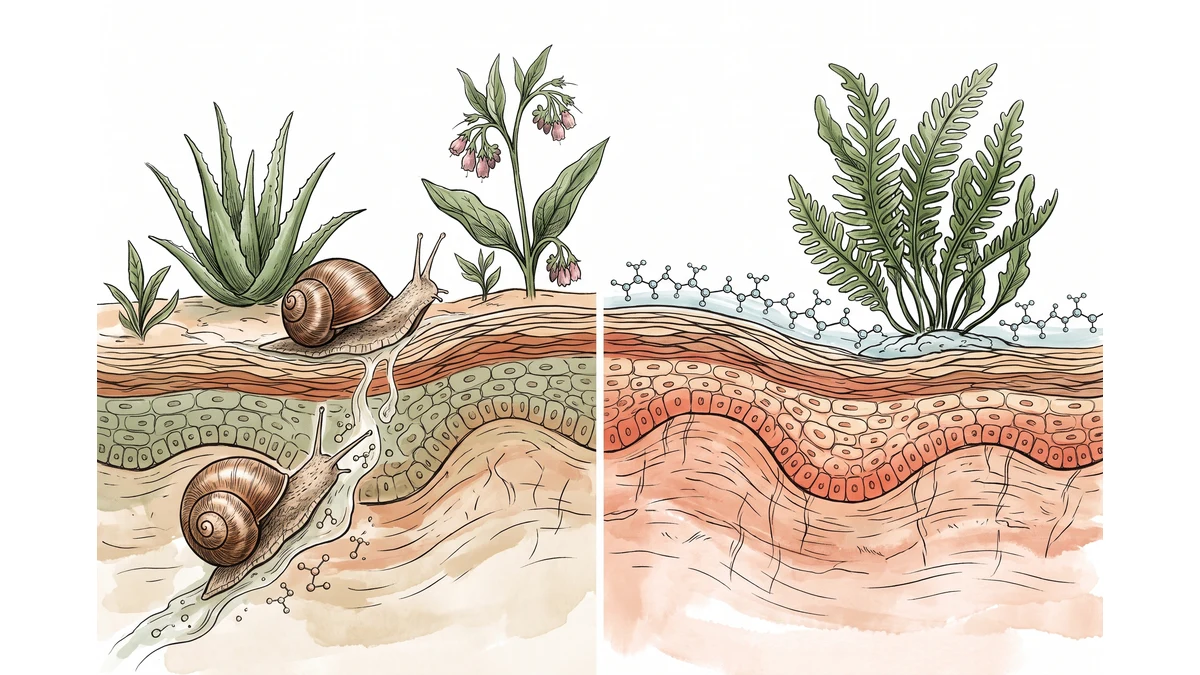
Snail mucin does contain hyaluronic acid, but calling them equivalent is like calling a smoothie the same as orange juice. Snail secretion filtrate is a mix of glycoproteins, glycosaminoglycans (including hyaluronic acid), allantoin, glycolic acid, zinc, copper peptides, and antimicrobial peptides.
Hyaluronic acid is one molecule. A single polysaccharide that holds up to 1,000 times its weight in water (Papakonstantinou et al., 2012).
The TikTok version flattens this. It treats "hydration" as the only axis that matters, then concludes the two ingredients compete for the same job. They don't.
How hyaluronic acid actually works
Hyaluronic acid pulls water into the stratum corneum by osmosis. The high molecular weight version sits on the surface and holds water there. Low molecular weight versions penetrate deeper into the epidermis and hydrate from within (Essendoubi et al., 2016).
That's the whole mechanism. It hydrates. It doesn't repair, soothe, or turn over cells.
This is why hyaluronic acid serums work almost immediately but also wear off. Once the water evaporates, you need to reapply or seal it with an occlusive. In low-humidity environments, hyaluronic acid can actually pull water out of your deeper skin layers, which is why pairing it with a moisturizer matters.
Paid links: Koracle may earn from qualifying purchases. Details.
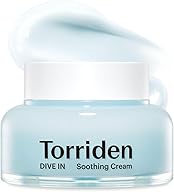
View on Amazon. Amazon shows final price and availability.
How snail mucin actually works
Snail mucin hydrates more slowly but does more than one thing at a time. The glycoproteins form a film that reduces transepidermal water loss. The allantoin and glycolic acid support gentle cell turnover. The copper peptides and antimicrobial fractions have been studied for wound healing (Tribó-Boixareu et al., 2022).
In a split-face study on burn scars, snail secretion filtrate improved texture and reduced erythema vs. control over 14 weeks (Tsoutsos et al., 2009). That's a very different outcome than "it hydrates."
A review of snail mucin's cosmetic use found measurable effects on wrinkle depth, skin texture, and erythema, beyond hydration alone (Trapella et al., 2018). The multi-component composition is doing work hyaluronic acid cannot.
Paid links: Koracle may earn from qualifying purchases. Details.

View on Amazon. Amazon shows final price and availability.
When each one actually wins
Pick based on your actual complaint, not the trending ingredient.
If your skin is tight, flaky, and dehydrated but otherwise behaves fine, hyaluronic acid is faster and cheaper. You feel the result in minutes.
If your skin is dehydrated and also red, bumpy, or recovering from over-exfoliation, snail mucin is the better single pick. The barrier support and mild cell turnover do things hyaluronic acid can't touch.
If you have oily acne-prone skin, snail mucin's film can feel heavy. A low-molecular-weight hyaluronic acid serum under a gel moisturizer is usually a better fit.
Not sure which humectant your skin actually needs?
Answer 9 questions. Koracle checks fit, conflicts, texture, and evidence.
Build my routine →Should you layer both?
Yes, if you want to. No, if you're asking because an influencer said to. There are no known conflicts between hyaluronic acid and snail mucin. They layer cleanly: hyaluronic acid first on damp skin, snail mucin second, moisturizer last.
But stacking humectants doesn't multiply hydration. Once your stratum corneum is saturated, extra humectant layers sit there without adding benefit. The limiting factor usually isn't how much water you can pull in. It's how much your barrier lets escape.
That's why a ceramide moisturizer on top of either humectant does more than adding a third humectant layer.
Paid links: Koracle may earn from qualifying purchases. Details.
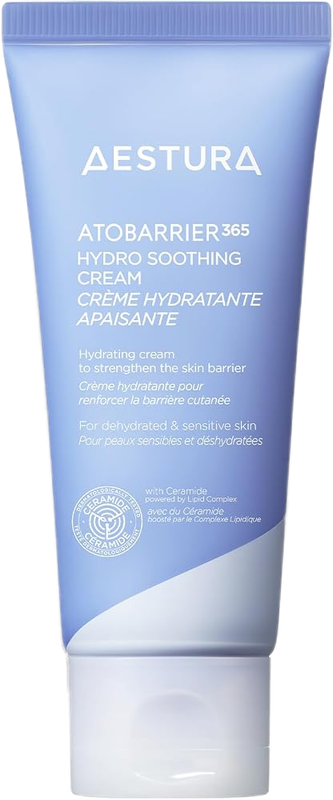
View on Amazon. Amazon shows final price and availability.
The bottom line
Snail mucin and hyaluronic acid aren't the same ingredient, and they aren't competitors. Hyaluronic acid is a fast, single-purpose humectant. Snail mucin is a slower, multi-tasking mixture that happens to include hyaluronic acid as one piece.
If your skin only needs water, hyaluronic acid is enough. If it needs water plus barrier support or texture work, snail mucin earns the shelf space. You don't need both. You need the one that matches what your skin is actually asking for.
Common Questions
Can I use snail mucin and hyaluronic acid together?↓
Yes, and they layer well. Apply the thinner hyaluronic acid serum first on damp skin, then snail mucin, then seal with moisturizer. There are no known conflicts between them.
Which one is better for dehydrated skin?↓
Hyaluronic acid pulls water in faster and more aggressively, so it's the better pick for pure dehydration. Snail mucin hydrates more slowly but also supports barrier repair, which matters if your skin feels dehydrated because the barrier is leaking water out.
Is snail mucin a trendy version of hyaluronic acid?↓
No. Snail mucin contains hyaluronic acid as one component, but also glycoproteins, allantoin, glycolic acid, and peptides. The combination does things pure hyaluronic acid cannot, like supporting wound repair and mild cell turnover.
If I only pick one, which should I buy?↓
For dehydration without barrier issues, hyaluronic acid. For dehydration plus redness, texture, or a damaged barrier, snail mucin. If your budget allows only one serum, match the pick to your actual skin complaint, not the trend.
Turn what you learned into a routine that fits your skin.
Answer a few questions and Koracle will check formula fit, budget, tolerance, and routine order.
Build my formula-checked routine