
Retinol Purging vs. Breakouts: How to Tell the Difference
In this article
You started retinol four weeks ago, your skin looks worse than when you began, and now you're scrolling forums at midnight trying to figure out whether to push through or quit. The advice you'll find is split down the middle, and most of it is wrong in the same direction: it tells you everything is purging.
It isn't. Retinol purging is a real, well-documented phenomenon, but most of the breakouts blamed on it are something else entirely.
TL;DR
Purging happens in your usual breakout zones within the first 4–6 weeks and resolves on schedule. New cysts, breakouts in new locations, or breakouts that persist past week 8 are irritation, not purging.
What retinol purging actually is
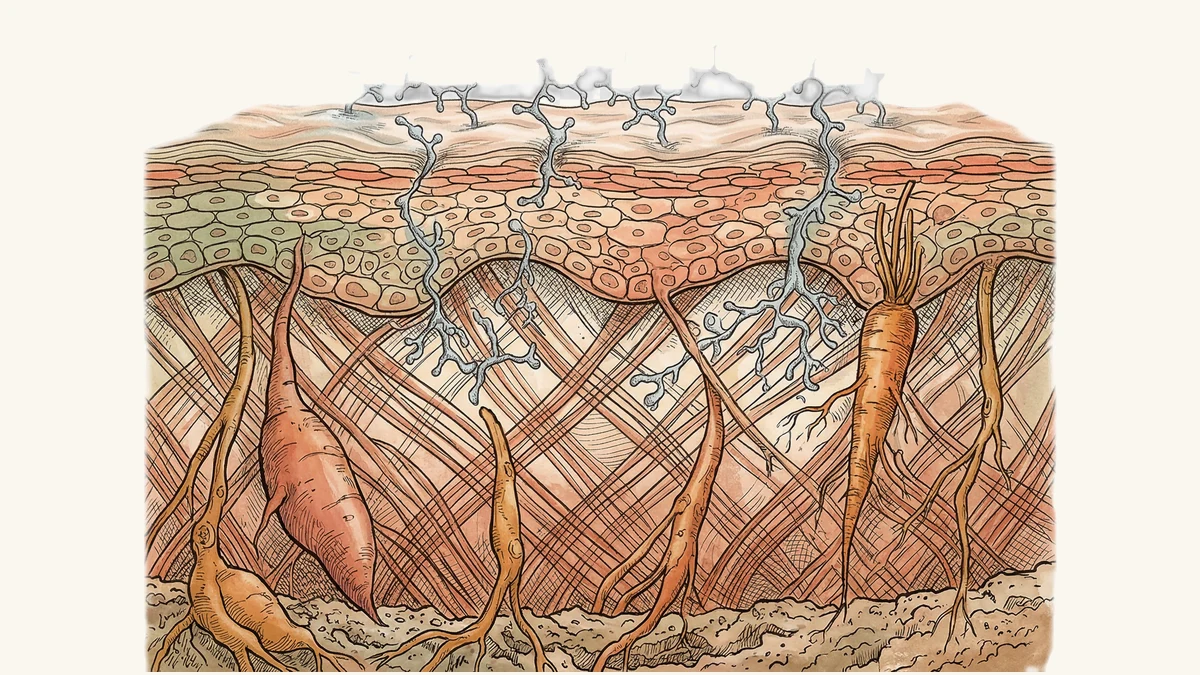
Purging is accelerated comedone extrusion, not new acne. Retinoids speed up keratinocyte turnover, which means the microcomedones already forming under your skin — the ones that would have surfaced over the next two to three months — surface in two to three weeks instead.
The mechanism is straightforward. Retinoids bind to nuclear retinoic acid receptors and downregulate the abnormal follicular keratinization that traps sebum and dead cells inside pores (Kang et al., 2005). Once that process accelerates, every microcomedone in the pipeline finishes its journey to the surface at roughly the same time. The result looks like a breakout. It's actually a clear-out.
Purging is your existing acne timeline compressed, not new acne created.
How to identify true purging
True purging follows three rules, and all three have to be true. If even one fails, you're looking at something else.
First, timeline. Purging starts within the first two weeks and resolves by week 4–6. The skin cell turnover cycle is roughly 28 days, and retinol shortens it. A breakout that begins at week 6 or persists into month three is not purging — that window has closed.
Second, location. Purging happens where you already break out. If your hormonal acne lives along your jawline, that's where purging will surface. New breakouts on your cheeks, temples, or neck — places you don't normally break out — point to irritation or a comedogenic product, not accelerated turnover.
Third, morphology. Purging produces small whiteheads and closed comedones that come to a head and resolve quickly. Deep cysts, painful nodules, and inflamed papules appearing for the first time are not purging. That's inflammatory acne triggered by a compromised barrier.
What people mistake for purging
Most "purging" is actually retinoid dermatitis with secondary breakouts. When you over-apply retinol — too much, too often, or layered on a barrier that wasn't ready — you trigger inflammation, transepidermal water loss, and reactive sebum changes. The skin responds with the classic retinoid reaction: tightness, flaking, redness, stinging. Then the breakouts follow.
"If my skin is breaking out on retinol, it must be purging and I should push through." Pushing through irritation acne makes it worse. The fix is dialing back, not toughing it out.
A 2019 review of topical retinoid tolerability found that retinoid dermatitis affects 30–50% of new users in the first month, and the inflammation itself can drive a secondary acne flare independent of any purging effect (Mukherjee et al., 2006; Leyden et al., 2017). Two distinct processes, often happening at the same time, with very different fixes.
The other common culprit is the rest of your routine. When you start retinol, you often start layering it with hydrating products you assume are gentle. Heavy occlusives, coconut-oil-based balms, and isopropyl myristate in your moisturizer can trigger comedonal acne that you'll then blame on the retinol.
Not sure if your routine is helping or working against your retinol?
Answer 9 questions. Koracle checks fit, conflicts, texture, and evidence.
Build my routine →How to handle real purging
Drop the frequency, don't drop the product. If you're inside the 4–6 week window and the breakouts match your usual pattern, the move is to slow down, not stop. Stopping resets the clock, and you'll purge again when you restart.
- Weeks 1–2: Cut frequency in half. If you're using retinol nightly, drop to every other night. If every other night, drop to twice weekly.
- Every retinol night: Buffer with moisturizer. Apply a ceramide or panthenol cream first, wait 10 minutes, then apply retinol on top. This blunts irritation without killing efficacy.
- Weeks 1–4: Audit the rest of your routine. Pull anything heavy, fragranced, or recently introduced. Strip back to cleanser, moisturizer, sunscreen, retinol.
- Week 6: Reassess. If breakouts have resolved, ramp frequency back up gradually. If they haven't, it wasn't purging.
A starter-strength formula matters more than people realize. 0.2–0.5% retinol with supportive ingredients gives you the receptor binding without the sledgehammer effect that drives irritation acne.
Paid links: Koracle may earn from qualifying purchases. Details.
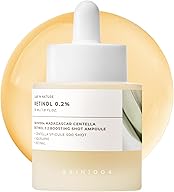
View on Amazon. Amazon shows final price and availability.
If you want a barrier-supportive option that pairs retinol with niacinamide and centella, this one's worth knowing about — the formulation buffers the retinoid effect from inside the product.
Paid links: Koracle may earn from qualifying purchases. Details.
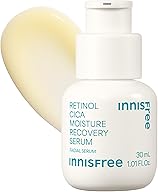
View on Amazon. Amazon shows final price and availability.
When it's definitely not purging
Stop and reassess if any of these apply. Cystic, painful breakouts appearing for the first time. Breakouts in zones you don't normally break out in. Burning, stinging, or scaling that doesn't settle within 10 minutes of application. Symptoms still escalating at week 8.
These point to one of three things: the formula is too strong for your current barrier, you're layering retinol with another irritant (acid toner, vitamin C, fragrance), or you have a sensitivity that won't resolve with time. None of these get better by continuing.
A barrier-first reset for two to three weeks — moisturizer, sunscreen, gentle cleanser, nothing else — and then a slower reintroduction at lower frequency usually solves it.
Paid links: Koracle may earn from qualifying purchases. Details.
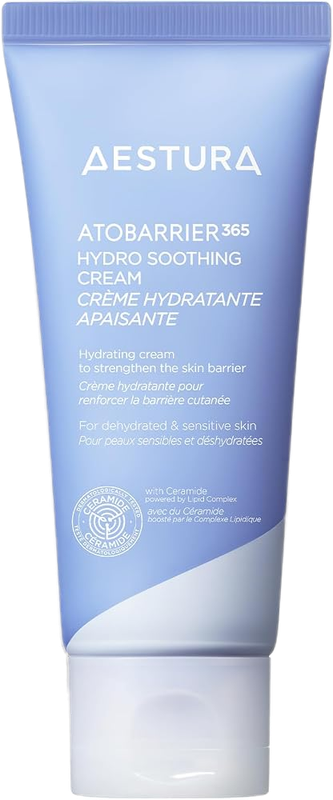
View on Amazon. Amazon shows final price and availability.
The bottom line
Real retinol purging is brief, predictable, and happens in your existing breakout zones. If your "purge" lasts longer than six weeks, shows up somewhere new, or produces deep cystic lesions, it isn't purging — and pushing through will make it worse. Drop the frequency, fix the barrier, audit the rest of your routine, then decide whether to continue.
Common Questions
How long does retinol purging actually last?↓
Purging tracks the skin cell turnover cycle, roughly 4–6 weeks. If you're still breaking out at week 8, it's not purging — it's irritation, a comedogenic product elsewhere in your routine, or a reaction to the formula.
Can retinol cause breakouts even after purging ends?↓
Yes, but indirectly. Over-application strips the barrier, which triggers inflammation and stress-driven sebum changes. The fix is less retinol, not more.
Should I stop retinol if I'm purging?↓
No. Drop the frequency to twice a week and buffer with moisturizer. Stopping resets the clock and you'll purge again when you restart.
Does retinol purge whiteheads and cysts equally?↓
Mostly whiteheads and small closed comedones surfacing faster. Deep cystic acne appearing for the first time on retinol is almost always irritation acne, not purging.
Turn what you learned into a routine that fits your skin.
Answer a few questions and Koracle will check formula fit, budget, tolerance, and routine order.
Build my formula-checked routine