
How Often Should You Exfoliate If You Use Retinol?
In this article
You read that retinol "speeds up cell turnover," so naturally you also bought a BHA toner and an AHA pad. More turnover, more glow, right?
Your barrier disagrees. Retinol is already doing exfoliation-adjacent work, and stacking acids on top is the fastest way to end up red, flaky, and convinced your skin "can't handle actives."
TL;DR
If you use retinol 2–3 nights a week, add an exfoliant once or twice a week on a different night. Never on the same night. Never the morning after.
Retinol is already an exfoliant, just through a different door
Most people think of retinol as an anti-aging ingredient and exfoliants as a separate category. They're not separate in how they act on your skin.
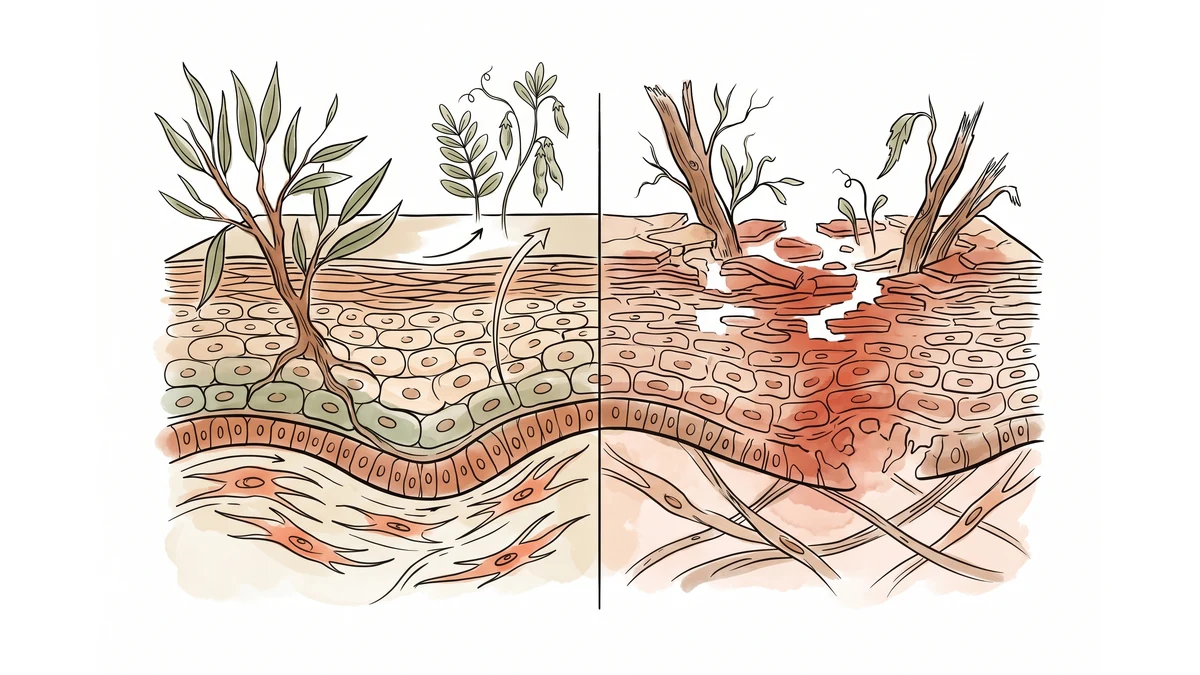
Retinol converts to retinoic acid inside your skin cells, then binds to nuclear receptors that tell those cells to divide faster and shed sooner (Mukherjee et al., 2006). The result is the same surface you'd get from a mild acid: newer cells on top, fewer dead cells stuck in clumps. The route is different, but the destination overlaps.
AHAs and BHAs work from the outside in. They break the bonds between dead skin cells (corneocytes) so the top layer sloughs off. Retinol works from the inside out, telling new cells to come up faster. Run both at full speed and you're thinning the same layer from both sides.
Retinol and exfoliating acids aren't doing different jobs. They're doing the same job from opposite directions.
What "over-exfoliation" actually looks like with retinol
The signs aren't subtle, but people misread them. Tight, shiny skin after washing. Burning when you apply moisturizer. Small flakes around your nose and mouth. Redness that doesn't fade by morning. These are barrier symptoms, not "purging."
A compromised barrier loses water faster (higher transepidermal water loss) and lets irritants in more easily (Proksch et al., 2008). Once that cycle starts, every product feels like it stings, including the moisturizer that's supposed to fix it.
If your skin burns when water hits it, stop both retinol and exfoliants for at least a week. Barrier repair first, actives later.
The frequency that actually works
Here's the schedule that holds up for most skin once you're past the adjustment phase.
If you're new to retinol, drop exfoliation to once a week or skip it entirely for the first 4–6 weeks. You need a baseline to know what your skin actually tolerates.
For the exfoliation night, a low-percentage BHA is the easiest pairing because it works inside the pore lining rather than the broader surface where retinol is already active.
Paid links: Koracle may earn from qualifying purchases. Details.
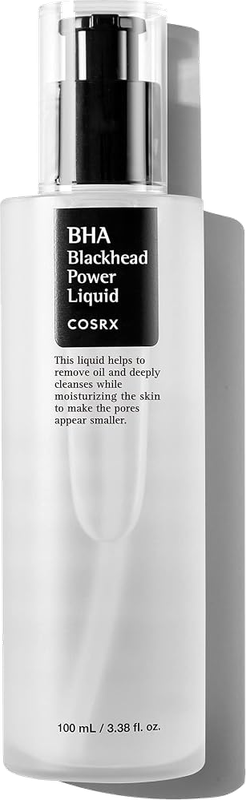
View on Amazon. Amazon shows final price and availability.
Why your moisturizer matters more than your acid choice
On retinol nights, the moisturizer is doing most of the work to keep your barrier intact. Look for ceramides, panthenol, or fatty alcohols high on the ingredient list. These rebuild the lipid matrix that retinol-driven turnover temporarily disrupts.
A ceramide-forward cream layered over retinol reduces the irritation rate of topical retinoids in clinical use without blocking their effect (Draelos et al., 2006). That's the part most routines get wrong: people pair retinol with a light gel that doesn't replace what retinol takes out of the barrier.
Paid links: Koracle may earn from qualifying purchases. Details.
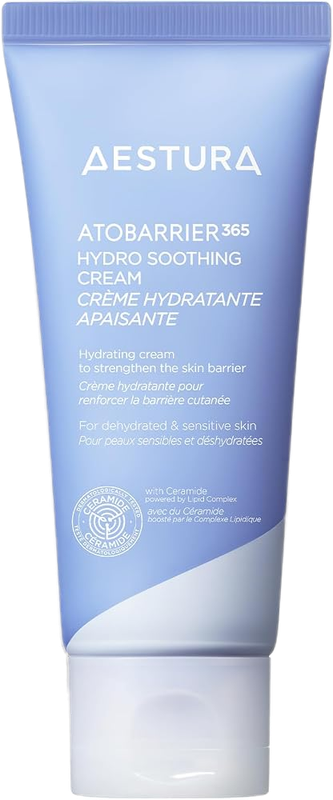
View on Amazon. Amazon shows final price and availability.
If your skin runs drier or you're using a stronger retinol concentration, step up to a richer ceramide cream.
Paid links: Koracle may earn from qualifying purchases. Details.
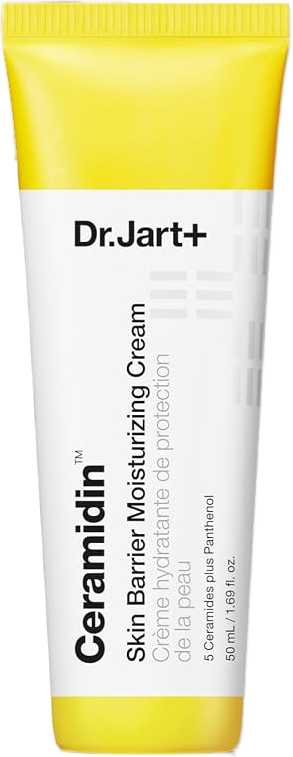
View on Amazon. Amazon shows final price and availability.
Not sure if your retinol routine has room for an exfoliant?
Answer 9 questions. Koracle checks fit, conflicts, texture, and evidence.
Build my routine →What about prescription retinoids or retinal?
Stronger forms of vitamin A change the math. Tretinoin, adapalene, and retinaldehyde act faster and harder than over-the-counter retinol because they're closer (or identical) to retinoic acid itself.
If you're using any of those, the answer to "how often should I exfoliate" is usually "you don't need to." The retinoid is already doing the turnover work an acid would add. Save acids for the weeks you take a break from your retinoid, not for layering on top.
The bottom line
Retinol is doing exfoliation work whether you call it that or not. Use an acid 1–2 nights a week on separate evenings from your retinol, lean hard on a ceramide moisturizer, and wear sunscreen every morning. If your skin starts burning or flaking, the answer is always fewer actives and more barrier support, not a stronger product.
Common Questions
Can I use retinol and AHA on the same night?↓
Most skin can't handle both in the same routine without irritation. Alternate nights instead: retinol one evening, acid the next. If your skin runs sensitive, keep them on entirely separate days.
Does retinol count as exfoliation?↓
Functionally, yes. Retinol speeds up cell turnover and loosens dead skin from below the surface, which is a different mechanism than acid exfoliation but produces a similar smoothing effect. That's why stacking both often causes flaking and redness.
How long should I wait between starting retinol and adding an exfoliant?↓
Give your skin 4–6 weeks on retinol alone before introducing any acid. That window lets your barrier adjust and tells you what irritation is from retinol versus what's from the acid you'd be adding.
What if I only use a gentle PHA or mandelic acid?↓
Lower-strength acids are easier to layer, but the rule still holds: alternate nights for most skin, twice a week max if you're new to retinol. PHAs are gentler, not free.
Turn what you learned into a routine that fits your skin.
Answer a few questions and Koracle will check formula fit, budget, tolerance, and routine order.
Build my formula-checked routine