
Retinyl Palmitate vs Retinol vs Retinaldehyde: Strength Actually Matters
In this article
Your night cream says "with retinol." You flip the bottle and see retinyl palmitate on the ingredient list, three-quarters of the way down. Same family, right? Kind of. But calling both of these "retinol" is like calling espresso and decaf both "coffee." Technically true. Practically, one of them is doing the work.
TL;DR
Retinoid potency roughly follows this order: retinyl palmitate < retinol < retinaldehyde < retinoic acid. Retinaldehyde is about 10x more effective than retinol at similar concentrations, and retinyl palmitate is so weak that most studies struggle to measure a wrinkle effect at all.
The claim that gets everything wrong
The internet treats every retinoid as interchangeable. A TikTok will say "retinol works," show a bottle of something containing retinyl palmitate, and move on. The label says "retinol product line," so the assumption sticks.
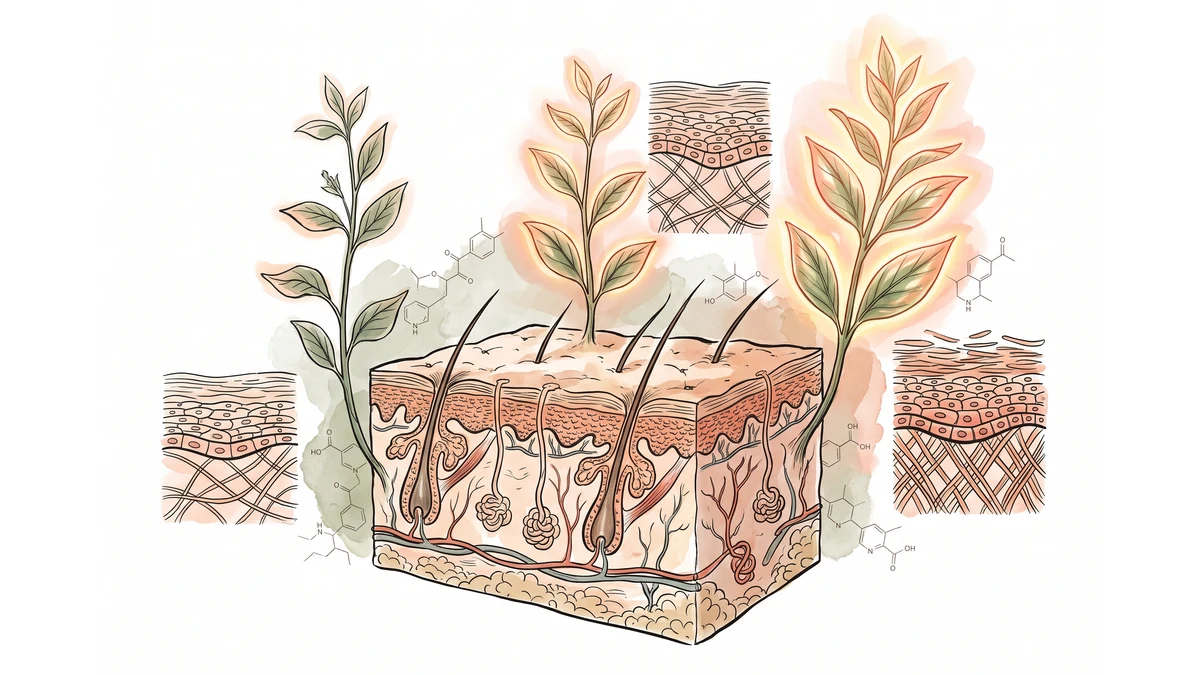
Here's what the claim leaves out: your skin can only use one form of vitamin A, which is retinoic acid (tretinoin). Everything else on the shelf is a precursor. The number of enzymatic conversion steps between the ingredient and retinoic acid determines how much of the ingredient actually becomes active on your face.
More steps means more loss at each step. Simple as that.
Every retinoid on the shelf is trying to become retinoic acid. Some are closer to the finish line than others.
How the conversion chain actually works
Your skin runs each retinoid through the same pathway, just at different starting points. The sequence looks like this:
retinyl palmitate → retinol → retinaldehyde → retinoic acid
Retinyl palmitate needs three conversion steps. Retinol needs two. Retinaldehyde needs one. Retinoic acid needs zero, which is why it's the prescription version (tretinoin) and why it works fastest.
Each step is enzymatic and inefficient. Sorg et al. (2006) estimated that only a small fraction of applied retinyl palmitate ever converts to retinoic acid, with most of it getting stored, degraded by UV, or washed off before your skin can process it. That's the mechanism. It's not that retinyl palmitate is fake. It's that most of it never makes it to the end of the line.
What the potency numbers actually show
Retinaldehyde reaches retinoic acid faster than retinol, and the difference is not subtle. A frequently cited comparison from Saurat et al. (1994) found that 0.05% retinaldehyde produced improvements in photoaged skin comparable to retinoic acid, with far less irritation. Follow-up work has consistently placed retinaldehyde around 10x more potent than retinol at matched percentages.
Retinyl palmitate sits at the other end. In head-to-head lab comparisons, it's estimated at roughly 1/20th the activity of retinol, meaning a 1% retinyl palmitate formula is doing something like the work of 0.05% retinol. And 0.05% retinol is already below the threshold where most clinical wrinkle studies see reliable results.
This is the part the label doesn't tell you.
Why brands still love retinyl palmitate
It's not a scam, exactly. It's a business decision. Retinyl palmitate is stable in air and light, cheap to formulate with, and rarely causes irritation because it barely reaches your dermis in active form. That combination makes it perfect for a mass-market night cream that needs a five-year shelf life and zero return complaints.
The downside: you're paying for a "retinol product" that performs closer to a moisturizer with a marketing angle. If you have sensitive skin and want gentle hydration, that's fine. If you're chasing fine lines or hyperpigmentation, it's the wrong tool.
Not sure which retinoid strength fits your skin?
Answer 9 questions. Koracle checks fit, conflicts, texture, and evidence.
Build my routine →How to choose your actual starting point
Match the retinoid to your goal, not the brand's naming convention. Here's the practical breakdown:
- Sensitive or reactive skin, wanting a gentle intro: Start with 0.1% to 0.2% retinol, two nights per week. This gives you real conversion to retinoic acid without the shock of a stronger formula.
- Normal skin, wanting visible anti-aging results: 0.3% to 0.5% retinol, three to four nights per week after a two-week ramp.
- Experienced retinol user hitting a plateau: Step up to retinaldehyde (usually formulated at 0.05% to 0.1%). The potency jump is significant, but tolerability stays reasonable.
- Anyone whose only "retinol" is retinyl palmitate: You probably haven't tried retinol yet. That's the honest answer.
Whatever tier you pick, buffer the retinoid with a supportive moisturizer. A ceramide-rich cream on top makes the transition easier and reduces the sting-and-flake phase that pushes most people to quit.
Paid links: Koracle may earn from qualifying purchases. Details.
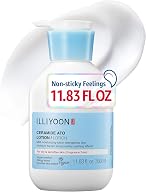
View on Amazon. Amazon shows final price and availability.
If your barrier is already reactive, the panthenol route is gentler than ceramides for the first few weeks.
Paid links: Koracle may earn from qualifying purchases. Details.
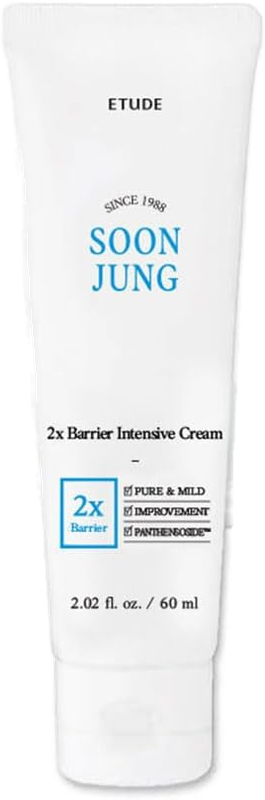
View on Amazon. Amazon shows final price and availability.
In a 12-month split-face study, 0.05% retinaldehyde produced significantly greater reductions in fine wrinkles and roughness than vehicle, with an irritation profile close to placebo (Diridollou et al., 1999). That combination of efficacy and tolerability is what makes retinaldehyde the sweet spot for many users.
The bottom line
Retinyl palmitate, retinol, and retinaldehyde are not three flavors of the same thing. They're three different distances from the finish line, and your skin only responds to what crosses it. If a product claims retinoid benefits but lists retinyl palmitate as the only vitamin A derivative, adjust your expectations, or move up the potency ladder.
Common Questions
Is retinyl palmitate the same as retinol?↓
No. Retinyl palmitate is an ester that your skin has to convert twice before it becomes active retinoic acid. Retinol only needs one conversion step. That extra step is why retinyl palmitate is dramatically weaker in practice.
Should beginners start with retinyl palmitate?↓
Not really. If your goal is a gentle start, a low-dose retinol (0.1% to 0.2%) used two nights per week gives you real results with a similar irritation profile. Retinyl palmitate is often gentle because it barely works, not because it's cleverly formulated.
Is retinaldehyde stronger than retinol?↓
Yes. Retinaldehyde is one enzymatic step away from retinoic acid, while retinol is two steps away. Clinical studies suggest retinaldehyde works roughly 10 times faster than retinol at similar concentrations, with comparable tolerability.
Why do brands use retinyl palmitate if it's so weak?↓
It's stable, cheap, and low-irritation. That combination makes it easy to put on a label without triggering complaints. Marketing gets the word 'retinol' on the box, and the formula stays gentle enough for daily use.
Turn what you learned into a routine that fits your skin.
Answer a few questions and Koracle will check formula fit, budget, tolerance, and routine order.
Build my formula-checked routine