
Propolis vs Honey in K-Beauty: Which Ferment Actually Soothes Better
In this article
Your FYP keeps calling propolis a "bee ferment" that soothes everything. Honey gets the same treatment, usually with a jar-dripping B-roll shot. The pitch is that both are gentle, natural, and interchangeable.
They are not interchangeable. One has real clinical data behind its anti-inflammatory claims. The other is mostly a humectant with a halo.
TL;DR
Propolis has the stronger evidence for soothing redness, repairing the barrier, and calming acne. Honey in most K-beauty products acts as a humectant with mild antibacterial activity, rather than a serious anti-inflammatory.
What propolis and honey actually are
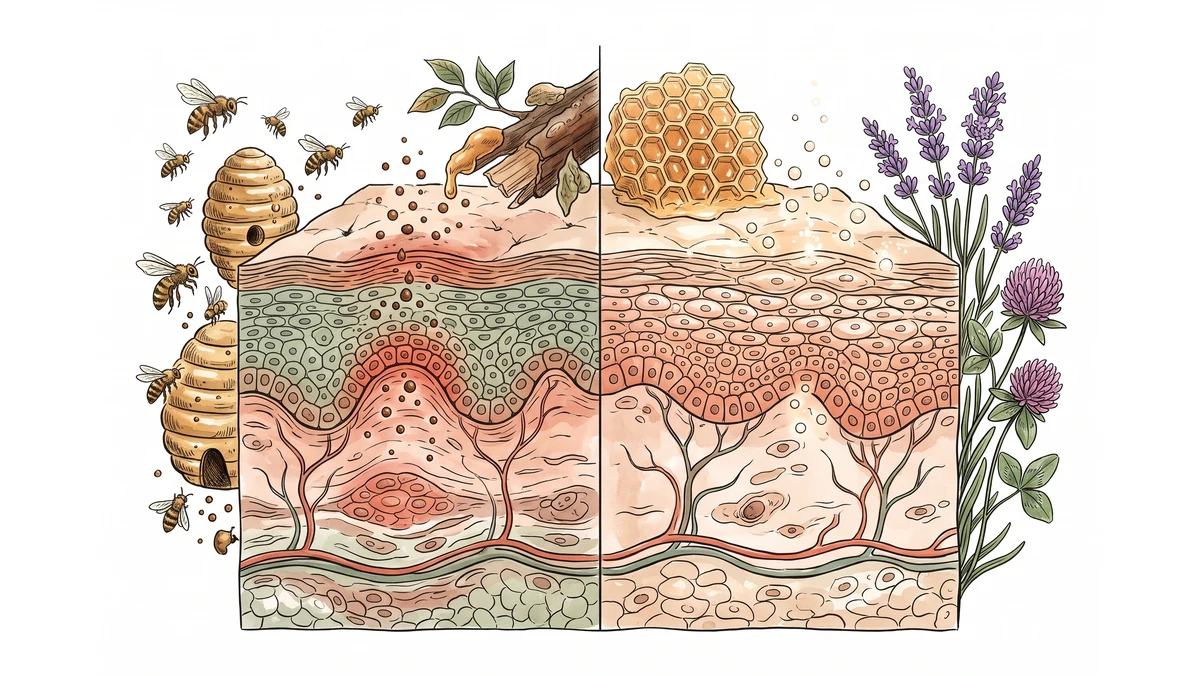
Propolis is not fermented, and neither is honey, despite what the marketing suggests. Bees make propolis by mixing tree resin, saliva, and wax into a sealant for the hive. Honey is nectar that bees concentrate and modify with enzymes.
Chemically, they are very different. Propolis is roughly 50% resin, loaded with flavonoids (chrysin, galangin, pinocembrin) and phenolic acids like caffeic acid phenethyl ester (CAPE). Honey is 80% sugars with trace enzymes, small peptides, and a handful of flavonoids depending on the floral source.
That compositional gap is why they behave so differently on skin.
Honey is sugar water with a halo. Propolis is a concentrated anti-inflammatory cocktail that happens to come from bees.
Why propolis actually soothes
The anti-inflammatory activity in propolis is driven by CAPE and flavonoids that block NF-κB signaling. NF-κB is the master switch for inflammatory cytokines like TNF-α and IL-6. Shut that pathway down and you get less redness, less swelling, and less post-inflammatory pigment.
A split-face study on mild-to-moderate acne found 3% propolis extract reduced inflammatory lesion count by 68% at 6 weeks vs. a vehicle control (Shehata et al., 2017). Separate work on atopic skin showed propolis improved transepidermal water loss (TEWL) and reduced erythema scores significantly over 2 weeks.
In vitro, CAPE suppresses NF-κB activation at micromolar concentrations (Natarajan et al., 1996). That is the same pathway targeted by prescription anti-inflammatories, which is why propolis punches above its "natural ingredient" weight.
Propolis also has mild antibacterial activity against C. acnes, which is why you see it stacked with centella and tea tree in acne-focused Korean lines.
What honey actually does on skin
Honey's main cosmetic job is pulling water into the stratum corneum. It is a humectant, like glycerin or hyaluronic acid, and a decent one. The sugars bind water and the low pH (around 3.9) is mildly exfoliating over time.
Medical-grade manuka honey has genuine wound-healing data, driven by hydrogen peroxide release and the compound methylglyoxal. But that evidence does not transfer to a 2% honey extract in your sheet mask. The concentration is too low, the formulation is wrong, and cosmetic honey is pasteurized in ways that kill the enzymes doing the work.
Honey is fine. It hydrates. It will not calm an inflamed acne flare the way propolis will.
When to pick which
Pick propolis if your main concern is redness, reactive skin, maskne, or buffering actives like retinol. The flavonoid content does measurable work on inflammation, and it layers cleanly under or over most of your routine.
Pick honey (or a honey-forward product) if your skin is dry and you want a slightly tacky, humectant-heavy finish. It is a texture choice more than a treatment choice.
For sensitive, inflamed skin that needs an actual soothing cream rather than a trending ingredient, these are the picks that pair well with a propolis essence:
Paid links: Koracle may earn from qualifying purchases. Details.
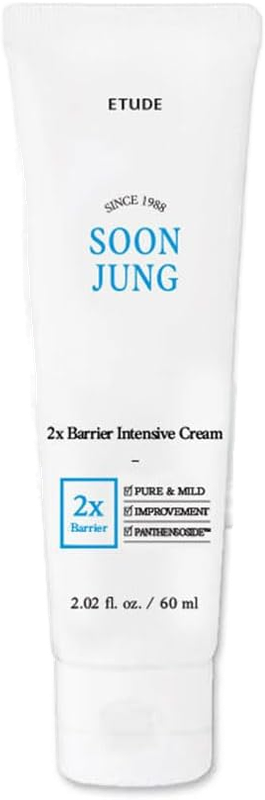
View on Amazon. Amazon shows final price and availability.
Paid links: Koracle may earn from qualifying purchases. Details.
Recently checked. Amazon shows final price and availability.
Not sure if propolis is right for your skin profile?
Answer 9 questions. Koracle checks fit, conflicts, texture, and evidence.
Build my routine →The allergy issue nobody mentions
Propolis is one of the more common contact allergens in cosmetics, with sensitization rates around 1.5 to 3% in patch-test populations (Walgrave et al., 2005). If you have ever reacted to a bee sting, patch test propolis on your inner forearm for 3 nights before putting it on your face.
Honey allergies are rarer but exist, usually tied to pollen sensitivity. Same patch-test rule applies.
If you react to either, swap to a centella- or panthenol-based soother. The mechanism is different but the outcome, less redness and a calmer barrier, is comparable.
Paid links: Koracle may earn from qualifying purchases. Details.
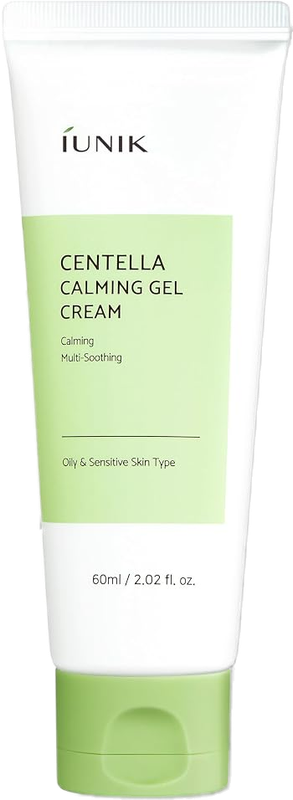
View on Amazon. Amazon shows final price and availability.
the bottom line
Propolis earns its soothing reputation. Honey mostly borrows one. If you are picking between them for inflamed, reactive, or acne-prone skin, propolis has the mechanism and the clinical data. If you want hydration with a nice label story, honey is fine but a glycerin-and-HA product will do the same job for less money.
The bottom line
Choose the option your skin can tolerate consistently. A simple routine that fits your skin and your morning is more useful than chasing every promising claim at once.
Common Questions
Is propolis actually a ferment?↓
Not in the biochemical sense. Bees make propolis by mixing tree resin with their saliva and beeswax, which involves enzymes but is different from fermentation like rice or galactomyces. K-beauty marketing uses 'bee ferment' loosely to describe both propolis and honey-derived ingredients.
Can I use propolis if I have a bee allergy?↓
No. If you react to bee stings or honey, skip propolis entirely. Allergic contact dermatitis to propolis is well-documented, with sensitization rates around 1.5 to 3% in patch-test populations.
Does honey do anything useful on skin or is it just marketing?↓
Medical-grade honey is proven for wound healing, but the cosmetic grades in most K-beauty products act mostly as humectants. They draw water into the stratum corneum but do not match propolis for anti-inflammatory effect.
Can I layer propolis with retinol or acids?↓
Yes, and this is one of propolis's best uses. Its antioxidant and anti-inflammatory activity helps buffer the irritation from retinoids and exfoliating acids when layered underneath.
Turn what you learned into a routine that fits your skin.
Answer a few questions and Koracle will check formula fit, budget, tolerance, and routine order.
Build my formula-checked routine