
Niacinamide vs Vitamin C: Which One Does Your Skin Actually Need?

In this article
You've seen both on every K-beauty shelf, both promising to fade dark spots, even out tone, and make your skin glow. So which one do you actually need?
The honest answer: they do overlapping but different jobs. Vitamin C is a faster, stronger brightener and a daytime antioxidant. Niacinamide is the gentler all-rounder that also handles oil and the skin barrier. Most people benefit from both — but if you can only pick one, the choice depends on your skin type and how reactive you are.
TL;DR
Vitamin C wins for speed and antioxidant protection. Niacinamide wins for tolerability, oil control, and barrier repair. If your skin runs sensitive or oily, start with niacinamide. If you want the fastest visible brightening, start with vitamin C.
How each ingredient actually works
The two molecules target pigmentation through completely different pathways. That's why they're complementary, not redundant.
Vitamin C (most often L-ascorbic acid at 10–20%) is a direct antioxidant. It donates electrons to neutralize free radicals from UV and pollution, and it inhibits tyrosinase, the enzyme that produces melanin at its source. It also acts as a cofactor for collagen synthesis.
Niacinamide works downstream. It doesn't stop melanin from being made — it blocks the transfer of pigment from melanocytes to your surface skin cells (Hakozaki et al., 2002). It also reduces sebum, strengthens the lipid barrier, and calms inflammation.
What the studies show on dark spots
Both fade hyperpigmentation, but vitamin C usually works faster.
A 12-week split-face trial of 5% niacinamide showed significant reduction in hyperpigmentation and improved skin tone vs. vehicle (Hakozaki et al., 2002). Most users see meaningful change between weeks 8 and 12.
Vitamin C moves quicker. 10% L-ascorbic acid has shown visible brightening in 4–8 weeks across multiple trials, with stronger effects at 15–20% when stabilized with ferulic acid and vitamin E (Lin et al., 2003).
Vitamin C stops melanin from being made. Niacinamide stops it from reaching the surface. Together they hit the pigmentation pathway at two different points.
The "they cancel each other out" myth
Niacinamide and vitamin C don't neutralize each other. The 1960s study behind that claim used pure raw ingredients heated to extreme temperatures — conditions that don't exist in any modern serum. Stability tests on current formulations show both remain active when combined.
K-beauty caught onto this years before Western brands did, which is why you'll find serums like numbuzin No.5 that pair ascorbic acid with tranexamic acid and niacinamide-adjacent actives in a single bottle.
Which one your skin actually needs
Match the ingredient to your dominant skin concern, not the other way around.
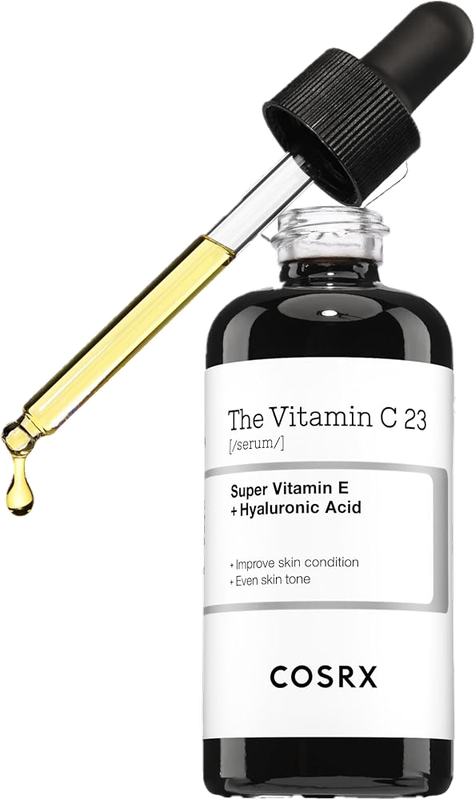
Pick vitamin C if your priority is fading existing dark spots quickly, you want daytime antioxidant defense alongside sunscreen, or your skin tolerates actives well. Higher-strength L-ascorbic acid (15–23%) gives the strongest effect but stings on sensitive skin.
Paid links: Koracle may earn from qualifying purchases. Details.
Check Amazon for current availability. Amazon shows final price and availability.
If you want the antioxidant benefit with less sting, a stabilized formula with ferulic acid is gentler on application.
Paid links: Koracle may earn from qualifying purchases. Details.
View on Amazon. Amazon shows final price and availability.
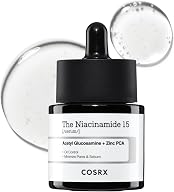
Pick niacinamide if your skin runs oily, congested, or reactive, you have a compromised barrier, or you've tried L-ascorbic acid before and it irritated you. It's well-tolerated up to 10%, and at 4–5% you get the full pigmentation and oil-control effect.
Paid links: Koracle may earn from qualifying purchases. Details.
View on Amazon. Amazon shows final price and availability.
Not sure which active fits your skin? Take the 60-second quiz.
Answer 9 questions. Koracle checks fit, conflicts, texture, and evidence.
Build my routine →How to use both in one routine
You don't have to choose — most evidence-based routines include both. The simplest layering pattern:
If layering feels like too much, alternate: vitamin C in the morning, niacinamide at night. The results are similar over a 12-week window.
The bottom line
If you only buy one, pick niacinamide for sensitive, oily, or barrier-compromised skin, and vitamin C for stubborn dark spots and daytime antioxidant defense. If you can use both, you're hitting the pigmentation pathway from two angles, and the evidence supports stacking them. Sunscreen does more work than either serum — wear it daily or you're treating spots that UV keeps remaking.
Common Questions
Can I use niacinamide and vitamin C together?↓
Yes. The old warning that they cancel each other out came from a 1960s study using unstable raw forms at high heat. Modern formulations are stable together, and several K-beauty serums combine them in one bottle.
Which one fades dark spots faster?↓
L-ascorbic acid at 10–20% generally shows visible brightening in 4–8 weeks. Niacinamide at 4–5% takes 8–12 weeks. Vitamin C is faster, but niacinamide is gentler if your skin is reactive.
Should I use vitamin C in the morning and niacinamide at night?↓
That works, but it's not required. You can layer them in the same routine. The AM/PM split is mostly useful if your vitamin C is a high-strength L-ascorbic acid that you want paired with sunscreen for daytime antioxidant defense.
Which is better for sensitive skin?↓
Niacinamide. It's well-tolerated up to 10% and rarely stings. L-ascorbic acid at 15–20% has a low pH that can sting, flush, or trigger reactive skin. If you're sensitive and want vitamin C, start with a derivative like sodium ascorbyl phosphate.
Turn what you learned into a routine that fits your skin.
Answer a few questions and Koracle will check formula fit, budget, tolerance, and routine order.
Build my formula-checked routine