
Niacinamide Sensitivity: Why Some Skin Reacts Badly to High Concentrations
In this article
You've read that niacinamide is the safe one. Well-tolerated at every skin type, layers with everything, no sun sensitivity. Then you tried a 10% serum and your cheeks turned red, or you got tiny bumps along your jaw, or your skin burned for twenty minutes after application.
The problem is not that your skin is broken. The problem is that "well-tolerated" was measured at concentrations most K-beauty serums have blown past.
TL;DR
Niacinamide sensitivity is almost always a formula problem, not an allergy. High concentrations, low pH, or degraded nicotinic acid drive the flush and sting. Start at 2–5%, patch test, and prioritize barrier support first.
Where the "well-tolerated" claim comes from
The evidence base for niacinamide safety was built on 2–5% formulas, not 10–20%. The foundational studies, including the frequently-cited work by Hakozaki et al. (2002) on pigment transfer and Bissett et al. (2005) on barrier function, tested 2% and 5% niacinamide. Those concentrations were exceptionally well-tolerated, with irritation rates barely above placebo.
Then the market moved. K-beauty and indie brands started stacking to 10%, 12%, even 20%, treating niacinamide like a hero-percentage active the way vitamin C brands do with L-ascorbic acid. The tolerability data did not scale with them.
A 2019 review by Boo noted that while niacinamide itself has a strong safety profile, concentration-dependent irritation becomes measurable above 5% in sensitive-skin subjects, and above 10% in the general population.
The concentration your skin tolerates is closer to what the original studies used than what your current serum contains.
What's actually causing the reaction
Three mechanisms drive most niacinamide sensitivity, and only one of them is niacinamide itself.
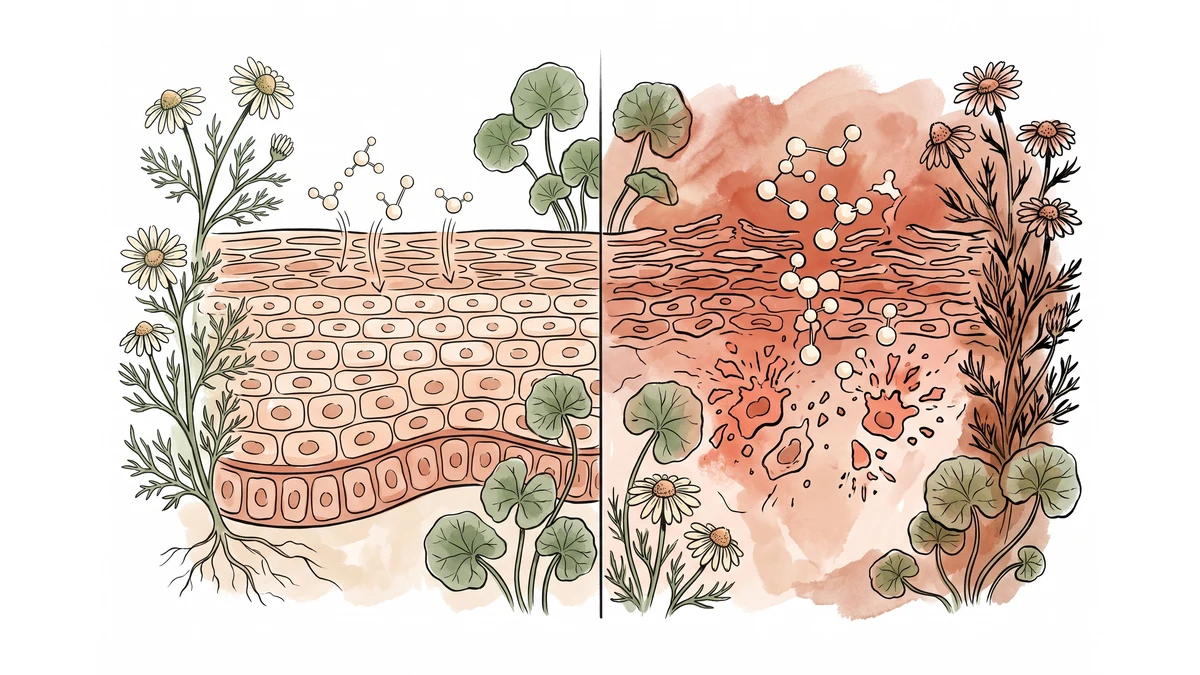
The first and most common is nicotinic acid contamination. Niacinamide (the amide) and nicotinic acid (the free acid, also called niacin) are structurally close cousins. Nicotinic acid triggers a well-documented vasodilation flush by activating GPR109A receptors on skin mast cells and Langerhans cells. That's the hot, red, prickling feeling. In fresh, well-formulated products, nicotinic acid stays under 0.1%. In degraded or poorly manufactured products, especially those exposed to heat or stored past their prime, it can climb high enough to trigger the flush in sensitive users.
A 2019 stability study by Wohlrab & Kreft found that niacinamide hydrolyzes to nicotinic acid faster at low pH (below 5.5) and at elevated storage temperatures. Formulas combining niacinamide with acids like ascorbic acid or AHAs create the exact conditions that accelerate this conversion.
The second is formula co-factors. A 10% niacinamide serum at pH 4.5 with 15% denatured alcohol and a fragrance blend is not testing your niacinamide tolerance. It's testing your tolerance to a low-pH, high-alcohol, fragranced product. The niacinamide gets blamed because it's on the front of the bottle.
The third, genuinely rare, is direct irritation from niacinamide at high percentages on compromised skin. If your barrier is already damaged from over-exfoliation or retinoid ramp-up, even a clean 5% formula can sting.
How to tell which one is your problem
The pattern of the reaction points to the cause.
A hot, flushed feeling that peaks in 5–15 minutes and fades within an hour is almost always the nicotinic acid flush. It looks dramatic but resolves cleanly. Switch to a fresher bottle or a lower percentage and it usually stops.
Small bumps, particularly along the jaw or hairline, appearing in the first two weeks are more often fungal acne flare from the humectants and thickeners in the base formula, not niacinamide itself. Niacinamide does not feed Malassezia.
Persistent redness, burning that lasts hours, or a rough sandpaper texture that develops over days points to barrier irritation. This is the one to take seriously. Stop the serum, drop everything active from your routine, and rebuild.
Not sure if your reaction is niacinamide or the rest of the formula?
Answer 9 questions. Koracle checks fit, conflicts, texture, and evidence.
Build my routine →What to do instead
Start lower than you think you need to. A 2–5% niacinamide delivers the majority of the sebum-regulating, barrier-supporting, and pigment-fading benefit shown in the original clinical trials. The jump from 5% to 10% adds a small increment. The jump from 10% to 20% adds almost nothing measurable in tolerability studies, but the irritation risk climbs sharply.
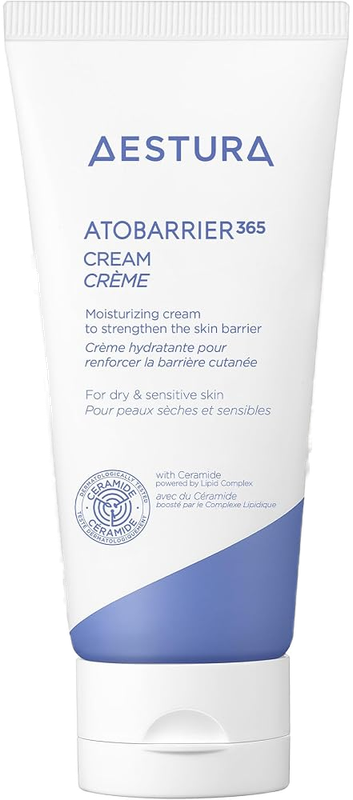
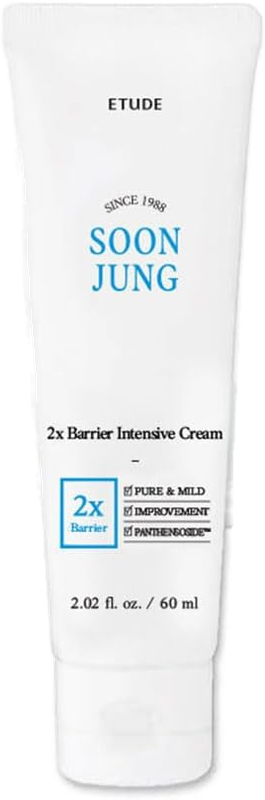
If you've had a bad reaction, spend two weeks on a barrier-focused routine before you try again. Ceramides, panthenol, and a simple occlusive give your skin the substrate it needs to actually benefit from an active later.
Paid links: Koracle may earn from qualifying purchases. Details.
View on Amazon. Amazon shows final price and availability.
For daily barrier support during a reset, a straightforward ceramide cream does more than most sensitive-skin serums. Look for formulas that lead with ceramide NP, panthenol, or cholesterol rather than adding them as afterthoughts.
Paid links: Koracle may earn from qualifying purchases. Details.
View on Amazon. Amazon shows final price and availability.
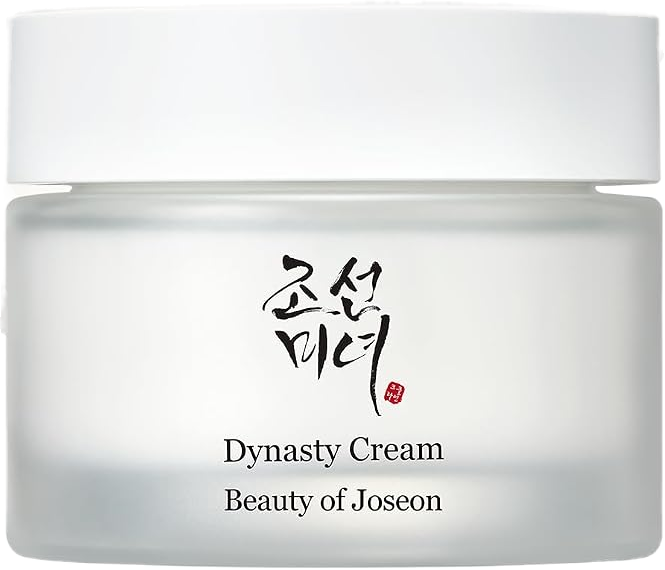
When you reintroduce niacinamide, pick a formula in the 2–5% range with a pH close to physiological skin (5.5–6.5) and no ascorbic acid or acids stacked in the same bottle. A niacinamide-forward moisturizer at a moderate percentage is easier for reactive skin than a punchy serum.
Paid links: Koracle may earn from qualifying purchases. Details.
Recently checked. Amazon shows final price and availability.
The bottom line
Niacinamide sensitivity is almost always a formula problem masquerading as an ingredient problem. The molecule itself is one of the most-studied and best-tolerated actives in skincare, but only at the percentages the original studies actually used. If your skin reacts, drop to 2–5%, check the pH, and rebuild the barrier before you retry. Chasing a 20% serum is not the win the label makes it look like.
Common Questions
Is niacinamide sensitivity the same as a niacinamide allergy?↓
Almost never. True niacinamide allergy is rare in the dermatology literature. What most people experience is a flush from nicotinic acid contamination or irritation from formula co-factors like a low pH or high alcohol content.
Can I build tolerance to 10% niacinamide?↓
Sometimes, but it's usually not worth chasing. Start at 2–5% for four weeks. If your skin tolerates it, the jump to 10% delivers small returns and often triggers the flush or purge that made you quit last time.
Why does my niacinamide serum sting only sometimes?↓
The formula's pH shifts as it ages, and nicotinic acid can accumulate in older or heat-exposed bottles. A serum that stung in month six probably didn't sting on day one.
Should I stop niacinamide if I break out in the first week?↓
Not immediately. A short adjustment period with mild bumps can happen, but true irritation looks like burning, persistent redness, or a rash. If it's the second, stop and switch to a barrier cream for two weeks before retrying at a lower percentage.
Turn what you learned into a routine that fits your skin.
Answer a few questions and Koracle will check formula fit, budget, tolerance, and routine order.
Build my formula-checked routine