
Mugwort in K-Beauty: Soothing Herb or Fragrant Filler?
In this article
Your feed keeps showing you that dark green mugwort essence, the one that looks like matcha and promises to calm every red patch on your face. The claim is that mugwort (artemisia) is a gentle herbal fix for irritation, breakouts, and sensitivity. The reality is more interesting, and a little more limited.
Mugwort does have real anti-inflammatory activity. But most of the evidence is in cell studies and animal models, not the kind of large clinical trials that back centella or niacinamide. That gap matters when you're choosing where to spend $30.
TL;DR
Mugwort has legitimate antioxidant and anti-inflammatory activity in lab studies, but human trials are thin. It's a reasonable soothing ingredient if your skin tolerates it, not a first-line pick for compromised barriers or active flares.
What mugwort actually is
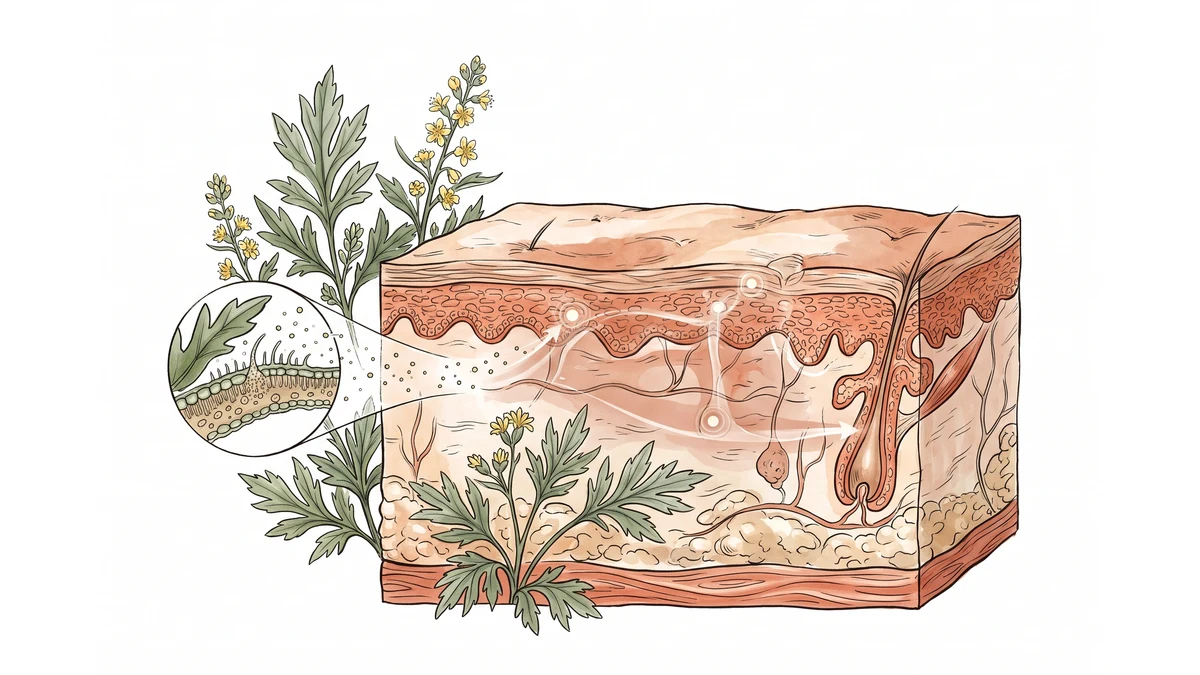
Mugwort is artemisia, a genus of aromatic plants that includes over 200 species. The one you'll see most often on Korean labels is Artemisia princeps or Artemisia vulgaris, sometimes listed as "artemisia leaf extract" or "artemisia annua." Different species, different compound profiles.
The interesting molecules are flavonoids (jaceosidin, eupatilin), phenolic acids (chlorogenic acid), and needed oils (cineole, camphor, thujone). Jaceosidin and eupatilin are the ones most studied for skin. They show antioxidant activity and can dampen inflammatory signaling in cultured skin cells (Lee et al., 2017).
The needed oil fraction is where the concerns show up. Thujone and camphor are what give mugwort its herbal smell, and they're also what can irritate sensitive skin at higher concentrations.
How the anti-inflammatory claim holds up
The mechanism is real, but the evidence is mostly preclinical. Eupatilin has been shown to inhibit NF-κB signaling and reduce pro-inflammatory cytokines like IL-6 and TNF-α in keratinocyte cultures (Min et al., 2011). That's the same pathway centella and niacinamide target, just through different molecules.
A 2021 review of Artemisia skin research counted over 40 in vitro studies demonstrating anti-inflammatory or antioxidant activity, but only a handful of controlled human trials, most with small sample sizes and short durations (Ekiert et al., 2021).
Compare that to centella, which has multiple randomized trials showing measurable improvement in wound healing, TEWL, and scar appearance. The mugwort data suggests it should work. The clinical proof that it does work on your face over weeks is not there yet.
That doesn't mean mugwort is a scam. It means it sits in a different evidence tier, and pricing should reflect that.
Who should try it and who should skip it
If your skin is generally calm and you're rotating soothing essences, mugwort is fine to experiment with. The antioxidant activity is genuine, and many people find the lightweight texture pleasant under other products. Layering a mugwort essence under a barrier cream is a low-risk way to see if it helps.
Paid links: Koracle may earn from qualifying purchases. Details.
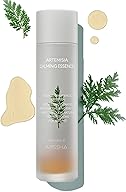
View on Amazon. Amazon shows final price and availability.
If your barrier is actively compromised, if you're dealing with a retinoid flare, or if you have plant allergies, this is not where I'd start. Mugwort needed oil components can sting compromised skin. Cross-reactivity with ragweed is well documented, so anyone with seasonal allergies should patch test carefully.
For active inflammation, centella has better evidence and gentler formulation history.
Paid links: Koracle may earn from qualifying purchases. Details.
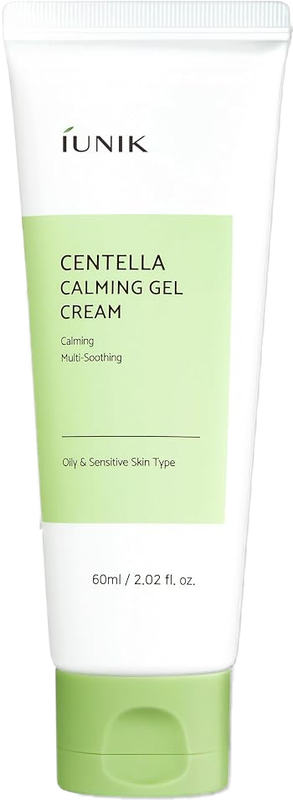
View on Amazon. Amazon shows final price and availability.
Not sure if mugwort fits your skin type?
Answer 9 questions. Koracle checks fit, conflicts, texture, and evidence.
Build my routine →What "100% mugwort" on the label really means
A "100% artemisia essence" claim usually means the water phase is replaced with mugwort extract, not that the whole product is mugwort. You're still getting preservatives, humectants, and pH adjusters. The 100% refers to what the water was swapped for.
This isn't dishonest, but it's misleading if you assume higher percentage means higher active concentration. The strength of the extract itself, meaning how much jaceosidin and eupatilin per milliliter, varies by supplier and processing method. A brand using a standardized 30% extract can deliver more active compound than one using a weaker 100% swap.
If a brand publishes the specific flavonoid content, that's the number worth looking at. Most don't, which is why the "fit" question comes down to whether your skin responds, not what the front of the bottle claims.
The bottom line
Mugwort has real anti-inflammatory activity and is a reasonable soothing ingredient if your skin tolerates aromatic botanicals. It's not the strongest evidence-backed pick for calming irritation, and it can trigger reactions in people with plant allergies. Patch test, treat it as a supporting player rather than a hero, and don't pay a premium based on the "100%" claim alone.
Common Questions
Is mugwort better than centella for sensitive skin?↓
Centella has more clinical trials behind it and a clearer mechanism through TECA and madecassoside. Mugwort has good in vitro anti-inflammatory data but fewer human studies. If you're new to soothing ingredients, start with centella. If centella works but you want variety, mugwort is a reasonable rotation.
Can mugwort trigger allergies?↓
Yes. Mugwort pollen is a known allergen for people with hay fever, and there's cross-reactivity with ragweed and some foods. Topical reactions are rarer than inhaled ones, but patch test on your inner arm for three days before using on your face if you have plant allergies.
Is fermented mugwort more effective?↓
Fermentation can increase the concentration of certain flavonoids and improve skin penetration in lab studies. Whether that translates to a visible difference on your face is not well established. Don't pay a big premium for 'fermented' as a marketing claim alone.
How high should the mugwort concentration be?↓
Most K-beauty essences use extracts ranging from 5% to 100% of the water phase. Higher isn't automatically better because the active compound concentration inside the extract varies by supplier. A well-formulated 30% extract can outperform a 100% extract from a weaker batch.
Turn what you learned into a routine that fits your skin.
Answer a few questions and Koracle will check formula fit, budget, tolerance, and routine order.
Build my formula-checked routine