
Best Korean Sunscreens for Oily Skin: What Makes a Formula Feel Light

In this article
You've probably seen the claim: Korean sunscreens feel light because they're "elegant" or "advanced." That's marketing, not chemistry. The real reason a sunscreen disappears on oily skin has almost nothing to do with the country it was made in and everything to do with which UV filters and base oils are inside.
Once you know what to look for on the back of the bottle, you can spot a comfortable formula in fifteen seconds.
TL;DR
Korean sunscreens feel light on oily skin because they use modern organic filters (Uvinul A Plus, Tinosorb S, Uvinul T 150) suspended in low-viscosity esters instead of heavy occlusive oils. SPF number matters less than filter choice and base.
Why most US sunscreens feel heavy
The US is stuck with an old filter list. The FDA hasn't approved a new UV filter since 1999, which means American sunscreens lean hard on avobenzone, octocrylene, and homosalate. These filters work, but they're oil-soluble and require a lot of carrier to stay stable. That carrier is usually a thick ester or a silicone, and on oily skin it pools in your pores by lunchtime.
Korea, the EU, and Japan approved a generation of filters that work at lower concentrations: Uvinul A Plus (UVA), Tinosorb S (broad spectrum), and Uvinul T 150 (UVB). Less filter means less carrier oil. Less carrier oil means less slip.
This is the entire reason a Korean SPF 50+ can feel lighter than a US SPF 30.
What "light texture" actually means
A sunscreen's finish comes from three things: the filter system, the base oils, and the powder load. The label rarely tells you all three, so you have to read the ingredient list.
Filters tell you whether the formula starts heavy or light. If you see Tinosorb S, Uvinul A Plus, or Uvinul T 150 in the first half of the list, you're looking at a modern Korean or EU filter system. If the only UV protection is avobenzone plus homosalate, expect more weight on the skin.
Base oils tell you how it spreads. C12-15 alkyl benzoate, neopentyl glycol diheptanoate, and dicaprylyl carbonate are low-viscosity esters that feel like water. Caprylic/capric triglyceride is heavier but still acceptable. Mineral oil, dimethicone above 5%, or any "butter" will sit on top of oily skin.
Powders tell you the finish. Silica, silica silylate, and HDI/trimethylol hexyllactone crosspolymer soak up the first wave of sebum and create a soft-matte look. Without them, even a thin formula leaves a slight sheen.
The SPF number tells you how much UV gets blocked. The first ten ingredients tell you how the sunscreen will feel four hours from now.
The mineral question
Mineral filters aren't disqualified for oily skin, but they're harder to formulate light. Zinc oxide and titanium dioxide are physical powders. To make them spread without a white cast, formulators have to suspend them in a fair amount of oil or silicone. That extra carrier is what makes most mineral sunscreens feel like a primer.
A few Korean hybrids manage it by keeping zinc under 8% and using newer organic filters to do the heavy lifting. If you have truly sensitive skin and need mineral, look for non-nano zinc under 10% paired with at least one modern organic filter. Pure mineral SPF 50 on oily skin will almost always feel heavy.
How to tell in the store (or on a product page)
Three signals on the ingredient list, in order: First, scan for Tinosorb S, Uvinul A Plus, or Uvinul T 150. At least one should appear. Second, check that the first listed oil is an ester, not a triglyceride or a butter. Third, look for silica or a silica derivative in the bottom third of the list if you want a matte finish.
If all three boxes check, the sunscreen will almost certainly feel light. The brand story, the bottle design, and the "for oily skin" claim are noise compared to those three lines.
What to layer underneath
Sunscreen is the last step, but what's underneath decides whether it pills. Heavy creams with high silicone content roll up the moment you rub sunscreen on top. The fix is a thin, water-based hydrator that fully absorbs before the SPF goes on.
For oily skin specifically, a centella or green tea emulsion gives enough hydration without leaving a film for the sunscreen to slide on.
Paid links: Koracle may earn from qualifying purchases. Details.
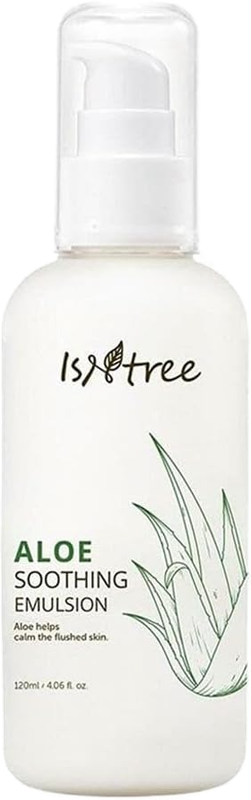
Check Amazon for current availability. Amazon shows final price and availability.
Paid links: Koracle may earn from qualifying purchases. Details.
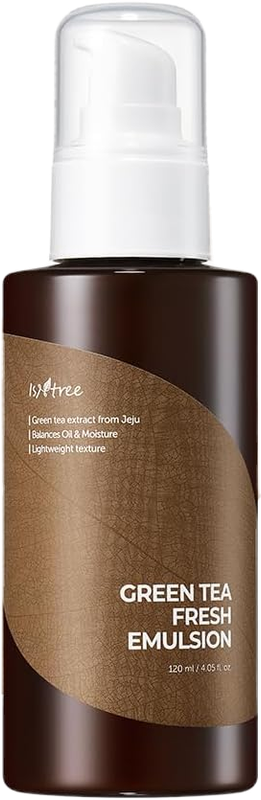
View on Amazon. Amazon shows final price and availability.
If you want lightweight hydration without barrier-heavy ingredients, a low molecular weight HA layer works well under modern SPF systems.
Paid links: Koracle may earn from qualifying purchases. Details.
View on Amazon. Amazon shows final price and availability.
Not sure which sunscreen finish actually fits your skin?
Answer 9 questions. Koracle checks fit, conflicts, texture, and evidence.
Build my routine →The matte finish trap
A matte sunscreen isn't an oil-controlling sunscreen. Silica absorbs sebum for a few hours. After that, your skin still produces oil at the same rate it always did. If your face is shiny by noon in a "matte" SPF, the formula isn't failing. Sebum production is just doing its job.
The realistic move is to start with a light, low-residue sunscreen and pat a thin layer of powder on top at midday. That gives you eight hours of comfort instead of pretending the SPF will do it alone.
The bottom line
If you have oily skin, ignore the SPF number for a second and read the filter list. A Korean sunscreen with Uvinul A Plus, Tinosorb S, or Uvinul T 150 in a light ester base will outperform a US SPF 50 on comfort every time. Layer it over a thin, water-based hydrator, not a heavy cream, and accept that "matte" buys you a few hours, not a full day.
Common Questions
Are chemical sunscreens always better for oily skin than mineral ones?↓
Usually, yes. Modern organic filters like Uvinul A Plus and Tinosorb S sit in lighter ester bases that absorb without a white cast or heavy mineral residue. But a well-formulated hybrid with low-percentage zinc can still feel light if the base is right.
Does SPF 50 always feel heavier than SPF 30?↓
Not in Korean formulas. Korea allows newer filters that hit SPF 50+ at lower total filter loads than US sunscreens. The finish depends more on the base oils and emulsifiers than the SPF number.
Will a 'matte finish' sunscreen actually control oil all day?↓
It controls initial finish, not sebum production. Most matte effects come from silica or starch that absorb the first few hours of oil. By hour four, your own sebum still shows through. Powder on top extends the effect.
Can I skip moisturizer if my sunscreen feels hydrating enough?↓
Often, yes, if your skin is genuinely oily. A hydrating Korean sunscreen with glycerin and HA can replace a lightweight moisturizer in the AM. Dry or combination skin usually still needs the moisturizer underneath.
Turn what you learned into a routine that fits your skin.
Answer a few questions and Koracle will check formula fit, budget, tolerance, and routine order.
Build my formula-checked routine