
Why Hyaluronic Acid Can Make Dry Skin Feel Tighter
In this article
You bought the hyaluronic acid serum because everyone said it would fix dry skin. You've been patting it on faithfully. Your skin still feels tight by lunchtime, and by evening it looks flaky.
You didn't buy the wrong product. You're using it in a way that's actively working against you.
TL;DR
Hyaluronic acid is a humectant, which means it pulls water from wherever it can find it. In dry air, that source becomes your own skin. Apply HA to damp skin and seal it with an occlusive cream, or skip the serum and use a barrier moisturizer instead.
The claim leaves out where the water comes from
Every HA product markets itself as "holding 1,000 times its weight in water." That number is real. What the marketing doesn't tell you is where that water comes from when you apply it.
Hyaluronic acid is a humectant. Humectants are sponges that grab water molecules from the nearest available source. In humid air (above 60% humidity), that source is the atmosphere, which is why HA feels amazing in a Seoul summer or a steamy bathroom.
In dry air, the atmosphere has nothing to give. So the HA reaches for the next available reservoir: the deeper layers of your own skin. That's the tightness you're feeling.
A humectant with nothing to seal it in doesn't hydrate your skin. It reroutes moisture from your dermis to the surface, where it evaporates.
How the mechanism actually works
Your skin has three layers of moisture defense, and HA only affects one of them.
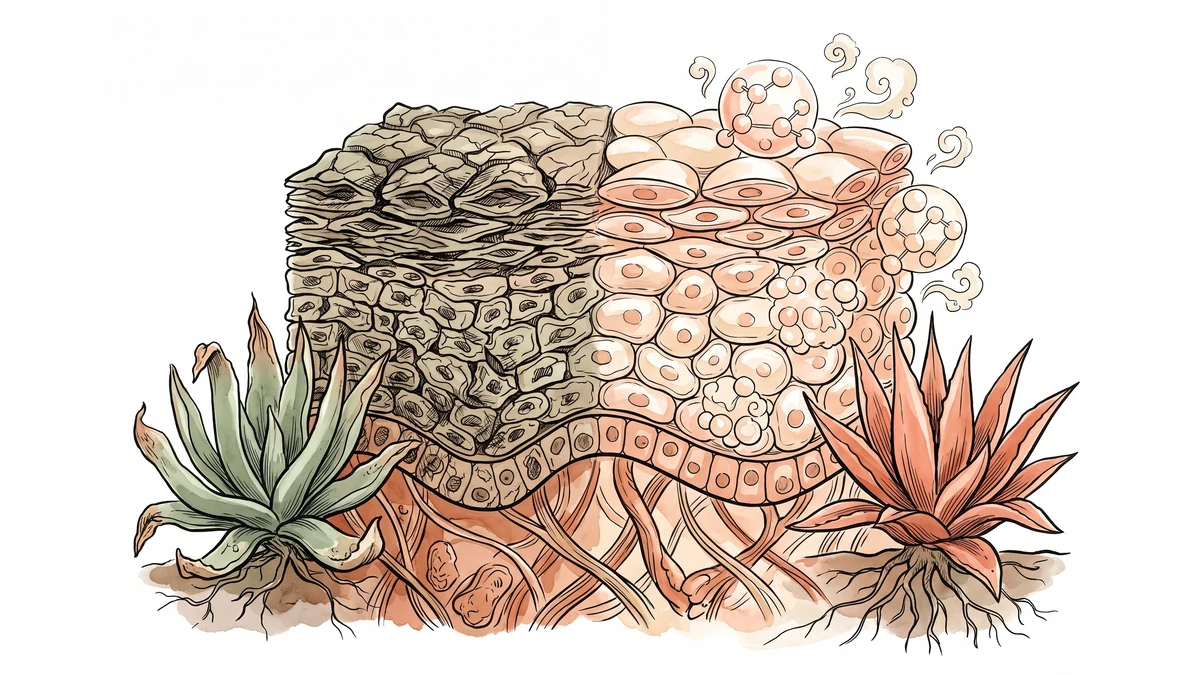
The top layer is your stratum corneum, held together by lipids like ceramides and cholesterol. Below that, the viable epidermis holds most of your skin's water. Deeper still, the dermis stores the majority of your body's natural hyaluronic acid.
When you apply topical HA to dry skin in dry air, it sits on the stratum corneum and starts pulling water upward through what's called transepidermal water loss, or TEWL. The water hits the surface, meets dry air, and evaporates. Your skin ends up drier than before you started.
Rawlings & Matts (2005) documented this pattern in their work on stratum corneum hydration: humectants applied to compromised or dry skin without occlusion measurably increase TEWL in low-humidity conditions.
The two fixes that actually work
You have two options, and both are simple.
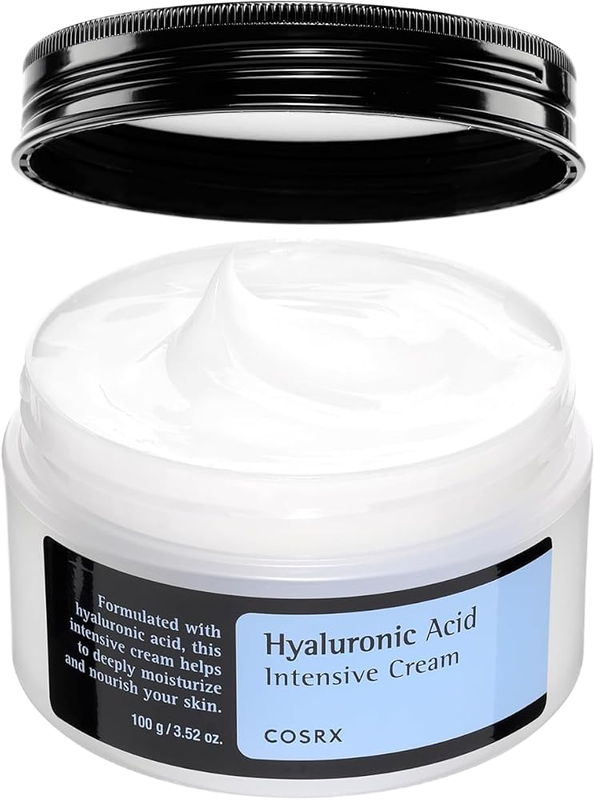
Option one: apply HA to damp skin, then immediately layer an occlusive on top. Damp skin gives the humectant water to grab. The occlusive cream, ideally one with ceramides, squalane, or panthenol, physically blocks that water from escaping. This is the sandwich method, and it's why K-beauty routines layer essence, serum, emulsion, and cream in that order.
Paid links: Koracle may earn from qualifying purchases. Details.
View on Amazon. Amazon shows final price and availability.
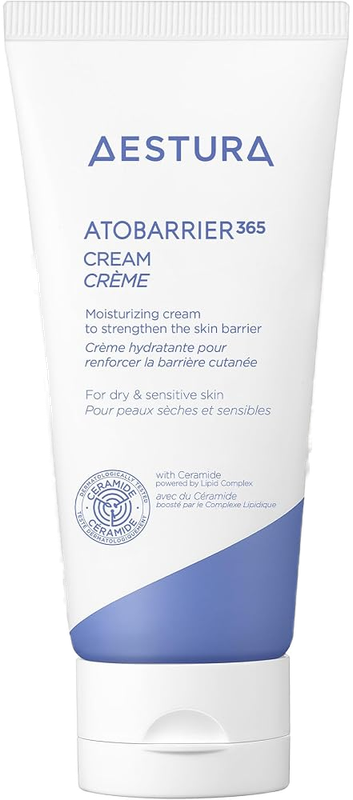
Option two: skip the standalone HA serum entirely and use a barrier-focused cream as your main hydration step. If you're in a dry climate, running heaters all winter, or dealing with a compromised barrier, this is often the better move. Ceramide creams hold onto the water your skin already has instead of trying to pull more in.
Paid links: Koracle may earn from qualifying purchases. Details.
View on Amazon. Amazon shows final price and availability.
Not sure if your dry skin needs a humectant or an occlusive?
Answer 9 questions. Koracle checks fit, conflicts, texture, and evidence.
Build my routine →When HA does work brilliantly
None of this means hyaluronic acid is bad. In the right conditions, it's one of the most reliable hydrators in your routine.
HA works well when the humidity is above 50%, when your skin is genuinely dehydrated rather than dry (dehydration is a water problem, dryness is a lipid problem), and when you're sealing it with something occlusive within about 60 seconds of application.
If you want a formulation that solves the sealing problem in one step, look for HA already blended with ceramides or squalane. The occlusive is built in, so you're not relying on a second product to save the first.
Paid links: Koracle may earn from qualifying purchases. Details.
View on Amazon. Amazon shows final price and availability.
The bottom line
Hyaluronic acid isn't the problem. Applying it to dry skin in dry air without an occlusive layer is the problem. Either seal it in with a ceramide or squalane cream within a minute of application, or skip the serum and let a barrier moisturizer do the whole job. If your skin feels tighter after your HA serum than before, that's your signal to change the sequence, not the ingredient.
Common Questions
Should I stop using hyaluronic acid if my skin is dry?↓
No, but you need to change how you use it. Apply it to damp skin and seal it with an occlusive cream. The tightness comes from the humectant pulling water out of your skin when there's nothing above it to hold moisture in.
Is low molecular weight hyaluronic acid better for dry skin?↓
It penetrates deeper, but it doesn't solve the core problem. If the air around you is dry and you don't seal it, any HA can still pull water from the deeper skin layers. Layering matters more than molecular weight.
Can I use hyaluronic acid in winter?↓
Yes, if you apply it to damp skin and lock it in with a ceramide or squalane cream. In low-humidity air (below 40%), skipping the occlusive step is where most people go wrong.
What should I use instead if HA keeps failing me?↓
Try a barrier cream with ceramides, panthenol, or squalane as the main step, and skip the standalone HA serum. Occlusive-heavy formulas hold onto the water your skin already has instead of trying to pull more in.
Turn what you learned into a routine that fits your skin.
Answer a few questions and Koracle will check formula fit, budget, tolerance, and routine order.
Build my formula-checked routine