
Glycerin vs Hyaluronic Acid: Which Humectant Wins for Dry Skin?
In this article
Your favorite K-beauty serum probably lists hyaluronic acid near the top and glycerin somewhere in the middle of the ingredient list. The marketing puts HA on the front of the bottle. The formulator knows glycerin is doing most of the work.
That mismatch is the whole story of this post.
TL;DR
For most dry skin, glycerin outperforms hyaluronic acid on the metrics that matter: barrier repair, hydration depth, and performance in low humidity. Use both. Do not pay a premium for HA-forward products that skimp on glycerin.
What each humectant actually does
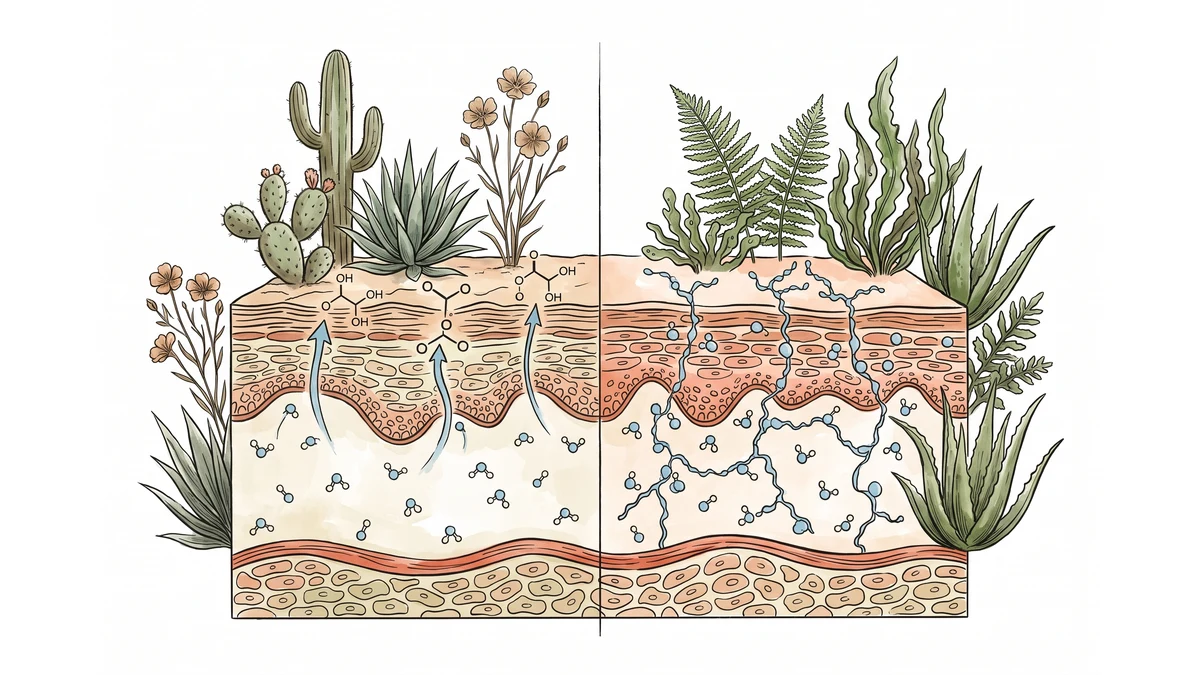
Both molecules bind water, but they do it at different scales. Glycerin is a small three-carbon molecule that slips into the corneocytes (the flat cells that make up your outer skin layer) and holds water there. Hyaluronic acid is a large polysaccharide that mostly sits on the surface, forming a hydrated film.
That size difference is why the two behave differently under stress. Glycerin gets into the tissue. Most cosmetic hyaluronic acid does not, unless it is fragmented into low molecular weight forms.
The evidence gap nobody mentions
Glycerin has decades of clinical data. Hyaluronic acid has decades of marketing. In a controlled comparison, Fluhr et al. (2008) found glycerin outperformed most other humectants on stratum corneum hydration and barrier function after repeated use. Glycerin also accelerated barrier recovery in tape-stripped skin (Fluhr et al., 1999), something topical HA has not consistently shown.
Glycerin gets into the tissue. Most cosmetic hyaluronic acid does not.
Hyaluronic acid does have hydration data. Pavicic et al. (2011) showed that low molecular weight HA (around 50 kDa) penetrated deeper and improved skin hydration and elasticity over 60 days. But the effect was tied to molecular weight. A random "hyaluronic acid" claim on a label tells you nothing about which form is inside or whether it can do anything below the surface.
The humidity problem
In dry air, hyaluronic acid can work against you. Humectants pull water from wherever water is available. When indoor humidity drops below about 60%, which happens all winter with heating on, surface HA can pull moisture from deeper in your epidermis instead of from the air. You end up with a hydrated film on top and drier skin underneath.
Glycerin is less humidity-dependent than hyaluronic acid because it works inside the corneocytes rather than as a surface film. In dry conditions, this is the difference between a humectant that helps and one that quietly makes things worse.
This is why sealing matters. A humectant serum without an occlusive layer on top is a half-finished routine, especially with HA in low humidity.
What to actually buy
Skip the ingredient hierarchy on the front of the bottle and read the first eight ingredients on the back. Glycerin in the top five is a green flag. HA anywhere on the list is fine, but not worth a premium on its own.
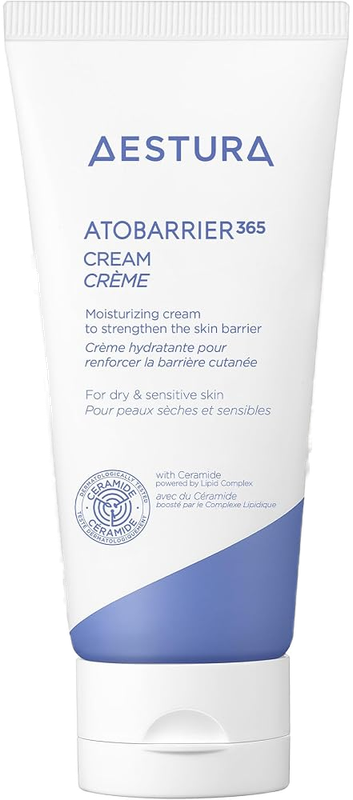
For dry skin that needs both humectants plus a proper barrier layer, a ceramide cream loaded with glycerin does more than a high-priced HA ampoule.
Paid links: Koracle may earn from qualifying purchases. Details.
View on Amazon. Amazon shows final price and availability.
If you want a lighter finish and prefer the HA-forward format, the low molecular weight versions have the most credible data behind them.
Paid links: Koracle may earn from qualifying purchases. Details.
View on Amazon. Amazon shows final price and availability.
And if your skin runs dehydrated but not particularly dry, a glycerin-heavy lotion is often enough on its own.
Paid links: Koracle may earn from qualifying purchases. Details.
![ULTRA FACIAL MOISTURIZING LOTION [Frangrance Free]](/product-cutouts/6b0e3a1873bad05c.png)
View on Amazon. Amazon shows final price and availability.
Not sure if your skin needs humectants, occlusives, or both?
Answer 9 questions. Koracle checks fit, conflicts, texture, and evidence.
Build my routine →How to layer them without wasting product
Apply humectants to slightly damp skin, then seal within 60 seconds. The damp skin gives the humectant water to bind. The seal keeps it from evaporating. Skip either step and you lose most of the benefit.
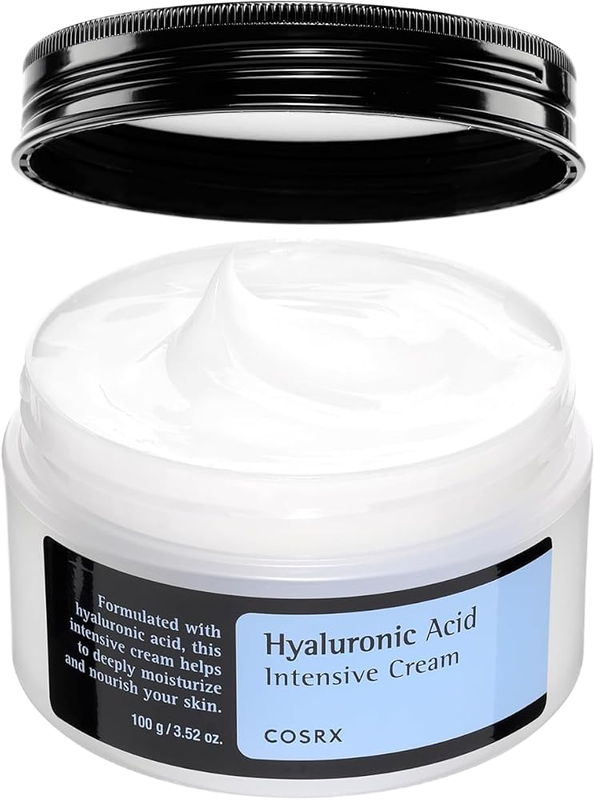
Order matters less than you think, as long as the occlusive goes last. If you are using a HA serum and a glycerin-rich cream, use the serum first because it is thinner. The cream on top does the sealing.
Paid links: Koracle may earn from qualifying purchases. Details.
View on Amazon. Amazon shows final price and availability.
The bottom line
Glycerin is the humectant with the stronger evidence, the better performance in dry air, and the clearer barrier-repair story. Hyaluronic acid is fine when it is formulated at the right molecular weight and sealed properly, but it is not worth paying more for. Use both, seal them in, and stop letting the front of the bottle decide which molecule matters.
Common Questions
Can I use glycerin and hyaluronic acid together?↓
Yes, and most K-beauty moisturizers already do. They pull water in through slightly different mechanisms, so stacking them tends to hydrate better than either alone. Just seal with an occlusive layer afterward.
Does hyaluronic acid pull water from deeper skin in dry air?↓
It can. When ambient humidity drops below about 60%, humectants at the surface may draw moisture from the lower epidermis instead of the air. That is why sealing with a cream or occlusive matters, especially in winter.
Is a higher percentage of hyaluronic acid better?↓
No. Above roughly 2%, formulas get tacky without meaningful hydration gains. Molecular weight and formula design matter more than the number on the front label.
Which is better for a compromised barrier?↓
Glycerin. It has direct evidence for accelerating barrier recovery and is less dependent on ambient humidity than high molecular weight hyaluronic acid.
Turn what you learned into a routine that fits your skin.
Answer a few questions and Koracle will check formula fit, budget, tolerance, and routine order.
Build my formula-checked routine