
How to Pick a Ceramide Moisturizer for Acne-Prone Skin
In this article
You've been told ceramide creams are for dry, sensitive skin. Your skin is acne-prone, so you skipped them and went straight to oil-free gels. Now your face is breaking out and stinging when you apply your BHA.
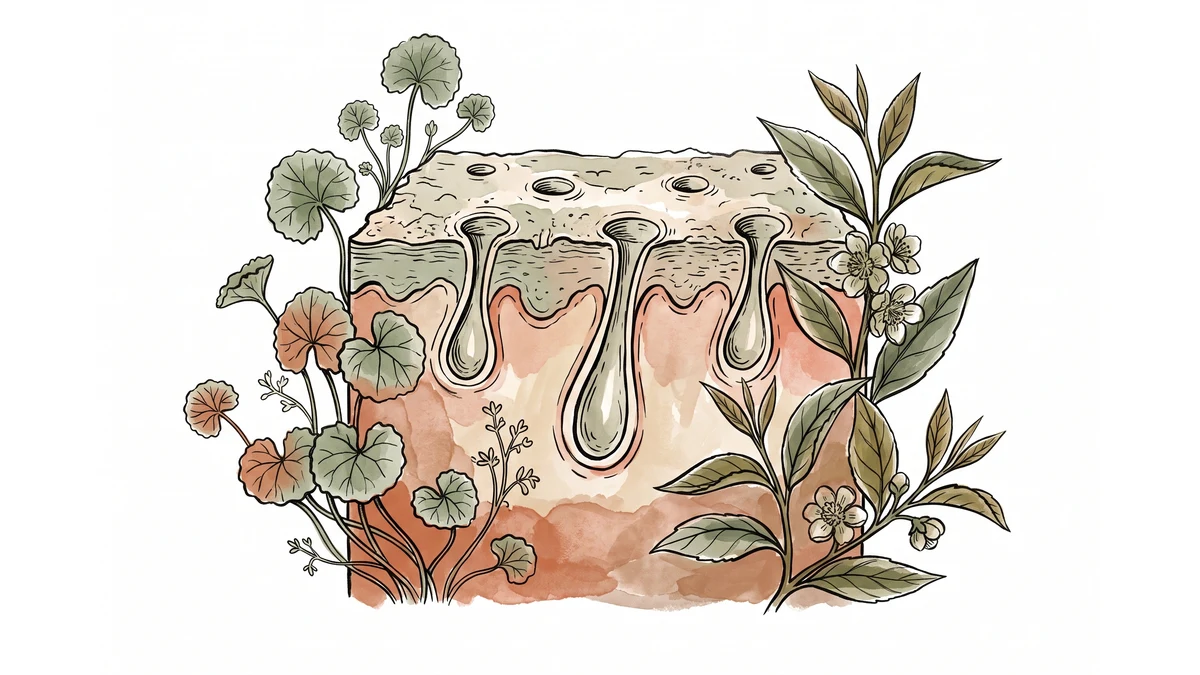
Here's what the "dry skin only" framing gets wrong: ceramides are not a moisture ingredient. They're a barrier ingredient. And acne-prone skin, especially skin using actives, has a broken barrier more often than not.
TL;DR
Ceramides don't cause acne. The oils and butters they're often paired with do. Pick a ceramide moisturizer with a lightweight base and no heavy plant lipids, and it will calm your skin without clogging it.
Why acne-prone skin needs ceramides in the first place
Your acne routine is probably damaging your barrier faster than you think. Salicylic acid, benzoyl peroxide, adapalene, and tretinoin all work by disrupting the top layers of skin. That's the point. But every disruption pulls ceramides, cholesterol, and fatty acids out of your stratum corneum along with the dead cells and debris.
When ceramide levels drop, your skin loses water faster (transepidermal water loss goes up), and the resulting dehydration triggers a compensatory oil response. That's the paradox most acne-prone readers run into: the more aggressively they treat oiliness, the oilier their skin gets by evening.
A study by Yamamoto et al. (1991) found that acne patients had significantly lower ceramide levels in their stratum corneum than healthy controls, and the deficit was worst in areas with active breakouts. The acne itself is a barrier problem, not only a bacterial one.
Ceramides are not what clogs pores. The formula around them is.
What actually clogs pores in a moisturizer
The comedogenic ingredients in a moisturizer are almost never the ceramides. They're the vehicle: the oils, butters, and waxes used to deliver the ceramides into the formula. Here's what to scan the ingredient list for if you're acne-prone:
Coconut oil, coconut alkanes, and isopropyl myristate rank high on comedogenicity scales. Cocoa butter and wheat germ oil can trigger breakouts on reactive skin. Heavy silicones like dimethicone are generally fine, but they can trap actives against skin and cause irritation bumps that look like acne.
What's safe: squalane, glycerin, panthenol, hyaluronic acid, cholesterol, and the ceramides themselves. If a moisturizer's first ten ingredients are mostly humectants and lightweight emollients, ceramides included, you're fine.
A comedogenicity study by Fulton et al. (1984) ranked 22 common cosmetic ingredients. Coconut oil scored 4/5, while cetyl alcohol and dimethicone scored 0-1. Ceramides were not tested because they were not commercially used at the time, but subsequent formulation data has consistently shown them as non-comedogenic.
The three formula types to consider
Match the base texture to what your skin is doing right now, not to what the label promises.
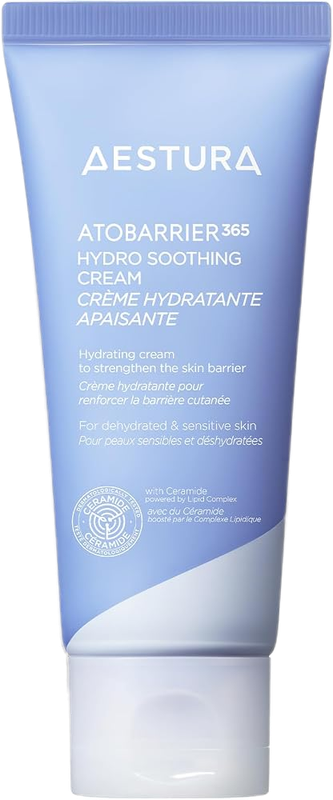
If your skin is oily-but-irritated (typical for anyone on BHA or benzoyl peroxide), you want a gel-cream or lotion with ceramides. These sit in the low-to-mid emollient range: enough lipid to patch the barrier, not enough to clog.
Paid links: Koracle may earn from qualifying purchases. Details.
View on Amazon. Amazon shows final price and availability.
The AESTURA Hydro Soothing version uses ceramide NP in a water-gel base with panthenol. There's no coconut derivative, no shea butter, no fragrance. It layers under sunscreen without pilling and doesn't leave the tacky film that trips up oily skin at midday.
If you're on a retinoid and your skin is flaking, you want something a step richer. The Illiyoon lotion is a good pick here: pediatric-grade, five ceramides, and cheap enough to use generously.
Paid links: Koracle may earn from qualifying purchases. Details.
View on Amazon. Amazon shows final price and availability.
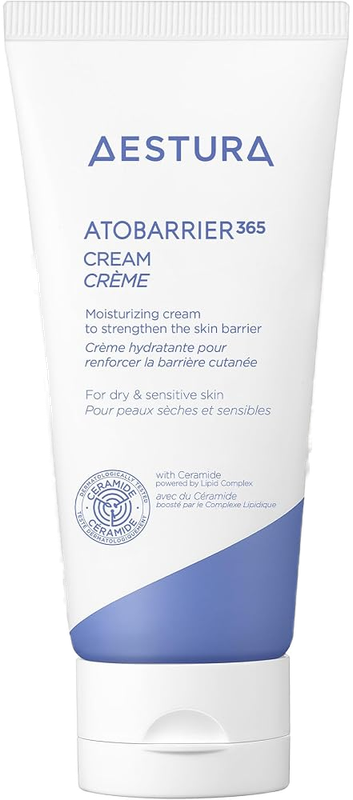
If your acne is mostly along the jawline or cheeks and your skin is dry-dehydrated rather than oily, the full-strength Atobarrier365 cream is denser but still passes the comedogenicity check. It's the one to reach for in winter or after a chemical peel.
Paid links: Koracle may earn from qualifying purchases. Details.
View on Amazon. Amazon shows final price and availability.
Not sure if your barrier is compromised or if it's just your skin type?
Answer 9 questions. Koracle checks fit, conflicts, texture, and evidence.
Build my routine →How to layer it with active treatments
Apply your acne treatment first, then the ceramide moisturizer. The sequence matters. Actives need to reach live skin to work. Layering a moisturizer underneath dilutes them and slows penetration.
The 60-second wait between active and moisturizer isn't dogma, but it does reduce the sting and prevents the two products from mixing into a slurry on your skin. If you're new to a retinoid, you can also try the sandwich method: moisturizer, wait, retinoid, wait, moisturizer again. That cuts irritation by roughly half in the first few weeks without meaningfully reducing efficacy.
What to skip
Skip anything marketed as a "ceramide facial oil" if you're breakout-prone. These are almost always plant oil bases with a token amount of ceramide added for the label. The oil profile determines the comedogenicity, not the ceramide claim.
Also skip ultra-rich "ceramide balms" during active breakouts. The barrier work matters, but occlusive balms trap sebum and bacteria against inflamed skin. Save those for post-treatment recovery, when the breakouts have calmed but the skin is still flaking.
The bottom line
Ceramide moisturizers belong in an acne-prone routine, especially if you're using any active treatment. The trick is picking a lightweight base without coconut derivatives or heavy butters, and layering it after your active rather than before. Start with a gel-cream or lotion, upgrade to a richer cream only when your skin actually asks for it.
Common Questions
Can ceramides cause breakouts?↓
Ceramides themselves are non-comedogenic and part of your skin's natural lipid barrier. Breakouts usually come from other ingredients in the formula, such as heavy plant butters, coconut derivatives, or thick occlusives paired with ceramides in richer creams.
Should I use a ceramide moisturizer if my skin is oily and acne-prone?↓
Yes. Oily skin can still have a damaged barrier, especially if you're using actives like BHA, retinoids, or benzoyl peroxide. A lightweight ceramide lotion or gel-cream restores lipids without adding grease.
Can I layer a ceramide moisturizer over acne treatments?↓
Yes, and you should. Apply your acne active first, wait a minute for it to absorb, then layer the ceramide moisturizer on top. This reduces the sting and flaking that come with tretinoin, adapalene, or high-percentage BHA.
Turn what you learned into a routine that fits your skin.
Answer a few questions and Koracle will check formula fit, budget, tolerance, and routine order.
Build my formula-checked routine