
Why Your Skin Barrier Still Feels Tight After Using Moisturizer
In this article
Your moisturizer feels great for the first ten minutes. Then your skin tightens again, maybe worse than before. You add another layer, and the cycle repeats.
The problem usually isn't that you need more product. It's that the product you're using is mostly water and humectants, and your barrier is asking for something else entirely.
TL;DR
Tightness after moisturizing almost always means your barrier is losing water faster than your product can hold it in. The fix is lipids, not more hydration.
What "moisturizing" actually means
Most moisturizers do one of three jobs, and the label rarely tells you which. Humectants (glycerin, hyaluronic acid, panthenol) pull water into the upper layer of skin. Emollients (squalane, fatty alcohols) smooth the gaps between skin cells. Occlusives (petrolatum, shea butter, certain silicones) seal moisture in by slowing evaporation.
A good moisturizer uses all three. A lot of lightweight K-beauty creams lean heavy on humectants because they feel elegant and non-greasy. That's lovely on a humid Seoul morning. It's not enough when your barrier is already compromised and the air around you is dry.
A humectant without an occlusive is a sponge in the wind.
Why hyaluronic acid can backfire
Hyaluronic acid pulls water from whatever source is closest. In humid air, that source is the atmosphere, and your skin plumps up. In dry air (winter, airplanes, air-conditioned offices), the nearest water source becomes the deeper layers of your own skin.
Without an occlusive layer sealed on top, the water you dragged up evaporates. You end up with less moisture than you started with. This is called transepidermal water loss, and it's the mechanism behind that tight, almost shrink-wrapped feeling 15 minutes after applying a hydrating serum.
Hyaluronic acid works beautifully when you follow it with a cream containing emollients and occlusives. On its own, in a dry room, it can leave you worse off than nothing.
The three lipids your barrier is missing
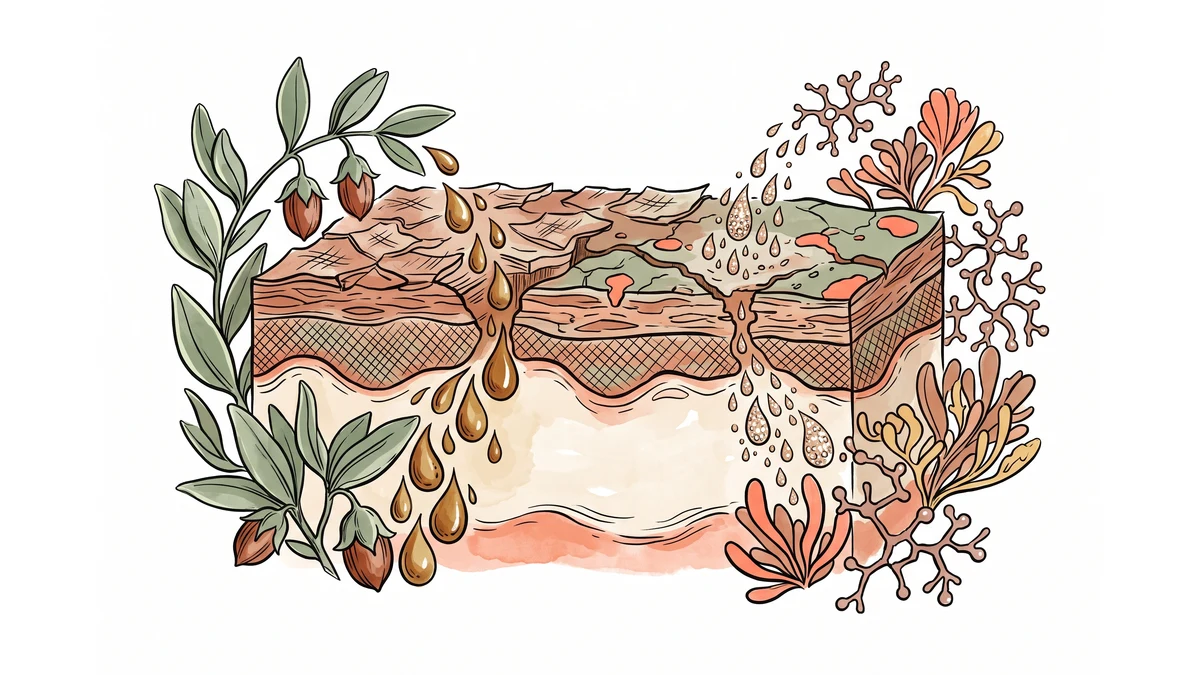
Your stratum corneum is held together by a specific lipid matrix: roughly 50% ceramides, 25% cholesterol, 15% fatty acids (Elias, 2005). When that ratio drops, water leaks out through the gaps between skin cells. No amount of surface hydration fixes a structural leak.
A landmark study by Man, Feingold, and Elias (1993) showed that applying an incomplete lipid mixture (ceramides alone, or cholesterol alone) delayed barrier recovery. Only a complete ratio of all three lipids restored barrier function at the normal rate.
This is why creams marketed around a single star lipid can underperform. Your skin isn't short on just one thing. It's short on the full set.
Paid links: Koracle may earn from qualifying purchases. Details.
View on Amazon. Amazon shows final price and availability.
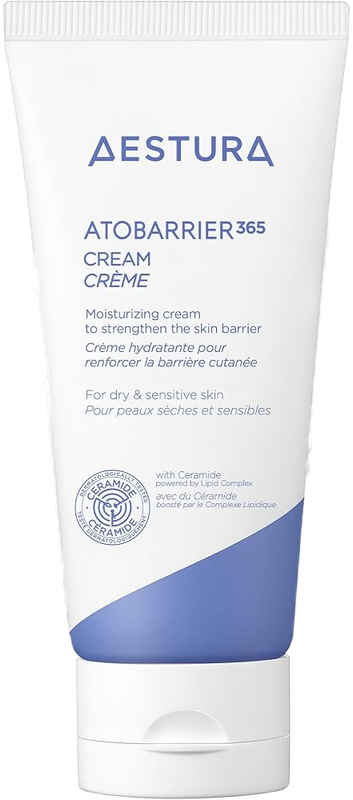
AESTURA's Atobarrier365 formulations are built around this logic. The cream pairs ceramides with cholesterol and a fatty acid base, which is closer to what your skin is actually trying to rebuild.
Paid links: Koracle may earn from qualifying purchases. Details.
View on Amazon. Amazon shows final price and availability.
Illiyoon's Ceramide Ato Concentrate Cream does something similar at a lower price point. It's heavier, which matters if you're layering it as your final step on genuinely dry skin.
What to do tonight if your skin feels tight
Stop adding more serum. Each hydrating layer without a seal on top makes the problem worse in dry air. Instead, do this:
Not sure if your tightness is barrier damage or just dehydration?
Answer 9 questions. Koracle checks fit, conflicts, texture, and evidence.
Build my routine →When the moisturizer isn't the problem
Sometimes the formula is fine and the surrounding routine is the issue. Over-cleansing, high-strength actives used too often, hot water, physical scrubs, or stacking a retinoid with an acid will keep your barrier damaged no matter what cream you finish with.
Paid links: Koracle may earn from qualifying purchases. Details.
View on Amazon. Amazon shows final price and availability.
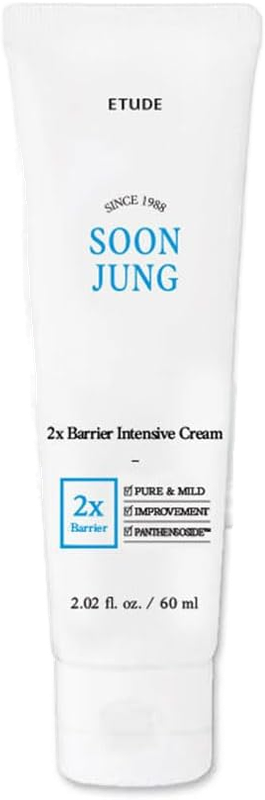
If your skin reads as reactive and visibly inflamed, a panthenol-forward cream like Etude SoonJung is a good holding pattern. Panthenol attracts water and has mild anti-inflammatory activity (Ebner et al., 2002), which calms the sensation of tightness while the lipid matrix rebuilds underneath.
The bottom line
Tightness after moisturizing is a signal that your barrier is leaking water faster than your product can replace it. The answer is almost never more humectant. It's a cream with the ceramide-cholesterol-fatty acid ratio your skin is trying to rebuild, applied over damp skin, with actives on pause until the tightness is gone.
If you're still tight after a week of a simple ceramide routine, the issue is upstream: cleanser, actives, water temperature, or something your skin is reacting to. Fix that, not the moisturizer.
Common Questions
Why does my skin feel tight 10 minutes after moisturizing?↓
The water in your moisturizer evaporates faster than the occlusive layer can hold it in. If the formula is mostly humectants and water with little in the way of lipids or occlusives, the moisture leaves and takes some of your own with it. You feel the tightness because your barrier is losing water through gaps between skin cells.
Is hyaluronic acid making my skin feel drier?↓
It can, in dry air. Hyaluronic acid pulls water from the nearest available source. In low humidity, that source becomes your deeper skin layers. Without an occlusive sealed on top, the water you pulled up evaporates and the tightness feels worse than before you applied anything.
Do I need a thicker moisturizer or a different one?↓
Thicker isn't automatically better. What matters is whether the formula includes the three lipids your barrier is actually missing: ceramides, cholesterol, and fatty acids. A thin lotion with the right lipid ratio outperforms a heavy cream that's mostly water and glycerin.
How long does it take to repair a compromised barrier?↓
Mild barrier disruption resolves in 3–7 days. More significant damage, from over-exfoliation or retinoid overuse, takes 2–4 weeks of consistent lipid replacement and no actives. If tightness persists past a month on a simple ceramide routine, it's worth seeing a dermatologist to rule out an underlying condition.
Turn what you learned into a routine that fits your skin.
Answer a few questions and Koracle will check formula fit, budget, tolerance, and routine order.
Build my formula-checked routine