
Azelaic Acid for Redness and Acne: What It Actually Helps

In this article
You've probably seen azelaic acid recommended for everything: acne, rosacea, melasma, dark spots, even closed comedones. That kind of universal pitch usually means the marketing has outrun the evidence. With azelaic acid, the strange thing is that the evidence mostly holds up.
But not for everything. And not equally.
TL;DR
Azelaic acid does three different things at once: kills acne bacteria, calms inflammation, and slows melanin production. That's why it shows up for acne, rosacea, and dark spots. It's not equally strong at all three.
What azelaic acid actually is
Azelaic acid is a dicarboxylic acid that naturally occurs on your skin, produced by Malassezia yeast. The cosmetic and prescription versions are synthesized from oleic acid for consistency, but your skin already recognizes it.
That matters because azelaic acid is unusually well-tolerated. It doesn't strip the barrier the way a strong AHA does, and it doesn't photosensitize you the way retinoids do. The trade-off is that it works slowly. Most studies measure outcomes at 12 weeks, not 4.
How it works on three different problems
Most actives do one thing. Azelaic acid does three, through three separate mechanisms, which is why the use cases look unrelated on the shelf.
For acne, it inhibits Cutibacterium acnes (the bacteria behind inflammatory breakouts) and normalizes the keratin plug that blocks pores. A review found 20% azelaic acid roughly comparable to 5% benzoyl peroxide for inflammatory acne, with significantly less irritation (Sieber & Hegel, 2014).
For rosacea, it suppresses kallikrein-5, an enzyme that drives the inflammatory cascade behind persistent redness and bumps. This is the mechanism that matters if your face flushes and stays flushed.
For dark spots, it inhibits tyrosinase (the enzyme that makes melanin) but selectively. It targets hyperactive melanocytes, the ones producing too much pigment, and largely ignores normal ones. That's why it rarely causes the patchy lightening that hydroquinone can.
Azelaic acid is one of the few actives that works on inflammation, bacteria, and pigment without picking a fight with your barrier.
What the evidence actually shows
A 12-week trial of 15% azelaic acid gel reduced inflammatory rosacea lesions by 58% and improved erythema scores significantly more than placebo (Thiboutot et al., 2003). For melasma, a 24-week study found 20% azelaic acid matched 4% hydroquinone in pigment reduction with fewer side effects (Balina & Graupe, 1991).
The strongest data is for rosacea and inflammatory acne. The melasma data is solid but takes longer, usually 16-24 weeks before you see meaningful change. For post-inflammatory hyperpigmentation (those flat dark marks left after a pimple heals), the evidence is good but most studies use it alongside other actives, so it's hard to isolate.
What the evidence does not strongly support: closed comedones (the small bumpy texture), oil control, or active anti-aging benefits. People report results for these, but the trials don't back it up the way they do for the big three.
What percentage you actually need
Over-the-counter formulas in Korean skincare typically run 5-10%, which is enough for mild acne, post-acne marks, and general redness. Prescription strengths are 15% (gel/foam) or 20% (cream), and those are what the clinical trials usually use.
If you have diagnosed rosacea or moderate-to-severe acne, the 10% formulas help but the prescription versions help more. If you're treating post-acne dark marks or background redness, 10% is the right starting point.
Paid links: Koracle may earn from qualifying purchases. Details.
View on Amazon. Amazon shows final price and availability.
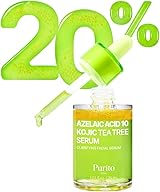
The Purito Azelaic Acid 10% Serum is the cleanest OTC option in this range. It uses a suspension that keeps the acid stable without the gritty texture some 10% formulas have. Pat it on after toner, before moisturizer.
Not sure if azelaic acid fits your skin?
Answer 9 questions. Koracle checks fit, conflicts, texture, and evidence.
Build my routine →How to add it without breaking your barrier
Start three times a week at night, on dry skin, after cleansing and toning. Wait until it absorbs (about a minute) and then layer moisturizer on top. Mild tingling is normal for the first two weeks. Burning or sustained redness is not.
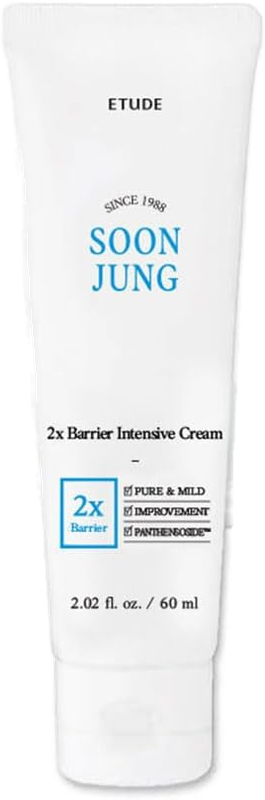
If your skin runs sensitive or you have active rosacea, pair it with a barrier cream rather than a lightweight gel. Ceramides and panthenol take the edge off the early irritation phase without blocking the acid from working.
Paid links: Koracle may earn from qualifying purchases. Details.
View on Amazon. Amazon shows final price and availability.
You can layer azelaic acid with niacinamide the same night, and they actually complement each other for redness and dark spots. With retinol, alternate nights for the first month. With strong AHAs or BHAs, pick one for that night.
The bottom line
Azelaic acid earns its reputation for redness, inflammatory acne, and post-acne marks, in roughly that order of evidence strength. It's slow but well-tolerated, and it's one of the rare actives that pairs cleanly with most of your routine. Start at 10%, give it 12 weeks, and judge results against the right problem, not the marketing.
Common Questions
Can I use azelaic acid every day?↓
Yes. At 10% or lower, daily use is well-tolerated for most skin. Start once a day and build to twice if your skin handles it. The 15-20% prescription versions can sting for the first two weeks, then settle.
Does azelaic acid work for rosacea redness?↓
It's one of the few ingredients with strong evidence here. A 15% gel reduced inflammatory lesions by about 58% in a 12-week trial (Thiboutot et al., 2003). It works on the inflammation driving rosacea, beyond the surface flush.
Can I layer azelaic acid with niacinamide or retinol?↓
Yes to niacinamide, they pair well for redness and dark spots. With retinol, alternate nights at first. Both can mildly irritate, and stacking them on day one is how barriers break.
Why does my azelaic acid serum tingle?↓
Mild tingling for the first one to two weeks is normal and not a sign of damage. If it burns, stays red for hours, or itches, dilute it by mixing with moisturizer or drop to every other day.
Turn what you learned into a routine that fits your skin.
Answer a few questions and Koracle will check formula fit, budget, tolerance, and routine order.
Build my formula-checked routine