
AHA vs BHA vs PHA: Which Exfoliant Does Your Skin Actually Need?
In this article
You've probably been told to "just use an acid" without anyone explaining which one. The three categories on every K-beauty shelf — AHA, BHA, and PHA — are not interchangeable. They penetrate to different depths, target different problems, and forgive different skin types.
Pick the wrong one and you either see no result or strip your barrier. Pick the right one and your skin reorganizes in a few weeks.
TL;DR
AHA for dullness and tone, BHA for blackheads and oily skin, PHA for sensitive or barrier-compromised skin. The deciding factor is solubility — water-soluble acids stay on the surface, oil-soluble BHA goes into the pore.
How the three acids actually differ
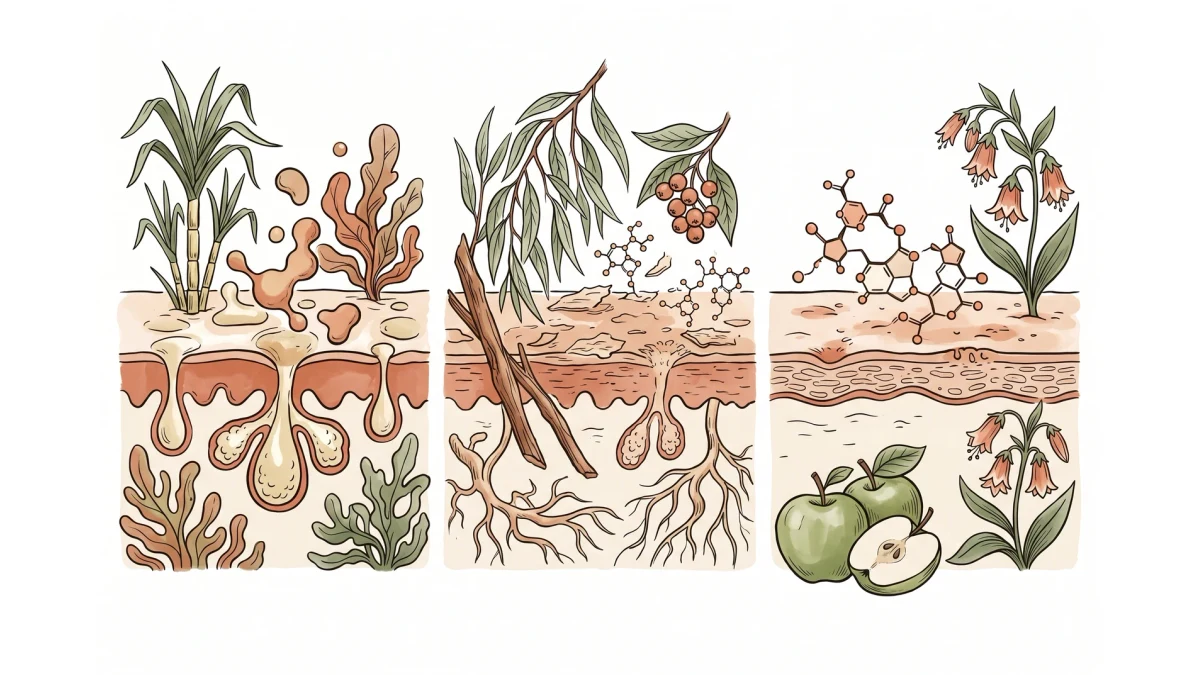
The split comes down to molecule size and what they dissolve in. AHAs (glycolic, lactic, mandelic) are water-soluble and work on the skin's surface. BHA (salicylic acid) is oil-soluble and travels into sebum-clogged pores. PHAs (gluconolactone, lactobionic acid) are water-soluble like AHAs but have larger molecules that penetrate less.
That structural difference dictates which problems each one solves.
When AHA is the right call
Reach for an AHA if your concern is texture, dullness, or uneven tone. Glycolic acid loosens the bonds between dead surface cells, accelerating turnover. A 12-week trial of 8% glycolic acid showed measurable improvements in fine lines, mottled hyperpigmentation, and skin roughness (Stiller et al., 1996).
Lactic acid is the gentler AHA and adds a humectant effect — it pulls water into the stratum corneum while it exfoliates. Mandelic acid has a larger molecule than glycolic and is the AHA of choice if your skin runs reactive but you still want surface-level resurfacing.
K-beauty AHA products typically run 5–10% at a pH around 3.5, which is the active range. Below 3, irritation outpaces benefit. Above 4, the acid is largely inert.
Paid links: Koracle may earn from qualifying purchases. Details.
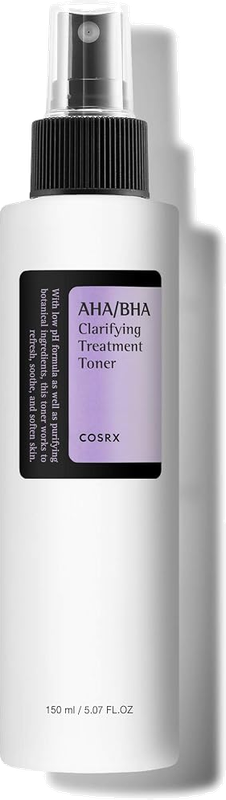
View on Amazon. Amazon shows final price and availability.
When BHA is the right call
If you have oily skin, blackheads, or recurring closed comedones, BHA is the answer. Salicylic acid's lipophilic structure lets it dissolve through sebum and exfoliate inside the pore lining — something no AHA can do. A study of 2% salicylic acid found a 47% reduction in comedones after 12 weeks (Zander & Weisman, 1992).
It's also anti-inflammatory, which is why it calms the red, raised papules of mild acne instead of just smoothing the surface around them.
Korean BHA products typically use 0.5–4% salicylic acid or betaine salicylate, which is gentler at equivalent concentrations. Look for a pH between 3.0 and 4.0.
Paid links: Koracle may earn from qualifying purchases. Details.
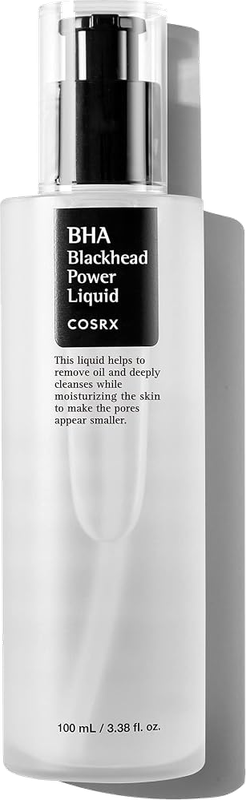
View on Amazon. Amazon shows final price and availability.
Not sure which exfoliant your skin actually needs?
Answer 9 questions. Koracle checks fit, conflicts, texture, and evidence.
Build my routine →When PHA is the right call
PHAs are for skin that can't tolerate stronger acids — sensitive, rosacea-prone, eczema-adjacent, or recovering from over-exfoliation. Gluconolactone and lactobionic acid have molecules roughly 2–3x larger than glycolic acid, so they sit higher in the stratum corneum and exfoliate more slowly. The trade-off: less irritation, plus a humectant and antioxidant effect from the polyhydroxy structure (Green et al., 2009).
In a comparative study, gluconolactone was as effective as 2% salicylic acid for mild-to-moderate acne over 12 weeks, with significantly less stinging and erythema (Hunt & Barnetson, 1992).
PHAs are also the safer pairing when you're already on retinol or vitamin C — the limited penetration depth means you're not stacking irritation.
Paid links: Koracle may earn from qualifying purchases. Details.
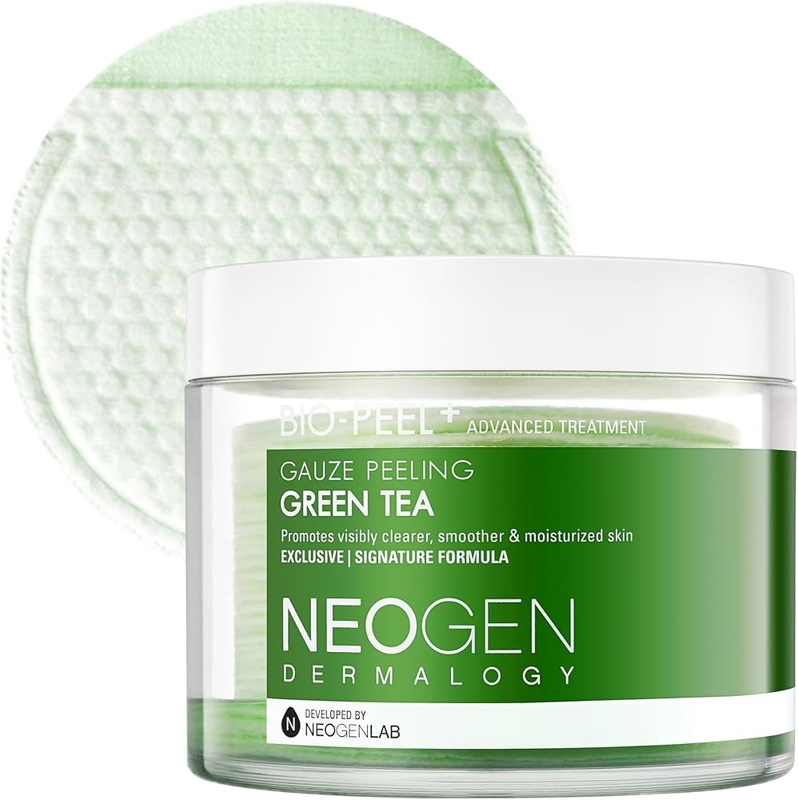
View on Amazon. Amazon shows final price and availability.
How to actually use them
Once you've picked the right acid, the application matters as much as the choice.
The right exfoliant for your skin is the one that solves your specific problem, not the one with the strongest percentage on the label.
The bottom line
Match the acid to the problem: AHA for surface tone and texture, BHA for clogged pores and oil, PHA for sensitive or compromised skin. Start with two or three applications per week, pair with daily SPF 50, and give it six weeks before you decide whether it's working.
Common Questions
Can I use AHA and BHA together?↓
Yes, but not in the same step. Alternate them by night, or use BHA in the morning and AHA in the evening. Layering both at once raises irritation risk without proportional benefit for most skin types.
Are PHAs strong enough to actually do anything?↓
Yes, but slowly. PHAs exfoliate at the surface like AHAs, just with larger molecules that penetrate less. Expect smoother texture over 4–6 weeks, not the rapid turnover an AHA delivers.
Which acid is safest during retinol use?↓
PHA. Its larger molecular size limits depth, so the combined irritation with retinol stays manageable. AHAs and BHAs stacked with retinol frequently trigger barrier damage.
Turn what you learned into a routine that fits your skin.
Answer a few questions and Koracle will check formula fit, budget, tolerance, and routine order.
Build my formula-checked routine